

Choosing between a 3 TPD and a 5 TPD desalination unit begins with a water balance. How much water is used, when is it used, and how many hours can the unit realistically run? A nameplate figure answers none of those questions on its own.
For light demand and a site where every kilogram and millimetre count, 3 TPD may be enough. Where consumption is closer to 3 m³ a day, tank recovery must be quicker, or downtime has to be built into the schedule, the extra output of a 5 TPD unit becomes useful. Feedwater, power, storage, access and the required product-water quality still have to be checked before either model is selected.
What Do 3 TPD and 5 TPD Actually Mean?
TPD stands for tonnes per day. Because one metric tonne of water is approximately one cubic metre (m³), a 3 TPD rating is roughly 3 m³ of product water in 24 hours. A 5 TPD rating is roughly 5 m³ over the same period.
Those figures assume rated design conditions. They are not fixed daily yields for every coast, season or installation. Water temperature and salinity affect membrane output. So do pressure, pretreatment condition, membrane condition and the time lost to flushing or shutdowns.
For an initial calculation, divide the daily rating by 24:
- 3 TPD works out to about 0.125 m³/h, or 125 L/h.
- 5 TPD works out to about 0.208 m³/h, or 208 L/h.
These hourly values are useful for planning. Final output must come from the approved design conditions and project datasheet.
Calculate Run Time Before Selecting Capacity
Begin with the water that will actually be used. Drinking and cooking may be only part of the load; washing, accommodation services or a defined process can account for the rest. If the design includes distribution loss or emergency reserve, state the agreed allowance. A convenient percentage copied from another project is not a sound basis for sizing.
Use this first-pass calculation:
Required operating hours = daily product-water demand / nominal hourly product-water rate
Take a daily requirement of 2.0 m³. Using the nominal rates above, the 3 TPD unit would run for about 16 hours. The 5 TPD unit would need about 9.6 hours.
Now raise demand to 2.8 m³. The calculated run time becomes about 22.4 hours for the 3 TPD unit, compared with about 13.4 hours for the 5 TPD unit. The 22.4-hour schedule is the concern. It leaves only a narrow window for checks, flushing, an intake interruption or reduced production when feedwater conditions shift.
A product-water tank helps because production can continue while demand is low and stored water can cover a short peak. It does not solve an undersized duty. If average production repeatedly falls behind average use, a larger tank merely delays the shortage.
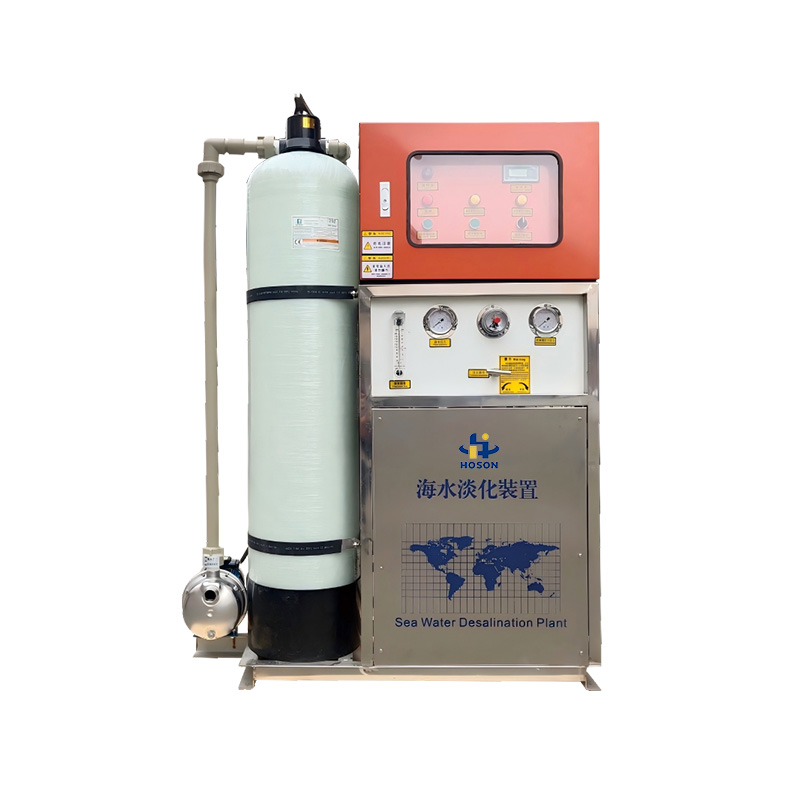
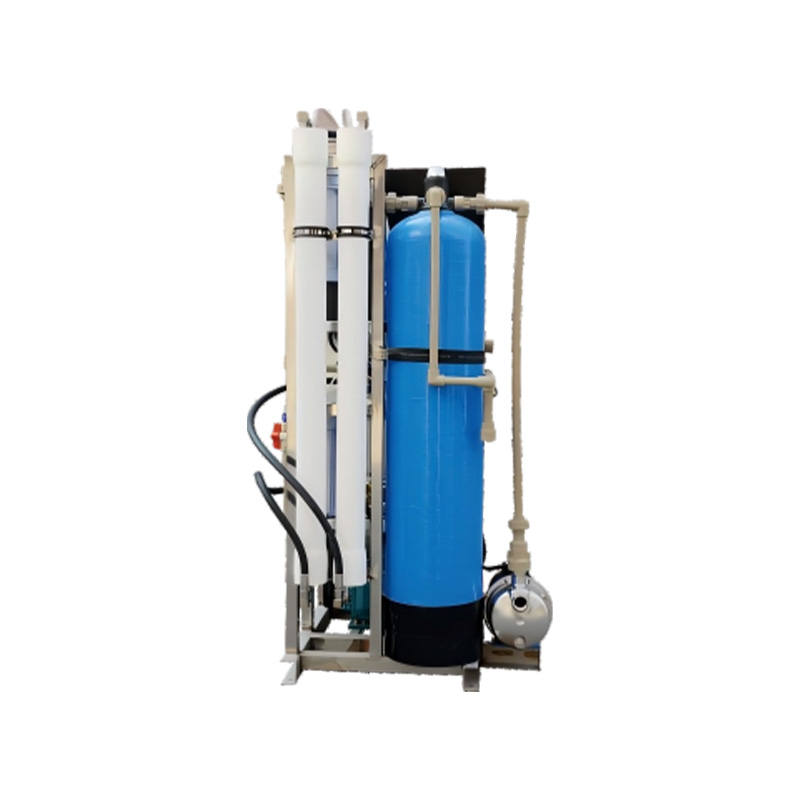
FSHB-3 and FSHB-5 at a Glance
The figures below are the documented ratings for the two models. They provide a comparison point, while the project design determines the final duty.
| المعلمة | FSHB-3 | FSHB-5 |
| Rated fresh-water output | 3 TPD | 5 TPD |
| Nominal hourly output | About 0.125 m³/h | About 0.208 m³/h |
| Approximate system recovery | About 15%, depending on temperature and water quality | About 20%, depending on temperature and water quality |
| Rated power | 1.5 كيلوواط | 2.2 كيلوواط |
| Power supply | AC 380 V, 50 Hz, three-phase | AC 380 V, 50 Hz, three-phase |
| Approximate dimensions | 500 x 570 x 1,350 mm | 910 x 500 x 1,540 mm |
| Approximate dry weight | 150 kg | 260 kg |
| Documented construction/detail | SUS316 stainless steel; IP56 electrical-control protection | 316L high-pressure pump; CCS inspection/certificate stated for the product |
How Feedwater Changes the Calculation
Seawater Reverse Osmosis (SWRO) applies pressure to feedwater and passes water through a semipermeable membrane. Most dissolved salts remain in the concentrate stream. Colder water generally passes through the membrane less readily, while higher salinity raises osmotic pressure. Either condition can alter the production expected from a given system.
The source also changes through the year. A wet season may bring suspended matter; warm water may coincide with algae or greater biological activity. An intake that performs well during one survey can face a different load several months later.
For that reason, “seawater” is not a complete feed specification. A useful review includes salinity or Total Dissolved Solids (TDS), temperature range, turbidity, pH value and relevant scaling or fouling risks. Sample location matters too. Where conditions vary, one convenient sample should not be treated as the whole design envelope.
Recovery Is Not Salt Rejection
Recovery and salt rejection are often confused, although they measure different things.
System recovery rate is the product-water flow divided by total feedwater flow. It tells the designer how much of the incoming water becomes permeate water. Salt rejection describes how much dissolved salt the membrane system removes.
FSHB-3 has a documented approximate recovery of 15%; FSHB-5 is approximately 20%. Both figures depend on temperature and water quality. They can inform an early intake and concentrate balance, but the approved design should provide the final flows. Neither recovery figure, by itself, states the product-water salinity.
Check Power and Installation Conditions
The standard documented electrical supply for both models is AC 380 V, 50 Hz, three-phase. Before an order is confirmed, compare that requirement with the actual voltage, frequency, phase and supply stability on site. Starting conditions and electrical protection also need attention. A mismatch discovered during commissioning is much harder to manage than one found during design.
FSHB-3 is the lighter and smaller option: approximately 150 kg dry and 500 x 570 x 1,350 mm. FSHB-5 is approximately 260 kg and 910 x 500 x 1,540 mm. The larger model takes more room, yet its higher nominal hourly output may reduce the daily production window substantially.
Equipment dimensions are only part of the layout. Allow room to approach components, route pipes, ventilate the area and carry out service work. Check the access path and lifting method as well as drainage, intake and concentrate piping, and the load capacity of the mounting surface. FSHB-3 and FSHB-5 are compact units; they should not be called containerized systems unless a separate enclosed configuration has been specified.
Pretreatment Must Follow the Water Analysis
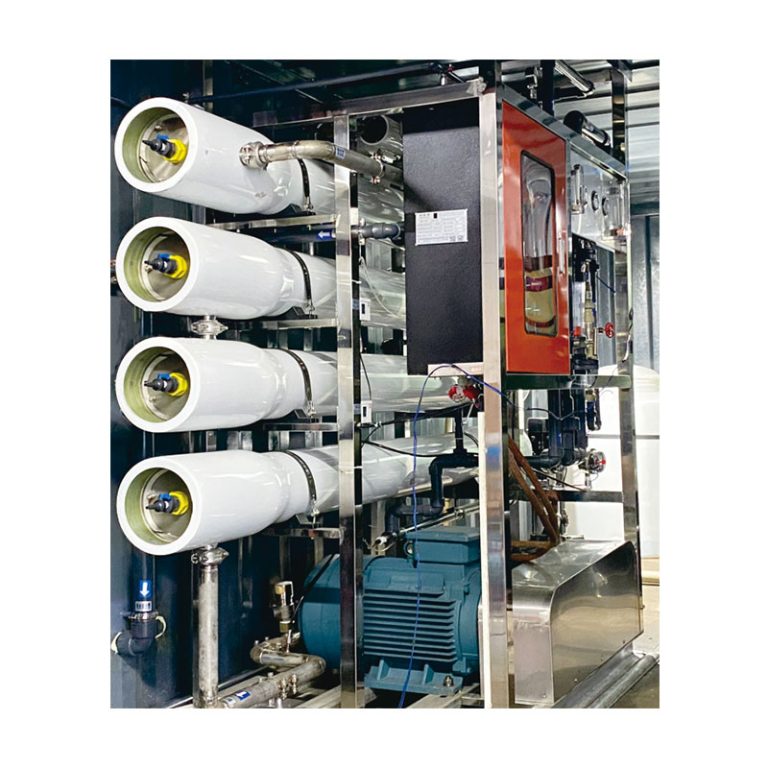
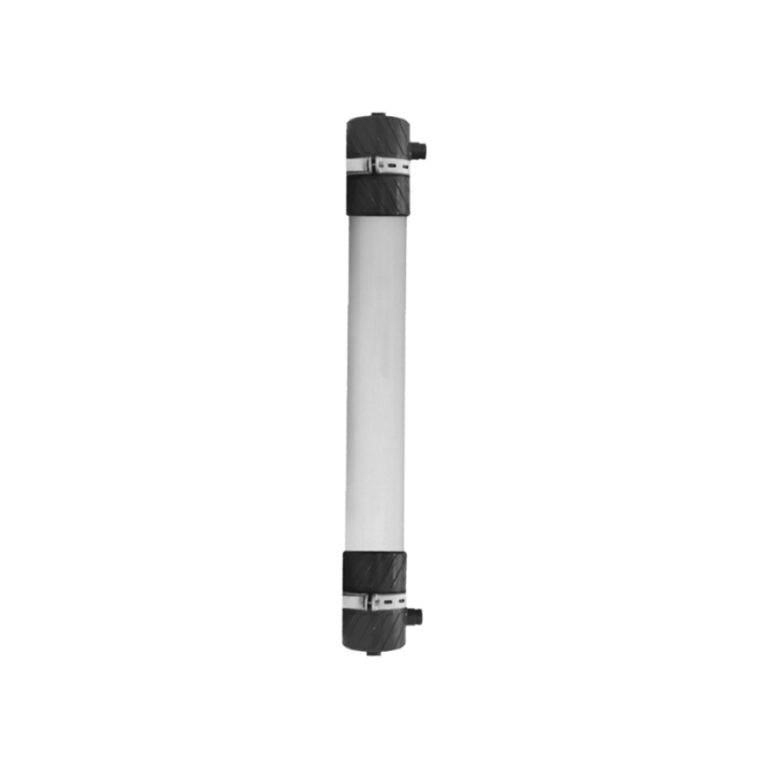
Reverse Osmosis (RO) needs controlled feed conditions. Depending on the source, pretreatment may include screening or coarse filtration, chemical dosing such as antiscalant, and cartridge filtration. Where algae, microorganisms, suspended solids or seasonal turbidity pose a greater fouling risk, Ultrafiltration (UF) may be considered.
There is no value in adding treatment stages simply to make a process diagram longer. Each step should address an identified water-quality risk and fit the intended operating and maintenance plan.
The required product water deserves the same clarity. Drinking, washing, accommodation use and a defined industrial process do not necessarily share one specification. Depending on the duty, the complete system may need remineralization, pH adjustment, disinfection, hygienic storage or compatible distribution materials. Capacity alone cannot establish a guaranteed product-water TDS.
When FSHB-3 Makes Sense
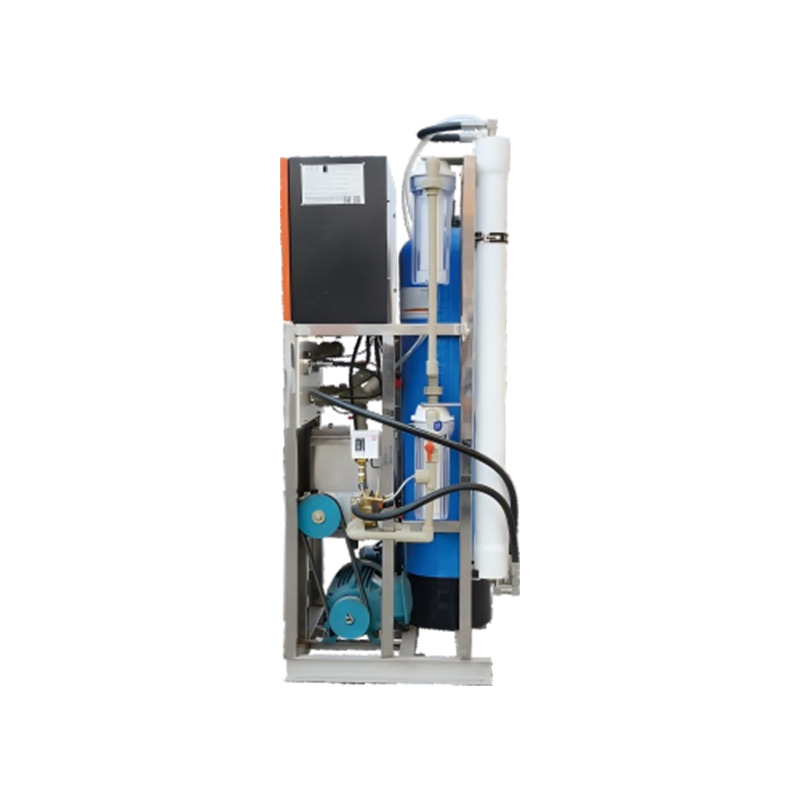
Our compact marine watermaker is worth considering when verified demand remains below 3 m³ a day and the operating calculation leaves a workable margin. Its smaller envelope and lower dry weight may also decide the issue where space and handling are tightly constrained.
Storage can make a modest, uneven demand profile easier to serve. Even so, a project that routinely needs nearly the full 3 TPD rating deserves another look. If one missed production period would drain the available reserve, the selection has little resilience.
When FSHB-5 Makes Sense
The 5 TPD RO system gives the operator more nominal production per hour. For the same daily demand, it can refill storage sooner and leave a wider non-production window. That margin matters when use is above the comfortable range of the smaller unit or when the schedule must accommodate regular operational pauses.
The trade-off is straightforward. FSHB-5 is larger and heavier, has a rated power of 2.2 kW, and requires its feed flow, concentrate route and installation arrangements to be confirmed. Extra capacity is helpful only when the rest of the site can support it.
Information to Prepare for a Technical Review
A model-only quotation is difficult to compare. A useful enquiry gives the engineering team enough information to check the duty:
- minimum, average and peak daily product-water demand;
- hours available for production and operator attendance;
- usable tank volume and the required minimum reserve;
- feedwater analysis and seasonal temperature range;
- intake location, depth, distance and expected turbidity changes;
- product-water uses and the corresponding quality requirement;
- available voltage, frequency, phase and supply stability;
- installation dimensions, access, lifting, drainage and service space;
- the proposed concentrate route and local discharge requirements;
- commissioning, training, monitoring and spare-parts scope.
With this information, our هوسون ووتر engineering team can check whether FSHB-3, FSHB-5 or a different configuration fits the actual duty.
Choose Capacity Around the Working Day
The useful distinction between 3 TPD and 5 TPD is the operating margin each one leaves after the daily water requirement has been met. Calculate the hourly balance, see how quickly the tank recovers, and then test the choice against feedwater, electricity, space, treatment and discharge conditions. The better model is the one that can meet that complete duty without relying on a perfect 24-hour day.
أسئلة متكررة
Will a 3 TPD unit always deliver 3 م³ each day?
No. Three TPD is a 24-hour rating under stated design conditions. Actual daily volume reflects the hours run and the condition of the feedwater, pretreatment, membrane and system. Planned downtime also reduces the water available that day.
Are FSHB-3 and FSHB-5 containerized units?
Not in their standard documented compact form. A containerized unit is installed within a specified enclosure and is a separate configuration decision.
What should be included with a request for quotation?
Send the water analysis, demand profile, operating hours, storage information, product-water requirement, electrical supply, installation constraints and concentrate-discharge conditions. Quotations based on the same inputs are easier to assess fairly.