
مقدمة
Remote water projects often face challenges because logistics, staffing, and raw water quality variations are difficult to manage. Modular water treatment systems can improve water security by moving more engineering work into the factory, reducing onsite construction requirements, and providing local teams with a monitored and repeatable operation model after commissioning.
Why Remote Supply Needs Modular Engineering
ألف modular water treatment project is useful when villages, camps, resorts, or small towns cannot wait for a conventional plant and long-distance pipeline network. The system must still be engineered; modular does not mean simplified water quality control.
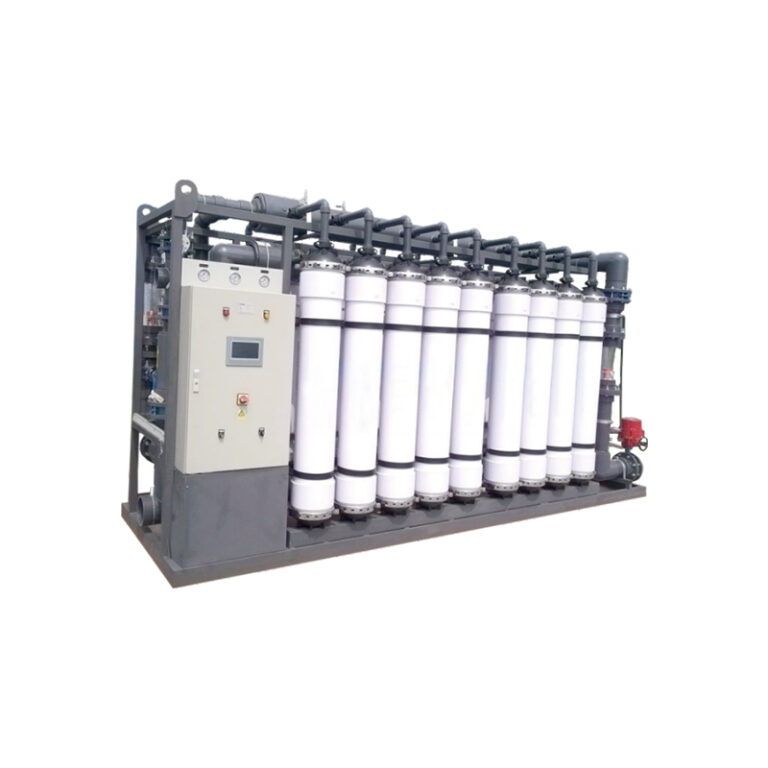
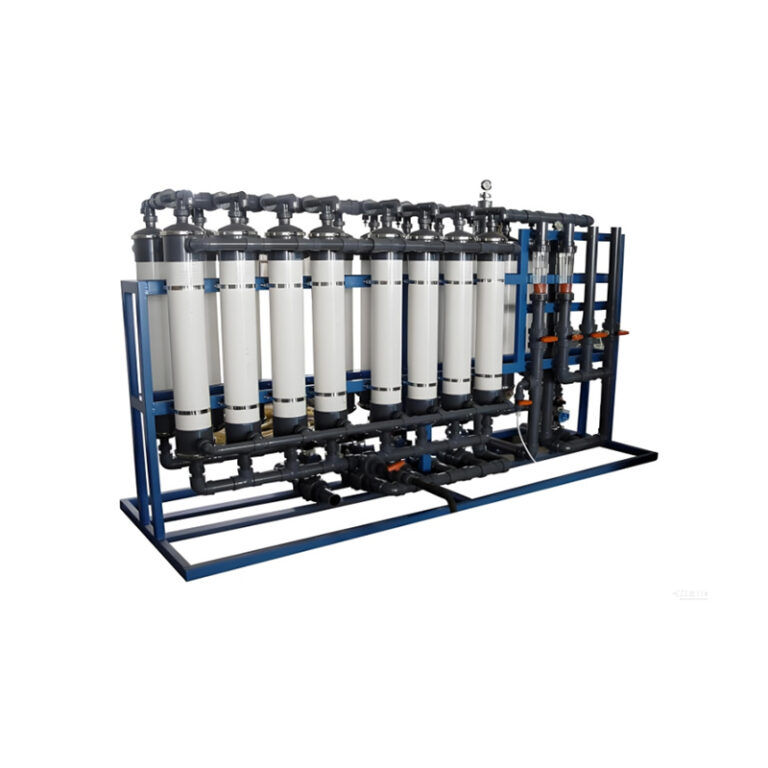
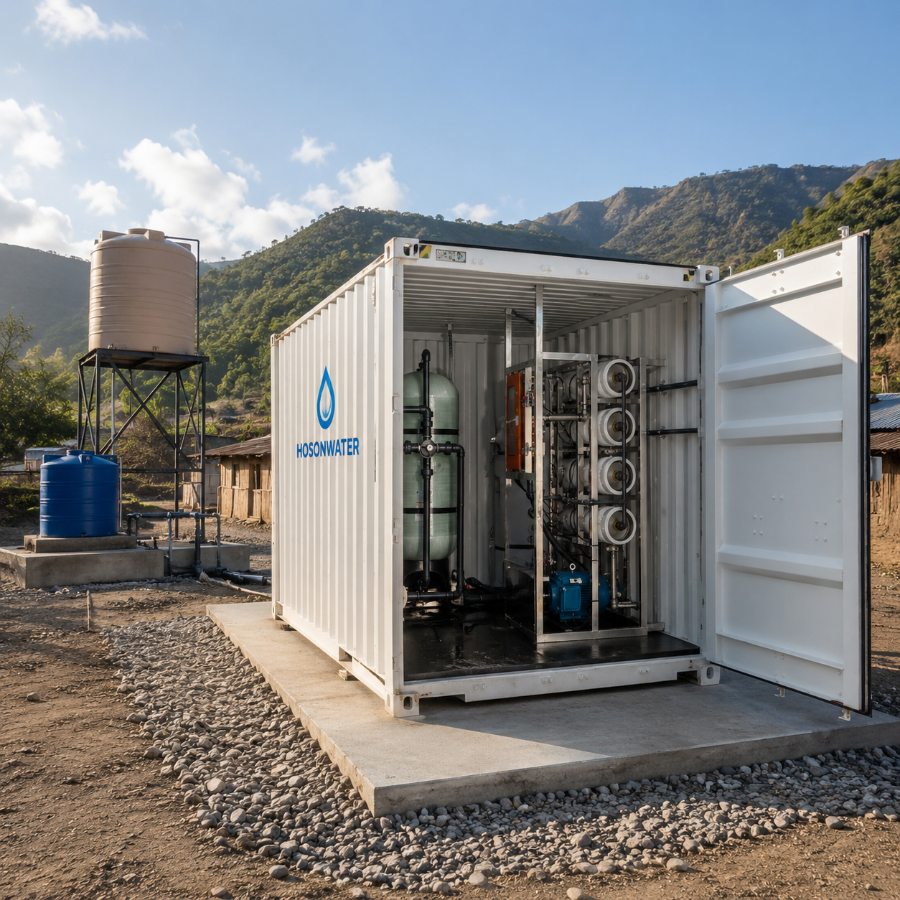
HOSONWATER’s Water Plant-in-a-Box concept integrates pretreatment, ultrafiltration, disinfection, control systems, and service support into prefabricated modules. Factory-prefabricated process modules and control systems reduce field fabrication and clarify module interfaces, but production and delivery duration remain project-specific.
Prefabrication does not eliminate site engineering. The buyer still needs a surveyed access route, stable foundation, raw water storage buffer, treated-water storage, drainage, chemical room, safe operator access, and a defined electrical interface. These boundaries should appear on approved drawings before production release and again in the documented installation checklist.
Procurement conditions to define first
- Daily demand, peak-hour demand, source type, turbidity range, and seasonal flood exposure.
- Local power quality, backup generator plan, chemical availability, and operator skill level.
- Required water standard, disinfection method, remote alarm responsibility, and spare-part supply route.
How UF Technology Stabilizes Village Water
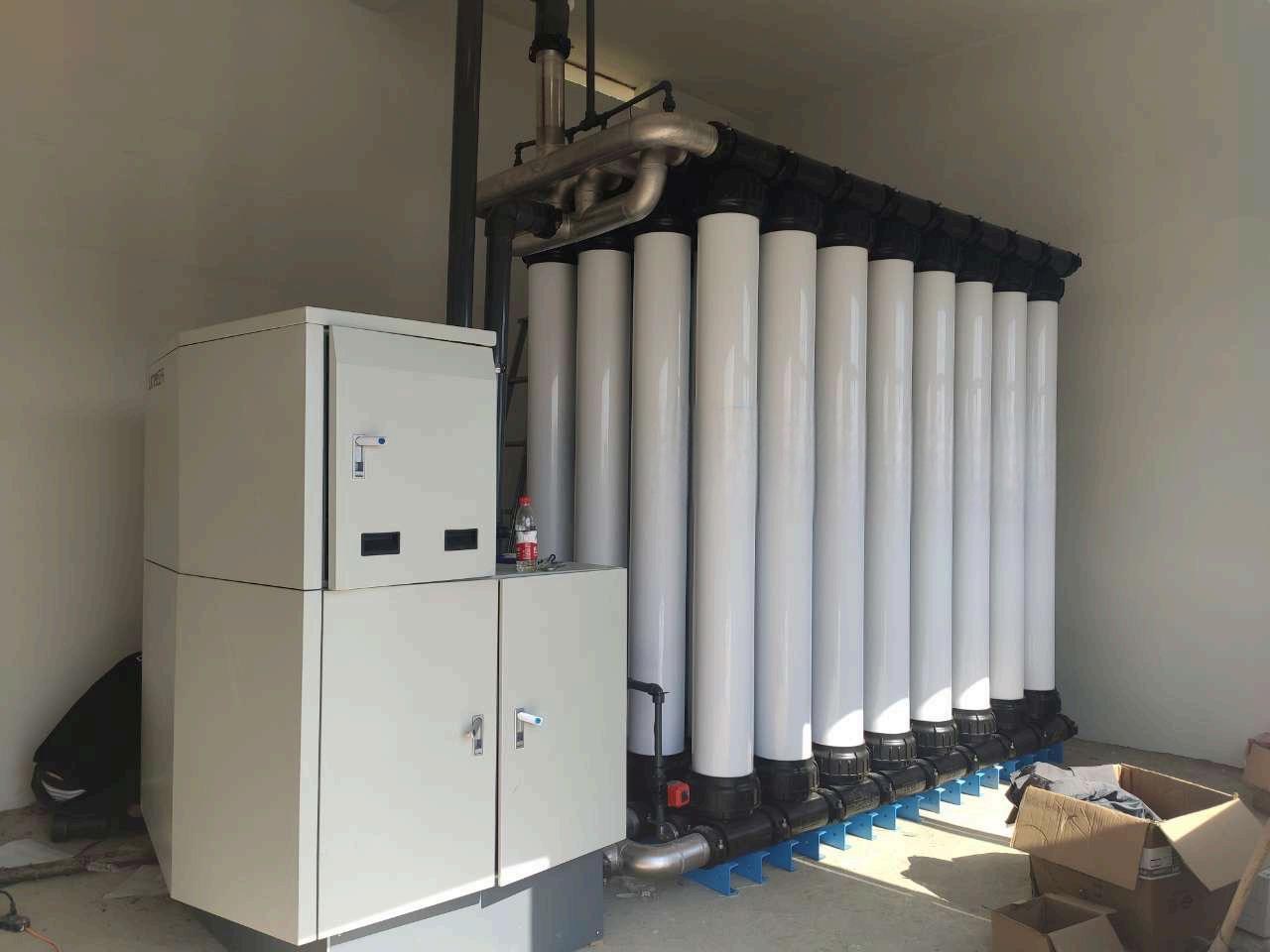
Ultrafiltration membrane technology is a physical barrier for suspended solids, colloids, suspended solids, colloids, bacteria, and some viruses; it does not remove dissolved salts, hardness, arsenic, or many dissolved organics. HOSONWATER’s published UF specifications include PVC alloy and PVDF membrane options with nominal pore sizes of 0.01 and 0.02 microns. Laboratory results should determine whether oxidation, adsorption, softening, or RO is required as a subsequent treatment step.
For municipal water treatment, the owner must identify the governing national or municipal potable-water standard. WHO guidance may inform risk assessment but does not replace local law. FAT verification, onsite commissioning tests, microbiological verification, and release records should be agreed before production.
Membrane material and pore size are only part of the specification. Engineers should also compare design flux, backwash interval, chemically enhanced backwash conditions, recovery, integrity-test method, clean-in-place limits, and replacement access. The selected operating window must reflect the worst credible source-water condition, not only a dry-season sample.
| Source-water class | Laboratory focus | Process implication |
| Surface water | Turbidity, SDI, algae, microbiology | Pretreatment, UF, and disinfection depending on raw water conditions |
| Groundwater | Hardness, iron, manganese, arsenic, organics | Oxidation, adsorption, softening, or other processes as water quality tests require |
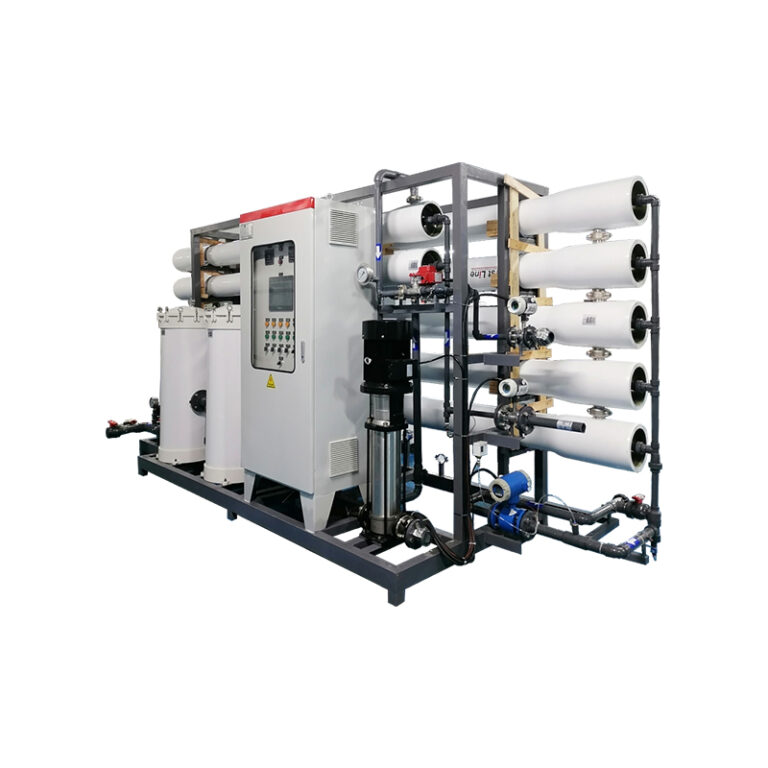
| Brackish or saline | TDS, ions, boron | UF pretreatment, RO, and post-treatment |
| Unknown contamination | Expanded chemical and toxicology panel | Specialist process review before potable use |
When containerized design is justified
A modular potable water plant is justified when transport protection, rapid deployment, and footprint control have measurable value. Mountain roads, island locations, desert camps, and land-constrained towns often benefit because the main process units arrive preassembled and factory tested.
Size nominal treated-water output from average daily demand and scheduled operating hours, then check peak-hour demand, recovery, cleaning downtime, redundancy, and storage autonomy. State every assumption in the contract; treated-water capacity must not be confused with required raw-water feed flow.
FAT should verify the flow path, instruments, controls, alarms, and documented test basis. Onsite commissioning tests should use actual source water to confirm treated flow and required water-quality parameters through an approved laboratory over an agreed test duration. Handover records should include training, consumables, critical spares, storage conditions, and escalation contacts.
Remote Monitoring Turns Equipment Into a Service
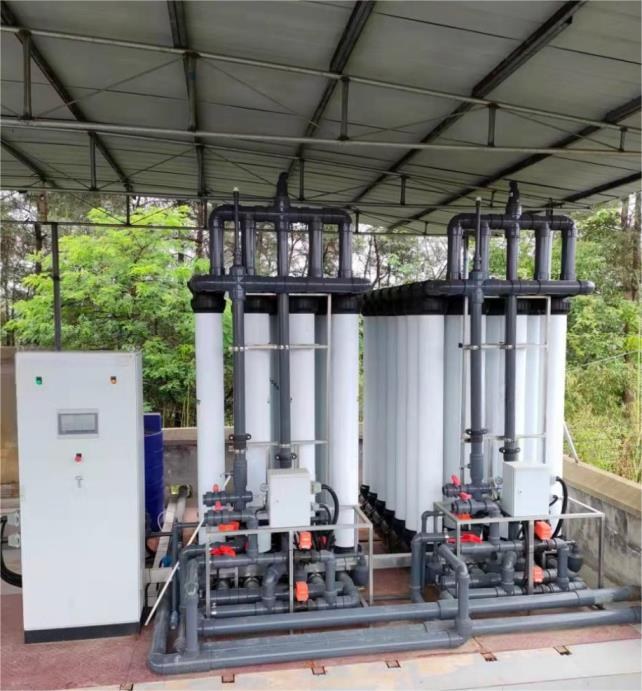
Water treatment remote monitoring converts isolated equipment into managed infrastructure. HOSONWATER’s smart platform tracks water quality, flow, pressure, salinity, alarms, energy use, and equipment status so technical teams can support local operators and improve operational visibility.
This service model matters in Southeast Asia, Africa, and the Middle East, where projects may be spread across islands, highlands, industrial camps, or small municipal networks. A dashboard cannot replace maintenance, but it can reduce blind operation and shorten fault identification and troubleshooting time.
Remote data also needs an operating protocol. The supplier and owner should agree who receives each alarm, which events stop equipment automatically, how often trends are reviewed, and how connectivity loss is handled. Local manual control, secure user permissions, data export, and an offline maintenance log remain necessary when mobile networks are intermittent.
For municipal water treatment projects, remote monitoring also supports asset management. Operators can compare sites, plan membrane cleaning, track chemical use, and train local staff with data rather than paper logs alone.
Commercial checks before quotation
Standardize quotation comparisons by included process scope, capacity assumptions, energy and chemical basis, consumables, production lead time, packing, freight, Incoterms, civil and electrical exclusions, FAT/SAT, payment milestones, warranty, training, spare-parts commitments, and service response. Initial quotation price is not comparable until these fields use the same scope boundary. Also confirm the local parameter schedule, laboratory, sampling responsibility, and release record.
A buyer comparing water treatment remote monitoring options should ask whether alarms are only displayed or actively escalated. Data-based maintenance planning has value only when roles, response time, and spare-part access are defined.
What to Submit for Process Selection
Send HOSONWATER the raw-water laboratory report, local standard, average and peak demand, operating hours, storage requirement, site location, power, access constraints, and preferred deployment date. The engineering team can then evaluate whether a modular potable water plant, a UF upgrade, or a staged municipal package is the right starting point.
أسئلة متكررة
Is modular water treatment only for emergencies?
Modular water treatment is not only for emergencies. It is also used for permanent small-town water supply, phased expansion, remote industrial camps, and land-constrained upgrades.
Can local staff operate a modular potable water plant?
Local staff can operate a modular potable water plant after structured training when the interface, backwash logic, alarms, and maintenance routines are clearly defined.
What does water treatment remote monitoring actually track?
Water treatment remote monitoring can track flow, pressure, turbidity, pH, salinity, energy use, pump status, valve status, alarms, and maintenance events.
How does ultrafiltration membrane technology perform under flood-related source-water fluctuations?
Ultrafiltration membrane technology can maintain low-turbidity output under variable source water when pretreatment, backwash frequency, and chemical cleaning are designed for the expected peak turbidity.
What should municipal water treatment buyers confirm first?
Municipal water treatment buyers should confirm source water quality, local standard, daily demand, operator availability, site access, power stability, spare parts, and service responsibilities.