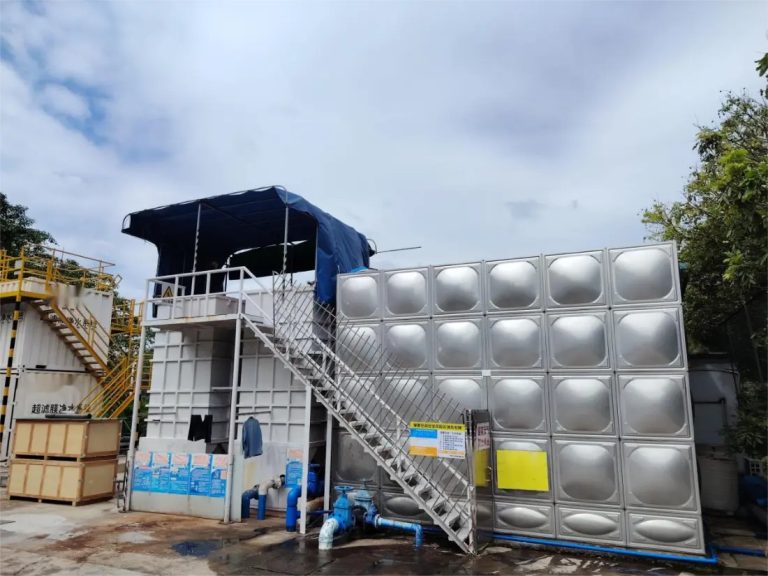

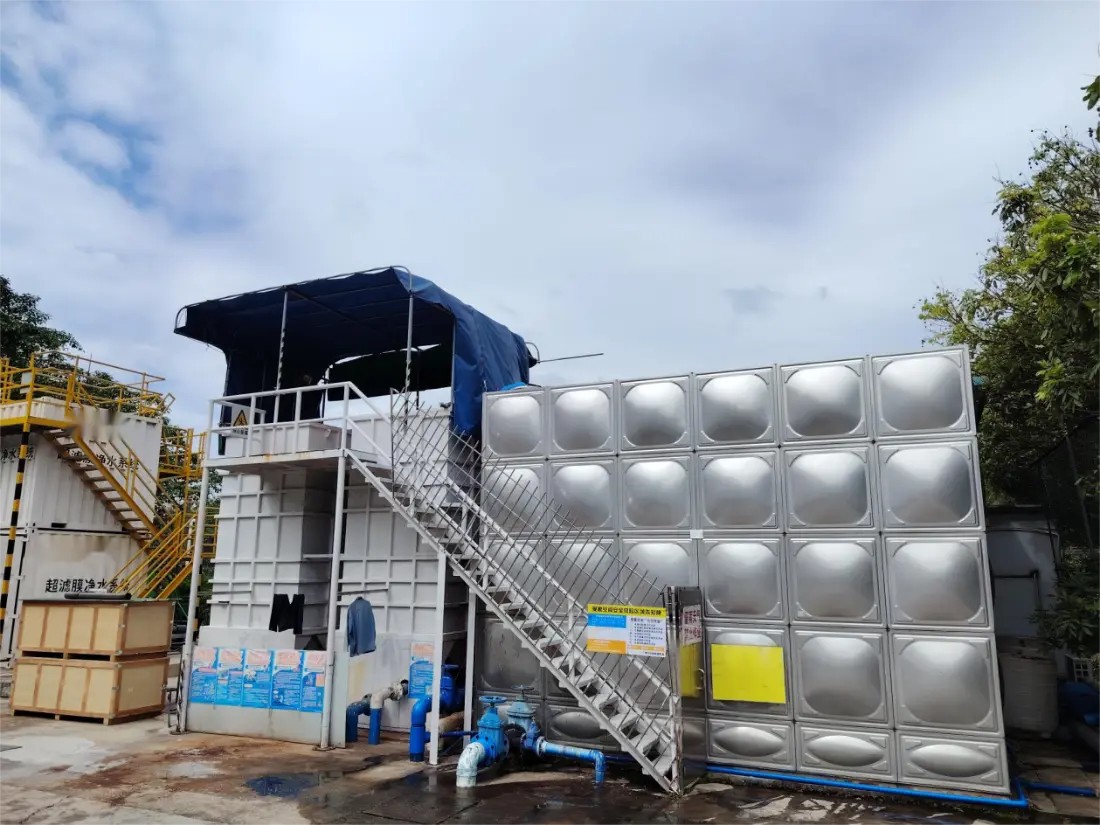
Severe weather events are becoming an increasing challenge to water resources systems across the world. When a major flood occurs, the conventional treatment processes and gravity-driven drainage systems are rapidly overwhelmed by heavy sedimentation, high turbidity, large quantities of suspended solids, fine sand, other debris, and silt. Ensuring that a water treatment plant can meet peak demand for clean water under emergency situations, such as flooding, is critical for public health and continuity of business. Ultrafiltration (UF) provides a critical layer of protection for water treatment systems under emergency conditions, including high turbidity events. These systems provide a physical barrier in water that can protect the existing plant processes and provide secure water supplies to communities during critical times of flooding and other emergencies.
Why do traditional systems fail during floods?
Common water cleaning steps, like simple sand filtering and basic settling, are very sensitive to changes in the starting water quality. In strong flood situations, the cloudiness of the raw water can jump from just a few NTU to more than 1000 NTU in only a short time. This fast rise causes several pressing and complex problems:
- Overloading of Clarifiers: Regular settling tanks often get swamped by the large amount of incoming dirt. As a result, this leads to a big carry-over of solid bits into the next parts of the cleaning process.
- Biological Treatment Disruption: Plants that depend a lot on biological water treatmentface issues from these quick increases in pollutants, along with fast flows. Such surges can cause biomass loss. Moreover, flood-related toxins often bring sudden stress, which greatly reduces the removal of nitrogen and phosphorus.
- Inconsistent Filtration Output: Usual sand filters tend to let particles through when the incoming cloudiness is unsteady. Because of this, the output water quality often does not meet tight safety rules.
What is Ultrafiltration and why is it a flood-proof necessity?
Ultrafiltration works mainly as a complete and strict physical block. It uses advanced membrane tech with exact hole sizes—usually between 0.01 and 0.1 microns. These systems catch floating solids, tough bacteria, tiny viruses, and big organic bits in the water.
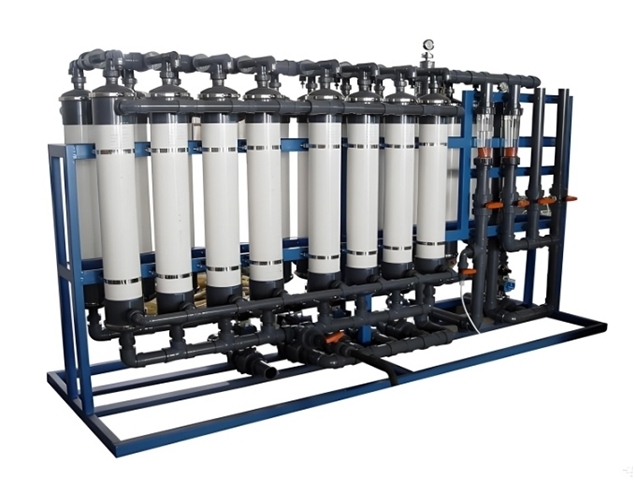
Unlike standard approaches that need lots of chemical additions or slow settling by gravity, UF delivers steady output quality. Even if the starting water looks clearly dirty and full of mud, the cleaned result stays very clear. It often stays under 0.1 NTU. This exact and reliable output—the sure promise that the system will always make safe water—is what makes UF an essential need for real flood strength.
How does UF integrate into a modern water treatment plant?
Adding ultrafiltration equipment to the site requires formulating a thorough plan in terms of system setup and intelligent control.HOSON, as a specialist in designs for water fixes, points out that a working system goes beyond just the membrane. It involves the full, smooth blend of all steps.
| Feature | Description | Benefit |
| Physical Barrier | 0.01-0.1 micron pore size | Guaranteed removal of pathogens and silt |
| Automated Backwash | Programmable cleaning cycles | Prevents long-term fouling during high-turbidity events |
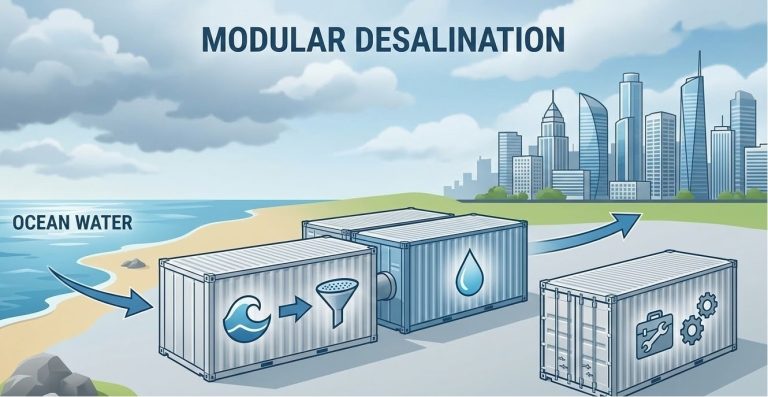
| Modular Configuration | Containerized or rack-mounted design | Rapid deployment and easy scalability |
| Remote Monitoring | Real-time sensor-based water quality tracking | Immediate response to flood surges |
The addition process includes a few vital technical parts:
Pre-treatment teamwork: Before water gets to the fine UF membranes, it usually goes through sturdy rough screens and an accurate mixing-settling stage. This first step cuts the main strain on the membranes. Thus, it lengthens their working life even in hard flood times.
Smart running: Current systems include high-level auto control parts that spot quick cloudiness jumps right away. If the input water turns too muddy, the setup will auto-start a Chemically Enhanced Backwash (CEB). Or it will change flow speeds to shield the membrane from lasting blockages.
Modular growth: Many plants now quickly take up the “Water Plant-in-a-Box” idea. These small units can be set up fast next to current setups to handle extra flow amounts. This helps a lot in updating old sites or growing water recycling systems in spots with little room.
How does UF enhance the efficiency of water recycling systems?
Past basic cleaning, UF takes a basic and key part in high-level water recycling systems. As water shortages grow stronger worldwide, the need for good recycled water—for farm watering or tricky factory tasks—has become clear.
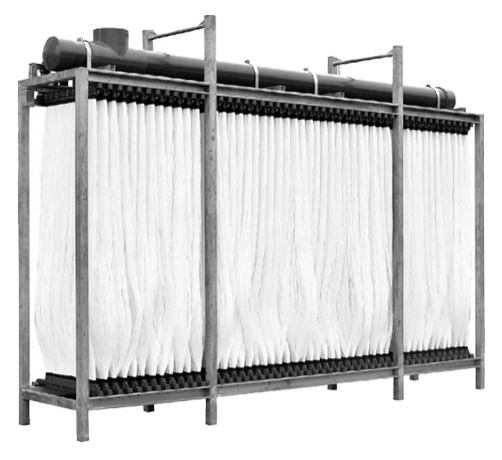
UF acts as the perfect and needed early step for Reverse Osmosis (RO) membranes. By making sure the input water has no cloudiness or biological risks, UF stops early blockages in later RO parts. Those parts are very open to such bits. This step-by-step method turns waste flows into useful water resources. It improves the overall plan of a water treatment plant for the best money value and lasting use.
What are the key maintenance strategies for flood resilience?
To make sure a site gets through rough weather well, using forward-thinking upkeep is very important.
- Chemically Enhanced Backwash (CEB): In a flood, the need for backwashing goes up a lot. Auto CEB rounds use gentle but strong chemicals to loosen stuck clay bits from the membrane face. This keeps high flow-through.
- Real-time Data Analytics: By watching the transmembrane pressure (TMP) levels as they happen, workers can guess just when the system needs hands-on help. This avoids waiting for a full surprise stop.
- Tiered Operator Training: In far-off places, giving local teams solid skills in simple cleaning steps and advanced remote help tools keeps the system running well. This holds true even when outside tech aid cannot get there fast.
Conclusion
Moving from old, weak water cleaning ways to new, membrane-focused fixes is a needed move for current strength. With strong UF tech, workers can turn their sites into solid, trusty resources that stand up to the wildest and hardest flood setups. Whether the aim is boosting biological water treatment or giving the main support for complex water recycling systems, HOSON offers the exact tech plan needed for ongoing water safety. If you want to update your site to manage tough nature conditions, our expert group is set to create a fix made just for your special water issues.
FAQ
Q: What is the typical deployment time for a portable water treatment system?
A: Most modular units can be installed within a few short days or weeks, depending entirely on the readiness of the project site. This prefabricated production method effectively shortens the traditional construction cycle to a fraction of the original time.
Q: Can these systems be integrated into existing biological water treatment setups?
A: Absolutely. UF membranes can be utilized to replace or significantly augment secondary clarifiers, creating a Membrane Bioreactor (MBR) configuration that remarkably improves effluent quality while simultaneously increasing the processing capacity of the entire plant.
Q: How does UF handle high-turbidity water without constant cleaning?
A: The system utilizes sensitive instruments to detect turbidity changes. During normal, calm conditions, it operates at a standard flux; however, when a flood occurs, the system’s smart controller automatically initiates more frequent backwashes and cleaning cycles to prevent the membrane from suffering from clogging.
Q: Are these units suitable for decentralized water recycling systems?
A: Yes, they are. Because they are designed to be modular and highly efficient, they are frequently utilized in decentralized projects, such as campus-wide water recovery or specialized industrial wastewater reuse, where high-quality treated water is strictly required for non-potable applications.
Q: How can a facility ensure the longevity of the membranes during a flood?
A: Longevity is guaranteed through proper pre-treatment to remove large debris, the consistent use of automated backwash protocols to remove fine particles, and a rigorous, proactive maintenance schedule supported by reliable remote diagnostics.