

Introduction
Water scarcity shows up as an increasing worldwide challenge. This problem comes from the fast population rise, city growth, and varying weather patterns. Regular freshwater supplies face heavy strain. Many places, above all in Southeast Asia, the Middle East, and Africa, are searching for different options. he desalination of ocean water has therefore become a critical solution in this context.
A fresh look at engineering and system integration shows that a modern water desalination plant isn’t just about filtering sea water. What matters most is how each part works together under steady conditions, handling years of operation without breakdown. Energy use shapes design decisions just as much as outside environmental effects do. The whole setup runs on predictable performance rather than short-term fixes.
Understanding Water Scarcity and the Limits of Natural Freshwater
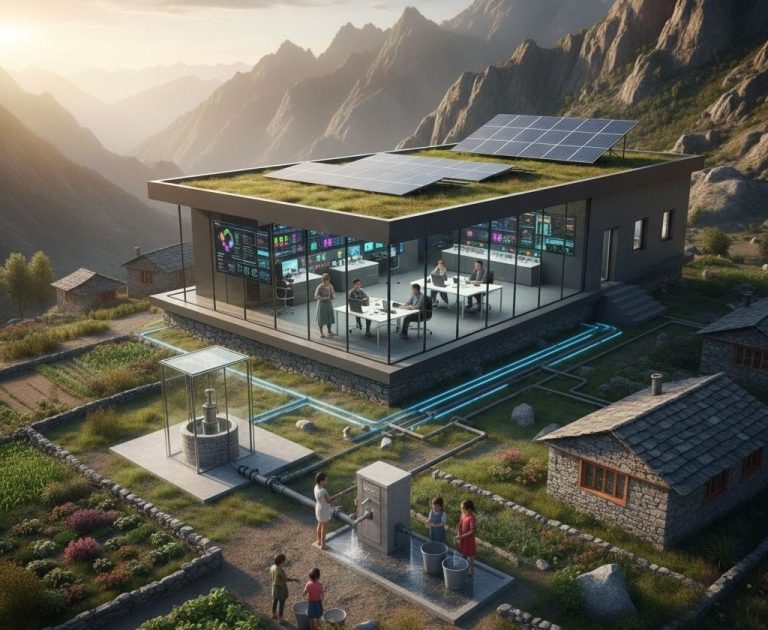
When cities grow busier, and factories work harder, people want more water than underground supplies can slowly renew. Places far from big rivers – such as coastal hamlets, holiday spots, or remote towns – might not have reliable pipelines to bring in enough flow.
What Is a Water Desalination Plant and How Does It Work
The Basics of Desalination of Ocean Water
Desalination of ocean water works by taking out salts and various pollutants from seawater. The purpose centers on making water safe for drinking or business use. This approach matters a lot in zones where usual freshwater runs short or gets dirty.
Key Technologies Used to Turn Seawater into Drinking Water
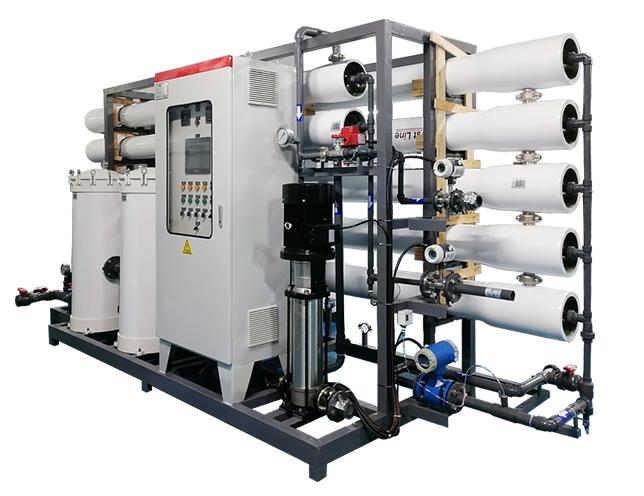
Today’s setups mostly count on Reverse Osmosis (RO). In this process, pumps apply a solid force to push seawater past special screens. Those screens let water pass but stop salts and extra unwanted parts. Take the FSHB-240 as an example. It holds strong RO membranes. These reach a 99.2% salt rejection rate. As a result, the output water stays below 700ppm in TDS. That level goes past basic standards.
The Step-by-Step Process Inside a Modern Desalination Plant
Seawater Intake and Pretreatment
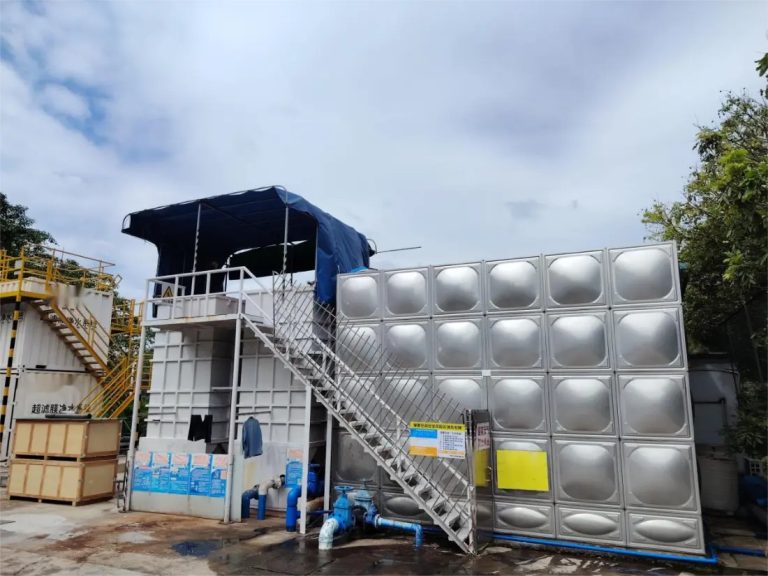
Workers bring in seawater through intake pipes. They clean it at first to remove junk, small living things, and bits floating around. This early cleaning helps prevent blockages in the machinery. Plus, it extends how long the whole setup lasts.
Reverse Osmosis and Salt Removal
This part stands as the core of the whole job. Strong pumps send seawater at RO membranes under great pressure. The FSHB-320 uses up-to-date RO membrane methods and exact building details. For that reason, it hits a 99.2% salt rejection mark.
Post-Treatment and Water Quality Control
Once the key desalination step wraps up, the water goes through more handling. Staff put back the needed minerals and carried out germ-killing steps. All of this makes sure the end result meets tough safety rules for drinking or business needs.
Environmental Concerns Linked to Desalination Plants
Energy Consumption and Carbon Footprint
Power plays a key role in desalination, particularly when pushing high pressures through reverse osmosis setups. Thanks to steady upgrades – better pumps, smarter energy recovery units, along with automated controls – today’s desalination facilities consume less energy to produce fresh water. Performance like this supports reliable supply needs without overloading the grid. Take a look at what’s working now:
| Model | Output (TPD) | Power (kW) | Salt Rejection | Recovery Rate |
|---|---|---|---|---|
| FSHB-320 | 320 | 75 | 99.2% | 35% |
| FSHB-240 | 240 | 52.5 | 99.2% | 35% |
| FSHB-150 | 150 | 37 | 99.2% | 35% |
This kind of gear cuts power use with built-in recovery parts and simple running options.
Brine Discharge and Marine Ecosystems
The desalination process inevitably produces high-salinity brine as a byproduct, which requires responsible discharge management to avoid localized ecological stress. If not handled well, letting it out can hurt sea creatures. That harm comes from less oxygen in nearby water or shifts in salt levels around.
How Modern Desalination Plants Balance Ecology and Efficiency
Energy-Saving Technologies and Recovery Systems
In practice, energy efficiency depends not only on individual components, but on how the entire desalination system is engineered and matched.
HOSON integrates energy recovery devices directly into its reverse osmosis systems, allowing hydraulic energy from high-pressure brine streams to be reused. This system-level approach typically reduces overall energy consumption by 25–40%, without compromising output stability.
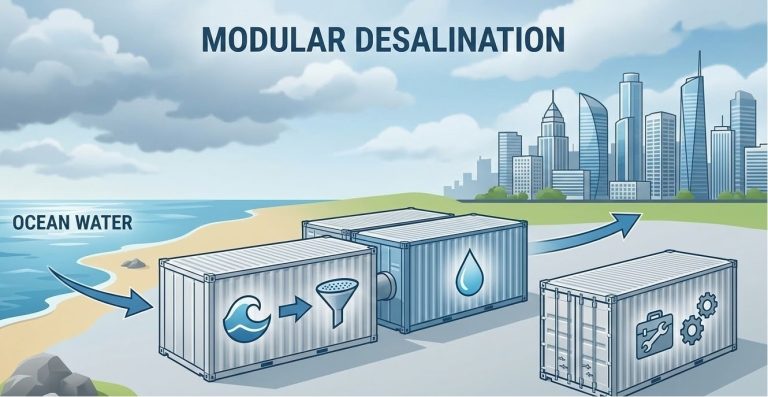
Modular and Smart Plant Design
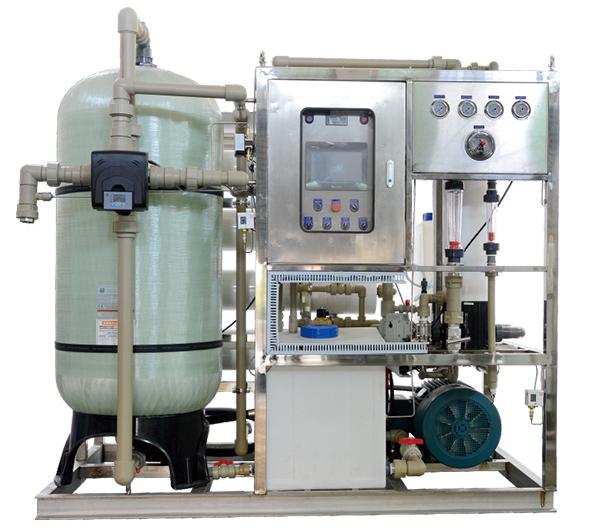
We provides ready-to-assemble options, like the FSHB-100. Such plans stay small, placed on movable bases, and tested completely before shipping from the plant. Putting them in place happens fast and needs little work at the spot. In turn, these setups take up less room on the ground, cut down on waste from building work, and lower risks during regular use.
Desalination for Different Use Scenarios
Coastal Cities and Industrial Parks
Big UF-RO desalination plants act as key water suppliers for work zones. These installations deliver clean water for cooling machines or production tasks.
Islands, Resorts, and Remote Communities
Options like the FSHB-150 or FSHB-100 fit well for hotels on islands and out-of-the-way towns. Tight space often creates issues in those places. The simple structure lets these machines fit in easily with the surroundings.
Emergency and Mobile Water Supply
Units like the FSHB-60A or FSHB-25A can be easily integrated into containerized layouts. This flexibility supports rapid deployment in emergency conditions or temporary sites, enabling teams to quickly turn seawater into drinking water when conventional water infrastructure is unavailable.
Comparing Desalination with Other Water Supply Solutions
Desalination vs Groundwater Extraction
Pulling water from underground sources costs less to start. But, using it too much wears out those hidden supplies. When linked with steps to protect nature, desalination gives a steadier choice.
Desalination vs Water Reuse and Recycling
Cleaning and using wastewater again saves a lot of resources. Still, it requires setting up treatment plants already there. For far-off locations missing city water lines, desalination works better.
Conclusion
Desalination brings possibilities as well as responsibilities. Being able to turn seawater into drinking water through fitted reverse osmosis setups opens a firm route for areas facing severe water shortages. Even so, lessening harm to the environment needs smart planning. HOSON offers a range of reliable seawater desalination facilities ans solutions, covering better membranes, power-smart parts, clever ready-to-assemble layouts, and good ways to deal with brine.
FAQ
Q: Is seawater desalination suitable for small islands without infrastructure?
A: Yes. Compact systems like the FSHB-60C are ideal for small islands due to their small footprint (2.25m x 1.25m x 2.04m), low power consumption (18.5 kWh), and plug-and-play design.
Q: How much energy does it take to desalinate seawater?
A: Energy needs vary by model. For example, the FSHB-240 consumes 52.5 kWh to produce 240 tons of freshwater per day, thanks to energy recovery technologies that reduce consumption.
Q: What is brine discharge and why is it a problem?
A: Brine is the concentrated saltwater left after desalination. If discharged improperly into oceans or rivers, it can harm marine life by changing salinity and oxygen levels.
Q: Can desalinated water be used for industrial purposes?
A: Absolutely. Systems like the FSHB-320 produce high-quality water suitable for power plants, petrochemicals, and electronics manufacturing.
Q: Are customized desalination solutions available for different needs?
A: Yes. HOSON provides customized equipment based on site conditions, capacity needs, water quality, and space constraints, ensuring optimal performance for every application.