

Inleiding
A modular plant should be purchased from a verified process basis, not from a container size or headline flow alone. A modular potable water plant specification must define feedwater variation, product-water limits, membrane material, pressure limits, disinfection, controls, factory testing, site interfaces, and commercial scope. This turns modular construction into a specification tied to measurable water-quality and performance requirements rather than deployment speed alone.
Define the Treatment Duty Before Selecting Hardware
Start a modulaire drinkwaterinstallatie specification with the treatment duty. One feedwater sample is not enough: include seasonal analyses, hourly and daily demand, peak factors, storage strategy, local limits, and operating hours. Turbid or algae-bearing surface water calls for a different pretreatment basis than stable groundwater. If the problem is dissolved salt, particle removal may need to be followed by reverse osmosis (RO).
Treat compliance as an acceptance test, not a footnote. Record the regulator, sampling method, and standard. The World Health Organization’s 2026 guidelines can frame risk, but country permits govern. Ask for product-level evidence for wetted components where required; a company quality credential answers a different question.
Procurement data sheet essentials
- Feedwater: turbidity, pH, temperature, total dissolved solids, organics, iron, manganese, hardness, microbial risk, and seasonal extremes.
- Duty: average and peak flow, recovery basis, product-water limits, redundancy, storage, backwash demand, and waste route.
- Site: voltage, frequency, ambient temperature, elevation, enclosure, foundation, lifting, drainage, access, and communications.
Compare UF Membrane Materials and Operating Windows
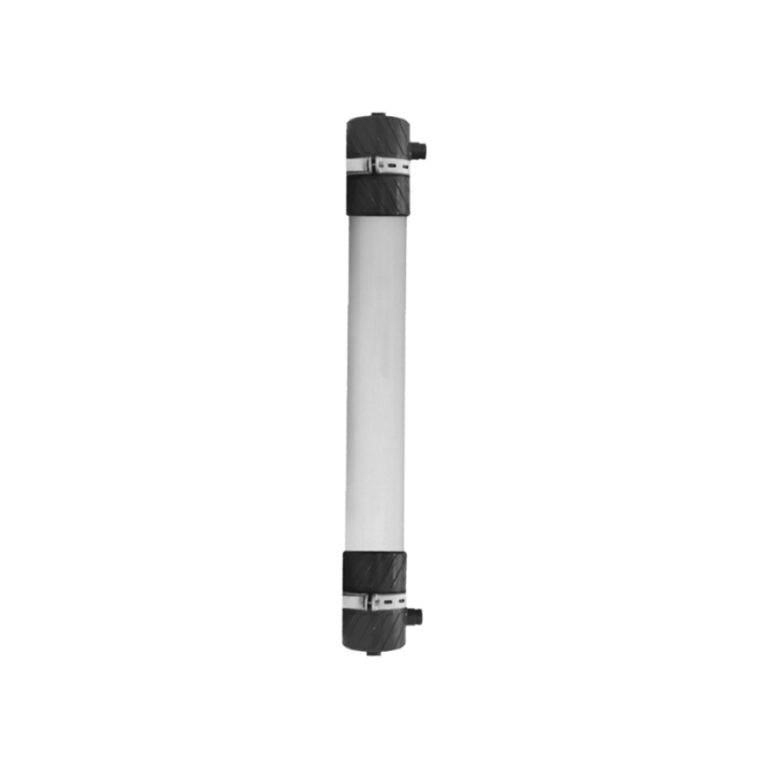
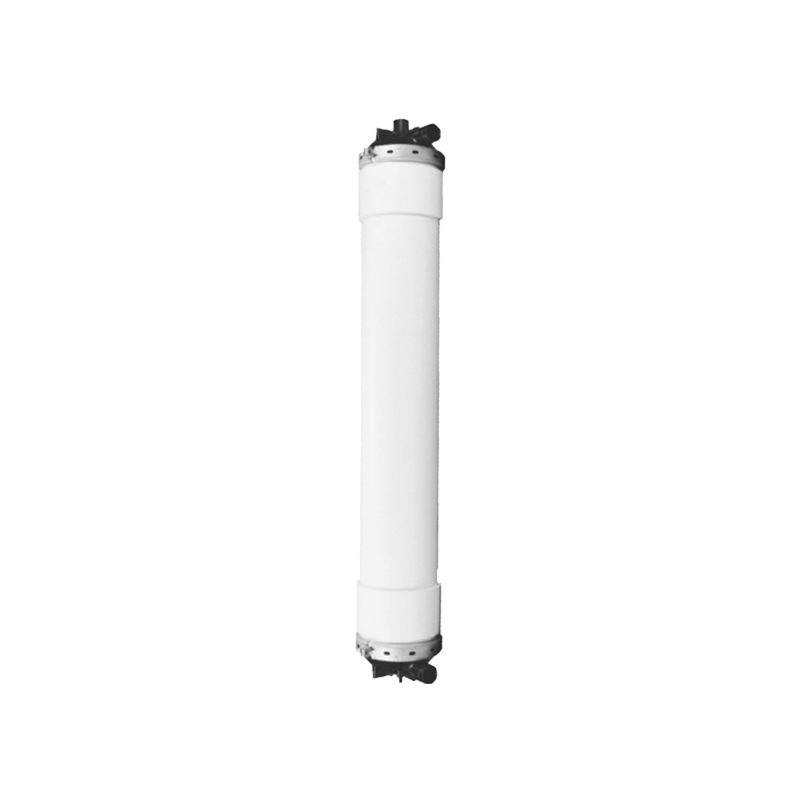
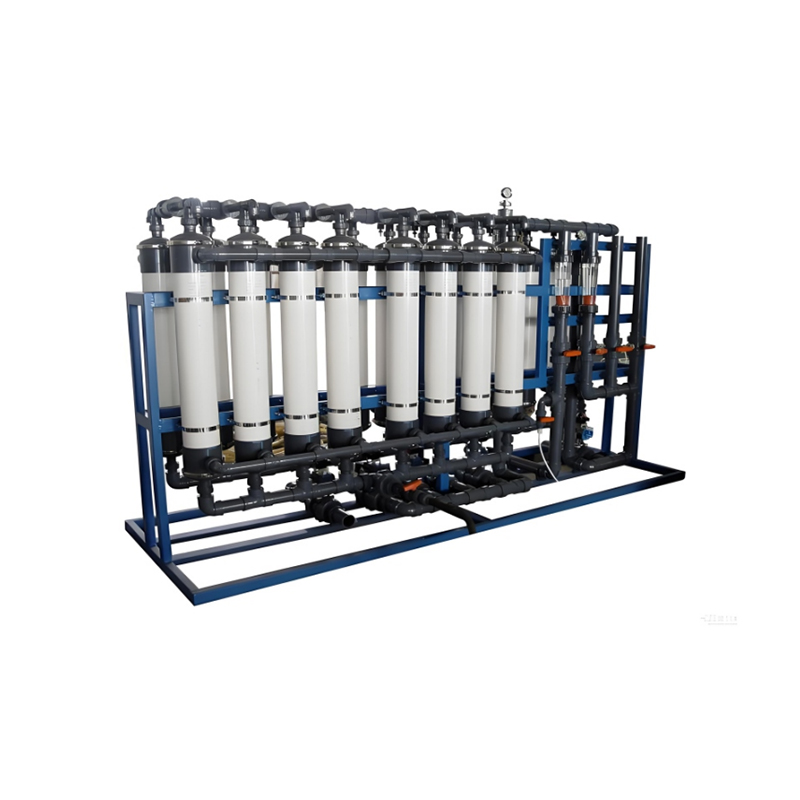
Think of an ultrafiltration membrane as a gate for suspended solids, colloids, and many microorganisms, not as a salt-removal step. HOSONWATER’s LH pressure-UF family uses a PVC alloy membrane with a 0.01 μm nominal pore size. Its published maximum limits are 300 kPa inlet pressure, 120 kPa TMP, and 250 kPa backwash pressure. The published data specifies a chemical-cleaning pH range of 1–14 and a temperature range of 0–40 °C. The allowable continuous operating pH range should be confirmed separately with the membrane manufacturer.
The comparable LW pressure-UF family uses a polyvinylidene fluoride (PVDF) membrane with a 0.02 μm nominal pore size. The published maximum limits remain 300 kPa inlet pressure, 120 kPa TMP, and 250 kPa backwash pressure, while the published data lists a pH tolerance of 1-13 and a temperature range of 0-40 °C. Under their stated conditions, both families list product water turbidity below 0.1 NTU and SDI₁₀ below 3. Those are model references, not a blanket plant guarantee.
PVC Alloy vs. PVDF: Key Selection Factors
The useful question is not which polymer wins in every project; none does. LH pairs the smaller nominal pore size with a 50-200 L/(m²·h) design filtration flux range. LW lists 40-200 L/(m2.h), with 56 m2 and 77 m2 module examples. Size the modular water purification system only after confirming the validated flux, fouling allowance, backwash frequency, cleaning chemistry, train redundancy, and replacement access.
| Specificatie | LH pressure UF | LW pressure UF |
| Membrane material | PVC alloy | PVDF |
| Nominal pore size | 0,01 μm | 0,02 μm |
| Design filtration flux | 50–200 L/(m²·h) | 40–200 L/(m²·h) |
| Chemical cleaning pH | 1–14 | To be confirmed |
| Continuous operating pH | To be confirmed by membrane manufacturer | 1–13 |
| Temperature | 0–40°C | 0–40°C |
| Pressure limits | 300 / 120 / 250 kPa | 300 / 120 / 250 kPa |
Chemical-cleaning pH and continuous operating pH should be specified separately. For the LH membrane, pH 1–14 refers to the published chemical-cleaning tolerance and should not be treated as a continuous operating range. The allowable continuous operating pH, together with applicable temperature and exposure-time limits, should be confirmed by the membrane manufacturer.
Build the Process Around the Feedwater
Every process step in a modular water purification system should have a defined function and acceptance point. Screening protects pumps. Coagulation or clarification tackles colloids, an ultrafiltration membrane becomes the particle barrier, and activated carbon can address selected organics or oxidant residuals. RO handles dissolved salts; final disinfection protects storage and distribution. UF should not be specified as a salt-removal process. It retains suspended and colloidal matter, while dissolved ions require a different separation process such as RO.
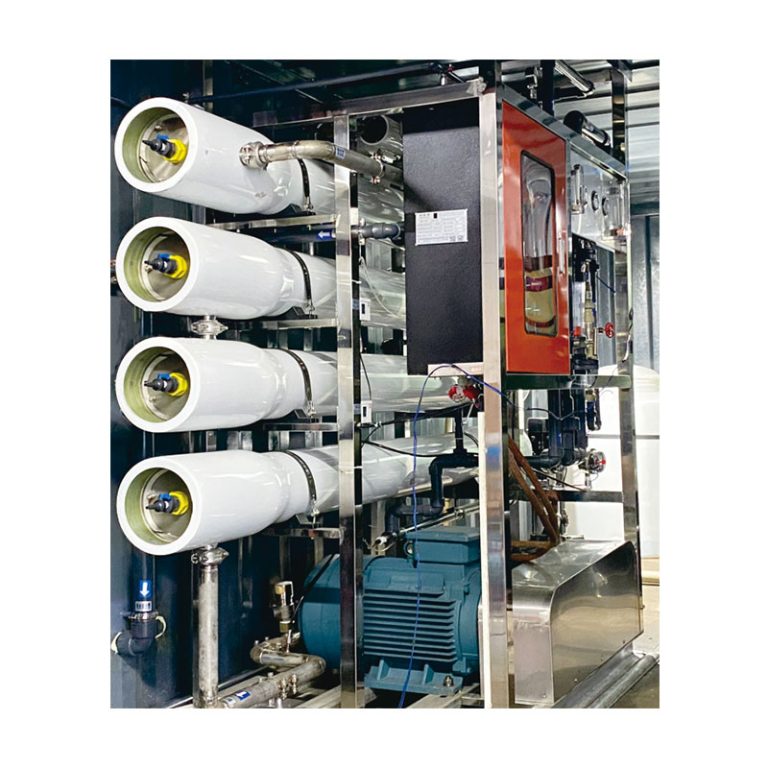
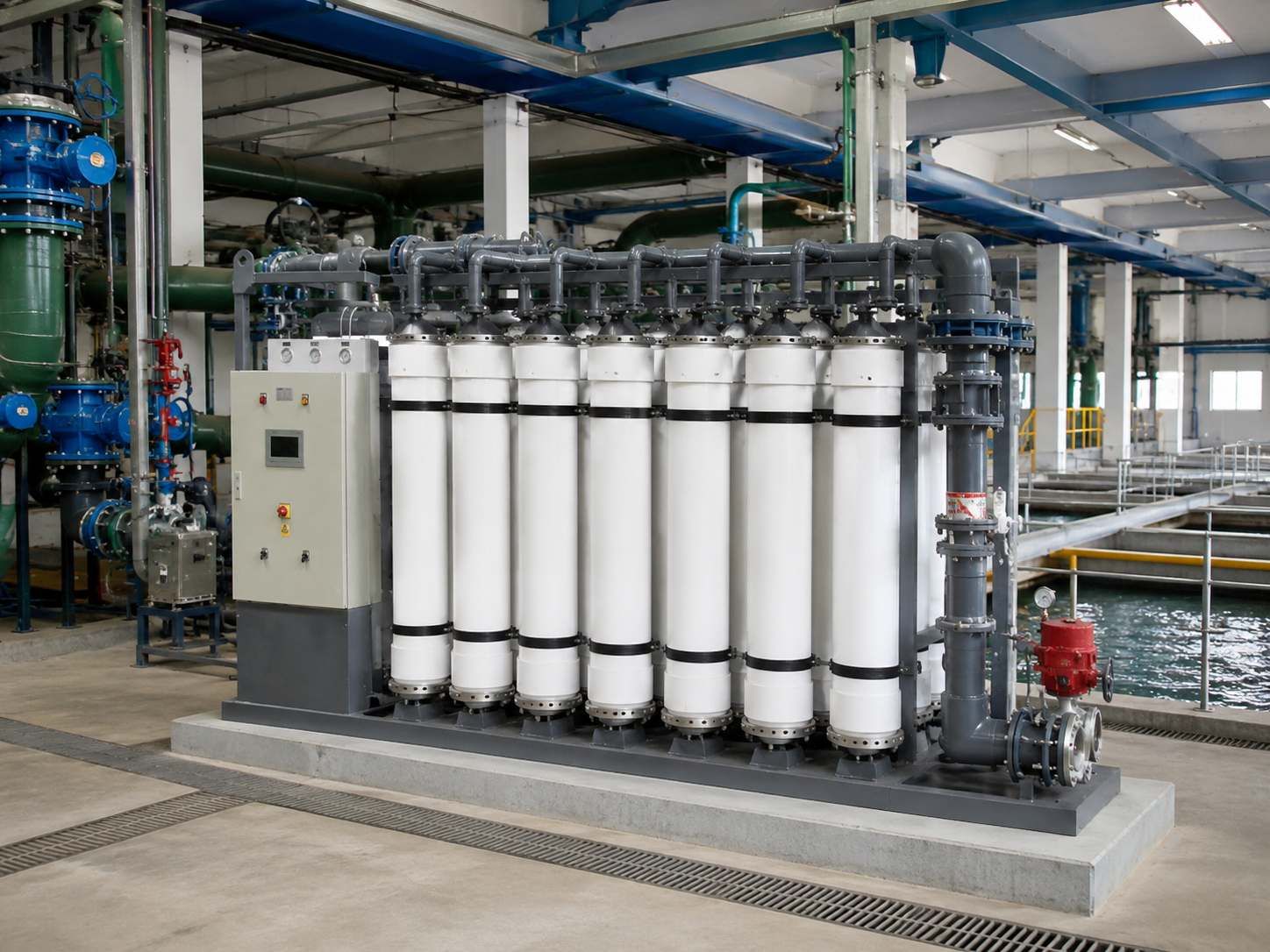
The physical package also needs a precise definition. Containerized equipment is enclosed for transport and weather protection, while skid-mounted design integrates equipment on an open frame. Prefabricated modules may use either form. Modular water treatment systems should therefore state enclosure rating, ventilation, corrosion protection, internal access, pipe battery limits, lifting points, and which tanks or civil works remain outside the supplier’s scope.
Make Factory Testing Useful at Site
FAT checks that transfer to commissioning
- Verify the process flow, membrane model list, instruments, electrical standard, control sequences, alarms, interlocks, and emergency-stop functions.
- Run the agreed test conditions, then record feed and filtrate flow, turbidity, pressure, TMP, backwash, cleaning logic, leakage, and trends.
- Before shipment, freeze the approved drawings, software version, calibration records, spares list, manuals, and accepted deviations.
Factory Acceptance Testing (FAT) proves assembly and control logic under the documented factory conditions. Site Acceptance Testing (SAT) verifies the installed modular water treatment plant under actual feedwater, utility, storage, distribution-pressure, and operating conditions. The factory and on-site acceptance records should use the same tag names and acceptance calculations so a buyer can distinguish shipping damage or site conditions from an equipment defect.
Plan Commercial Terms and Site Interfaces
Commercial clarity helps prevent a technically sound package from arriving without the site interfaces or services needed for commissioning. The quotation should separate manufacturing, packing, freight, customs, unloading, installation, commissioning, and training. For this project framework, the shipping period is planned separately at about one month, followed by a stated 10-day installation and commissioning window after arrival when the site, utilities, lifting, and interfaces are ready. The final contract must confirm the applicable schedule rather than treating it as universal.
List MOQ, production lead time, Incoterms, export packing, warranty, consumables, membrane preservation, spares, document language, and support mode in the quotation. HOSONWATER’s service scope can include water analysis, feasibility review, design, installation, commissioning, training, and technical support. A responsibility matrix separates included work, options, and local-contractor duties.
Request a Traceable Proposal
For a comparable modular water treatment plant proposal, send the feedwater file, design duty, local standard, site layout, power data, destination, and acceptance tests. The return package needs a process basis, equipment and membrane schedules, utilities, boundary drawing, FAT/SAT plan, packing list, lead-time schedule, warranty, and after-sales matrix. That record is comparable; a price tied only to cubic metres per day is not.
Veelgestelde vragen
Why is TMP important in an ultrafiltration system?
TMP shows the pressure driving water through an ultrafiltration membrane. A rising TMP under comparable flow and temperature conditions can indicate membrane fouling or incomplete backwash, so defined trend limits should trigger inspection or cleaning before operation becomes unstable.
How is a modular water purification system different from a container?
A modular water purification system is a scalable process architecture; a container is only one enclosure option. The module may sit on an open skid, inside a container, or in a prefabricated room. A usable tender defines both the process arrangement and its physical construction.
How are modular water treatment systems shipped?
Modular water treatment systems may be shipped as enclosed containers, open skids, or separated modules. Buyers should confirm packed dimensions, gross weight, lifting points, preservation, vibration protection, customs documents, unloading equipment, and storage conditions.