

介绍
Coastal desalination projects often struggle when pretreatment is treated as a secondary step rather than a key control stage for RO performance. UF improves seawater desalination by stabilizing turbidity, lowering Silt Density Index (SDI) risk, and providing a cleaner feed stream before the high-pressure SWRO stage. For buyers in Southeast Asia, Africa, and the Middle East, that stability often matters more than the rated output stated in specifications.
Why UF Pretreatment Matters Before SWRO
A reliable 海水淡化 train starts by controlling particles, colloids, algae, and microbial load before seawater enters the high-pressure RO stage. Conventional sand filters can work, but storm-driven turbidity, coastal algal events, and variable intake quality can push them outside the designed operating range.
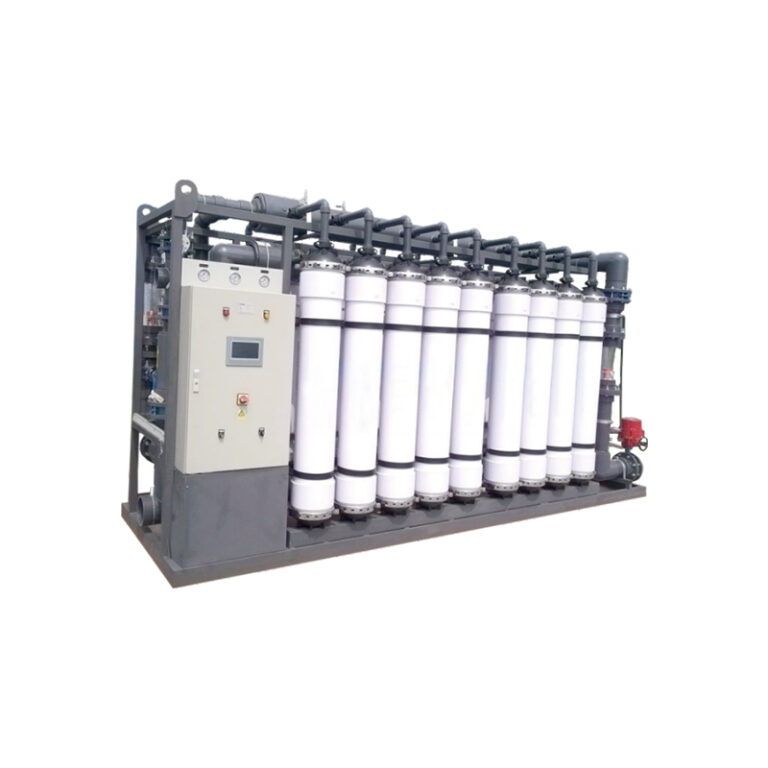
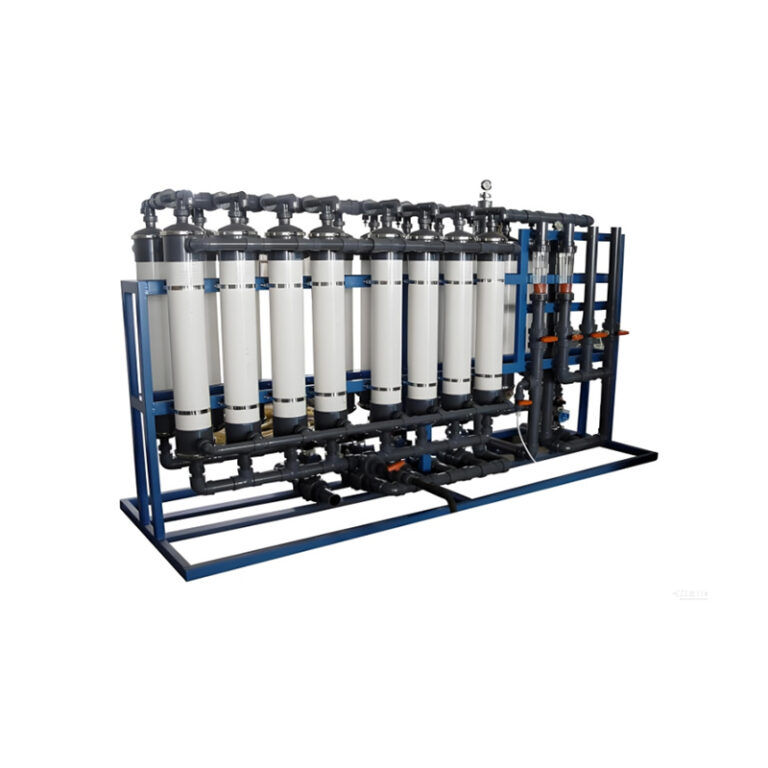
The ultrafiltration membrane acts as a physical barrier prior to SWRO. HOSONWATER employs UF as one of its main RO pretreatment methods since it is capable of lowering the risk of fouling at the later stages, ensuring the stability of RO feed quality, and reducing the chemical treatment frequency.
Pressure, flow, and transmembrane-pressure trends should be recorded from commissioning onward. These data show whether an ultrafiltration membrane is losing permeability because of suspended solids, biological loading, or incomplete backwash. Trend limits must trigger inspection or cleaning before unstable filtrate reaches the cartridge filters and SWRO stage.
Key selection signals
- Feed water TDS, turbidity, algae risk, and seasonal suspended solids should be confirmed before equipment sizing.
- UF filtrate turbidity and SDI targets should be linked to RO membrane warranty and cleaning strategy.
- Recovery rate, antiscalant dosing, cartridge filtration, and concentrate discharge should be reviewed as one operating package.
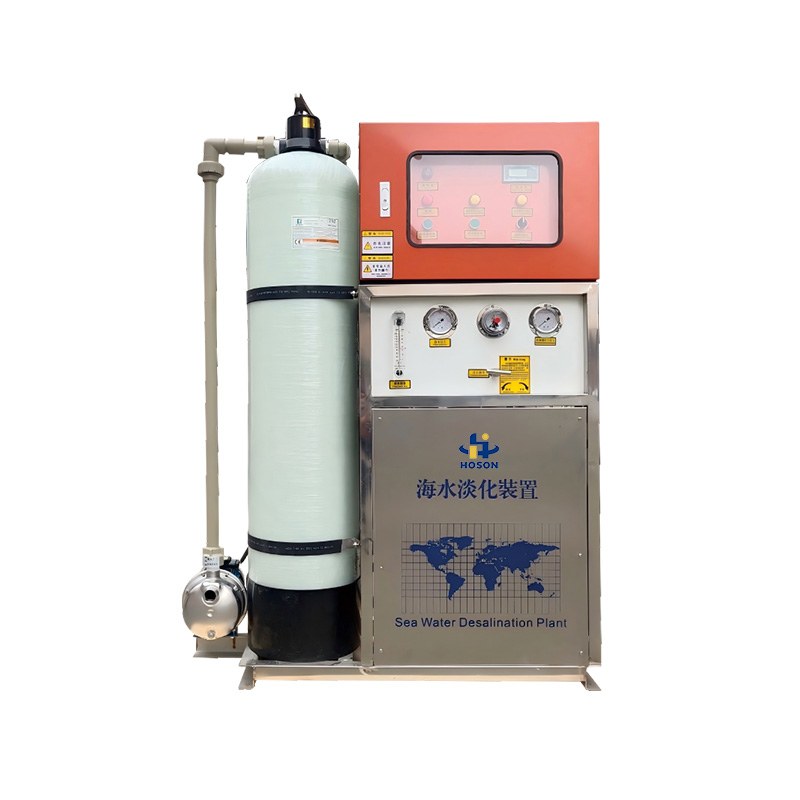
How UF Changes the Operating Risk Profile
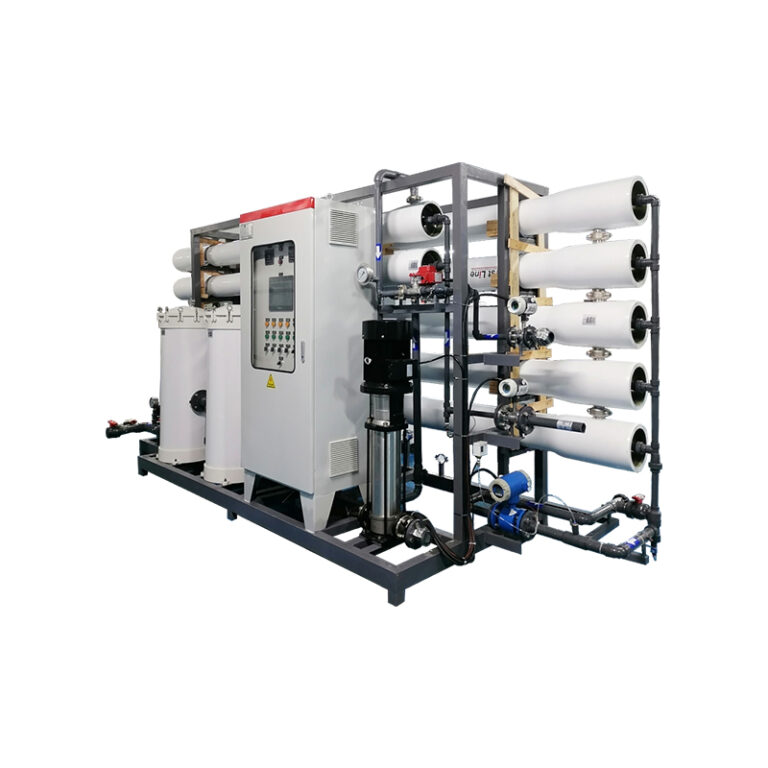
UF modifies the risk factor by minimizing the operator’s discretion on RO feed water quality. The design of a seawater treatment system utilizing coagulation, UF, cartridge filtration, RO, energy recovery, and disinfection provides the operator with several means of control rather than one filter medium barrier.
This structure is useful in island resorts, coastal communities, mining camps, and industrial parks where intake water can change quickly. HOSONWATER designs UF-RO lines as integrated systems rather than isolated components, so pretreatment, high-pressure pumping, membranes, energy recovery devices (ERD), and controls are evaluated together.
| UF control point | Tender requirement | Acceptance evidence |
| UF membrane barrier | Model-specific material and nominal pore size | Approved technical datasheet and module list |
| Filtrate quality | Project turbidity and SDI guarantees | Witnessed FAT and SAT sample records |
| TMP and cleaning | Design limits, alarms, backwash, and CIP logic | Baseline trend plus functional tests |
| UF selection | Variable colloids, algae, or media-filter instability | Intake history, pilot evidence, or documented design basis |
Warm coastal intakes require particular attention to biological fouling. Designers should define intake screening, coagulation conditions, backwash water quality, cleaning chemicals, and shutdown preservation as one control sequence. An effective UF barrier does not remove the need for disciplined operation; it makes deviations easier to measure and correct.
Specification discipline
Specification discipline prevents confusion between power and energy. Product power should remain in kW, while energy consumption belongs in kWh per cubic meter only when actual hourly operation and recovery conditions are calculated. This distinction is important when a buyer compares desalination systems under different voltage standards, salinity levels, and local electricity prices.
Published FSHB specifications are model-specific. Buyers should use the exact product page and approved technical datasheet for capacity, feed TDS, recovery, salt rejection, power, voltage, and dimensions, then confirm post-treatment, local drinking-water rules, and remineralization before procurement.
Factory acceptance should verify the model-specific flow path, instruments, alarm logic, pressure protection, electrical standard, and documented test conditions. Site acceptance should then confirm actual feed salinity, permeate quality, operating pressure, recovery, noise, leakage, and operator handover. The two records prevent catalogue values from being mistaken for unconditional field guarantees.
Where Modular SWRO Fits Remote Procurement
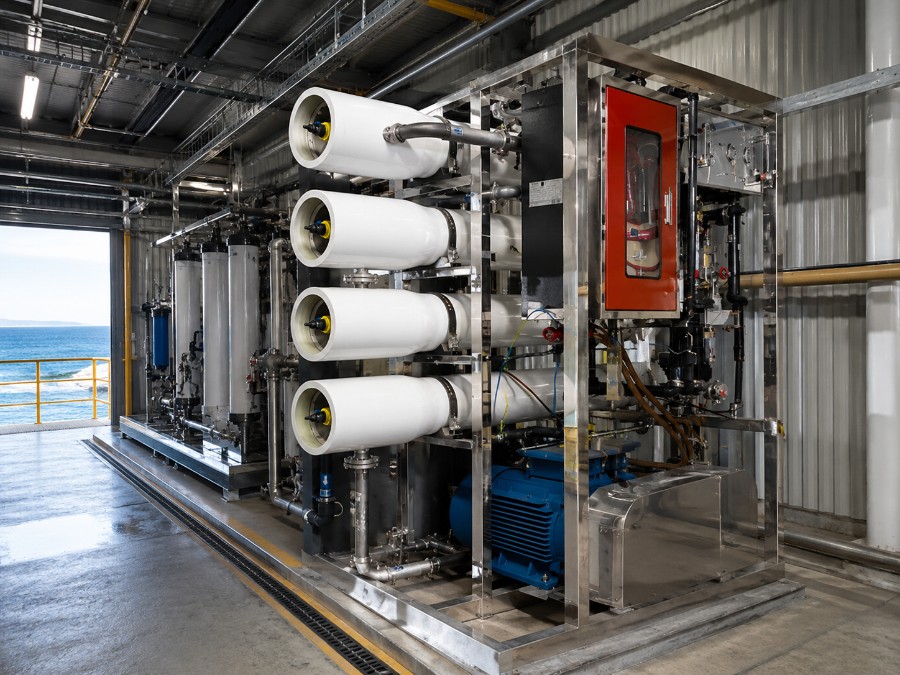
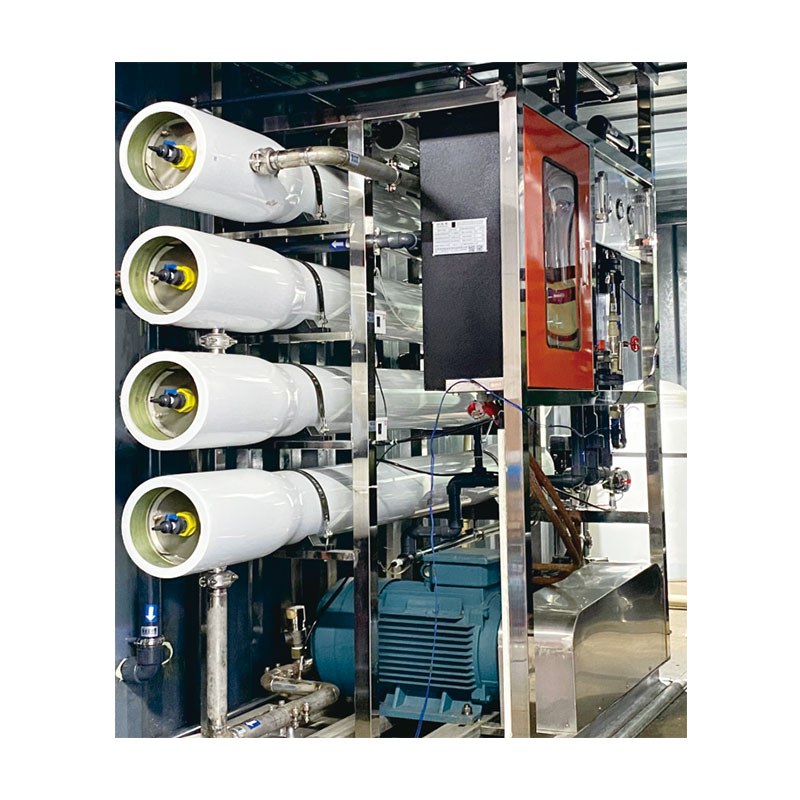
A. 待售海水淡化系统 should be judged by commissioning conditions, not only daily output. Containerized modular desalination units can reduce on-site civil work, protect equipment during transport, and make installation more predictable when sites lack local construction resources.
A modular desalination plant also helps phased purchasing. A resort, utility, or coastal industry can start with the required capacity, then add modules as demand grows. This suits markets where financing, grid capacity, and distribution pipelines are often built in stages.
Skid-mounted and containerized arrangements solve different logistics problems. A skid is accessible for integration inside an existing building, while a container provides transport protection and a defined enclosure. Procurement documents should state lifting points, ventilation, drainage, ambient-temperature limits, foundation loads, access clearances, and the site connections supplied by others.
What buyers should confirm
Buyers should confirm intake depth, pretreatment chemical availability, spare cartridge supply, cleaning chemicals, discharge route, power quality, and operator training before shipment. HOSONWATER’s full-cycle service model covers water analysis, feasibility study, design, installation, commissioning, training, and lifetime technical support.
HOSONWATER’s published ultrafiltration membrane information lists PVC alloy or PVDF, nominal pore sizes of 0.01 and 0.02 microns, and, for relevant pressure-UF products, filtrate targets below 0.1 NTU and SDI below 3. Treat these as product-specific references, not universal guarantees; require the selected model data sheet, feed conditions, and FAT/SAT test method.
What to Send for Engineering Review
Share feed water TDS, daily demand, power standard, site photos, discharge limits, commissioning deadline, delivery term, packaging, warranty scope, recommended spares, documentation, and required compliance evidence with HOSONWATER. A precise seawater treatment system proposal can then separate required equipment from options and identify whether UF-assisted SWRO is justified.
常见问题解答
Is a modular desalination plant suitable for islands?
A modular desalination plant is suitable when the island has confirmed intake conditions, a stable power plan, service access, and a compliant concentrate discharge route.
When should seawater treatment system data be checked?
Seawater treatment system data should be checked before design, before production release, after factory testing, during commissioning, and during early operation.
Can UF reduce RO cleaning frequency?
UF can reduce particulate and colloidal loading on RO membranes, but cleaning frequency still depends on feed water biology, scaling control, operating recovery, and maintenance discipline.
What makes a desalination system for sale credible?
A credible desalination system for sale provides model-specific capacity, recovery, power, feed TDS range, water quality limits, voltage, dimensions, packing data, and service responsibilities.