

An ozone system can appear straightforward at the proposal stage: specify a generator, provide a contactor, and define the required dose. Actual operation involves a wider set of process and safety variables. Changes in feedwater quality alter ozone demand, gas-liquid mass transfer is never complete, ozone does not provide a persistent disinfectant residual, and maintenance directly affects both process performance and site safety. When these factors are addressed during process design, ozone can be applied with clearly defined operating limits—and rejected where another treatment barrier offers a more appropriate risk and lifecycle-cost profile.
Why ozone disadvantages appear at system level
Generator nameplate capacity indicates ozone production capability, but it does not define the ozone dose actually transferred to the water. Actual treatment performance depends on ozone production, transfer efficiency, ozone demand, contact conditions, and reaction kinetics. A complete ozone water treatment system also requires feed-gas preparation, ozone injection, a contactor, off-gas collection and destruction, ventilation, instrumentation, and, where required, downstream treatment. If these functions are omitted from the design basis, the resulting gaps are typically transferred into commissioning risk, operating cost, or safety exposure.
Ozone also differs fundamentally from disinfectants intended to maintain a residual in storage and distribution. It reacts rapidly and decays after the contact stage, so it does not normally provide persistent protection throughout downstream storage or distribution. The wider set of water treatment equipment must therefore protect finished water after ozone has done its immediate work.
Four Operating Constraints Require Specific Design Controls
| Operating constraint | Why it develops | Design response |
| Variable ozone demand | Natural organic matter, reduced species, and other reactive constituents increase ozone demand | Test representative feedwater and establish ozone dose and control limits |
| Incomplete gas transfer | Injector performance, gas dispersion, contactor hydraulics, temperature, and pressure affect gas-liquid mass transfer | Provide an appropriate downstream barrier or secondary disinfectant residual where storage or distribution requires continued protection |
| No persistent disinfectant residual | Ozone decays rapidly after treatment | Add an appropriate downstream barrier or residual where the supply network requires it |
| Hazardous off-gas | Untransferred ozone may leave the contactor in the off-gas stream | Provide closed off-gas collection, an appropriately sized ozone destruct unit, ventilation, and ambient ozone monitoring |
Feedwater chemistry governs by-product risk
Two source waters can require the same finished-water quality while presenting substantially different ozone demand. Water containing higher concentrations of natural organic matter or reduced species can exhibit substantially higher ozone demand. Where bromide is present, ozonation may also promote bromate formation under unfavorable operating conditions. Bench-scale or pilot-scale testing should use representative source water across the expected operating range and evaluate ozone dose, pH, temperature, contact time, treatment performance, and relevant by-products together.
Instrumentation should be selected against the stated treatment objective rather than added as a generic monitoring package. ORP should not be used as the sole parameter for verifying control of a specific oxidation or disinfection objective. The monitoring plan should define the controlled parameter, sampling location, alarm and action limits, verification method, and the applicable local drinking-water or discharge requirement.
Gas handling and materials define site safety
Gas-side safety depends on the integrity, material compatibility, containment, and ventilation of the complete ozone gas path. Seals, tubing, valves, instruments, contactors, and ozone destruct units must be compatible with the expected ozone concentration, gas composition, moisture level, and operating pressure. Ambient ozone detection is an additional safeguard; it does not replace closed contactor design, controlled vent routing, or effective off-gas destruction. Ventilation, alarm interlocks, and a defined safe-shutdown sequence should be included in the control philosophy.
Routine maintenance requirements should be reflected in the plant layout as well as in the operating and maintenance procedures. An industrial ozone generator for water treatment depends on specified feed-gas quality, adequate cooling, calibrated instrumentation, and safe access to the injection and gas-handling components. Maintenance deficiencies may first appear as unstable ozone concentration, reduced transfer efficiency, elevated ozone in the off-gas, or instrument alarms before a clear finished-water trend develops.
What Must Follow Ozonation When No Persistent Residual Remains
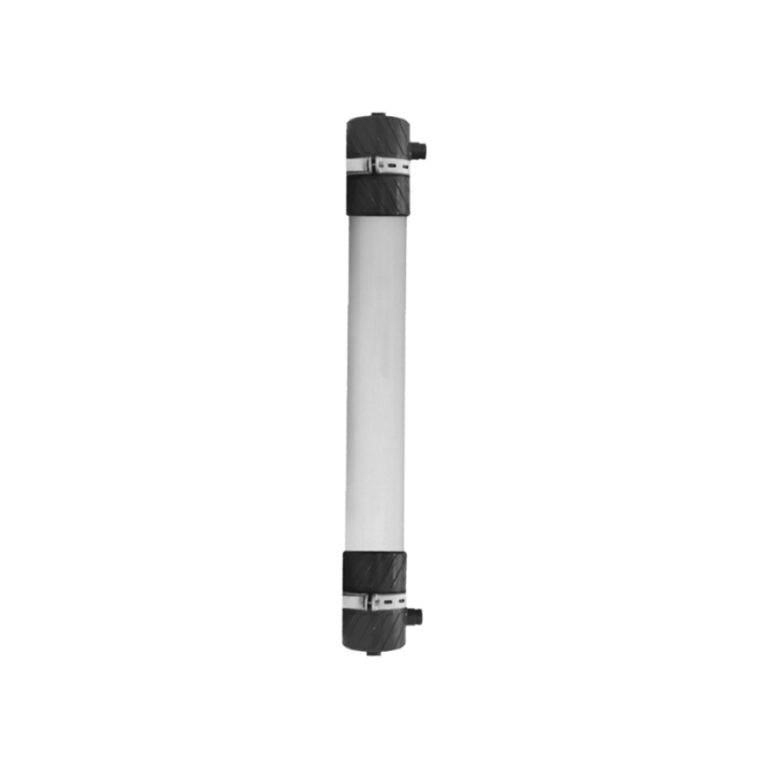
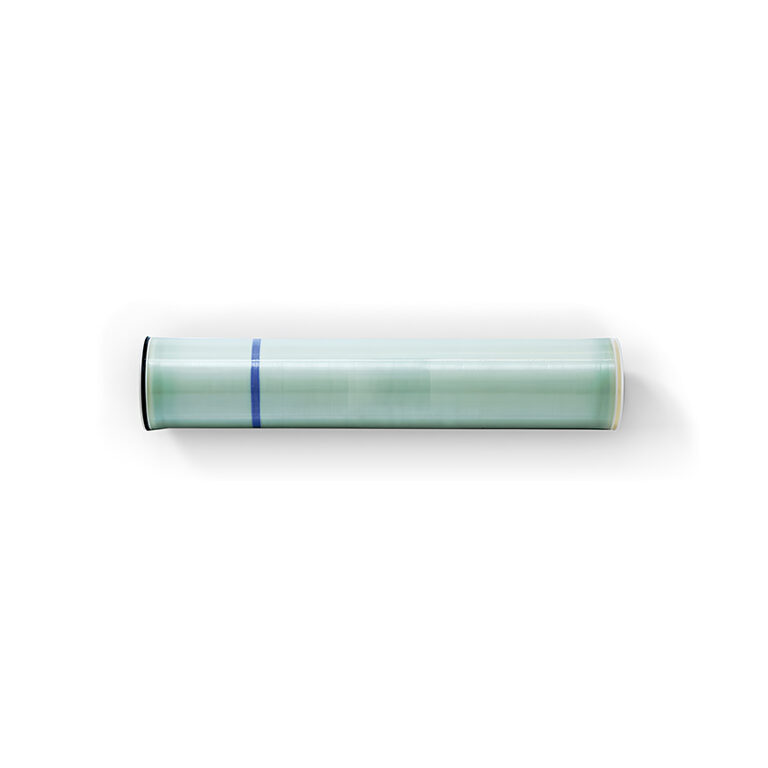
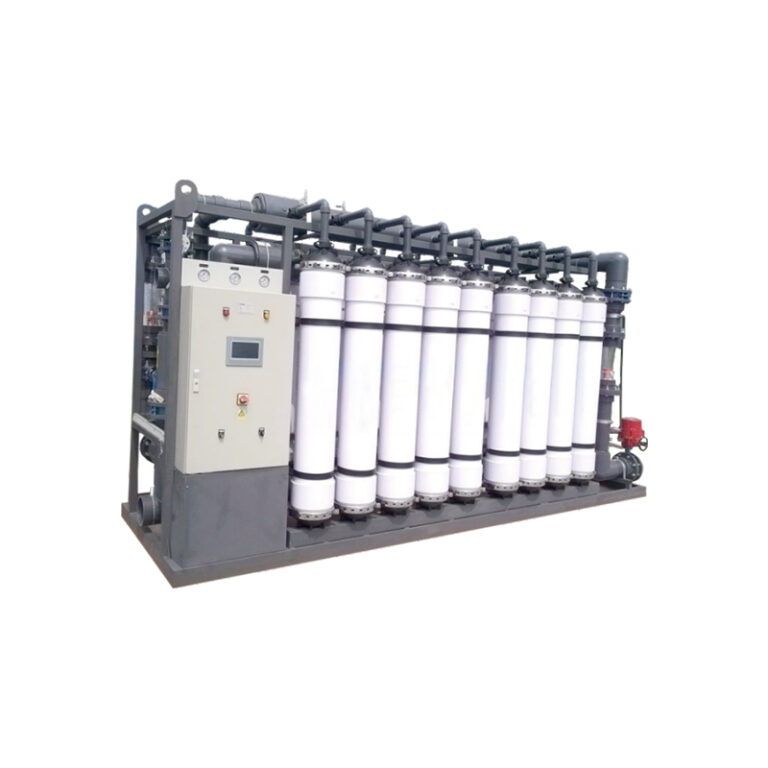
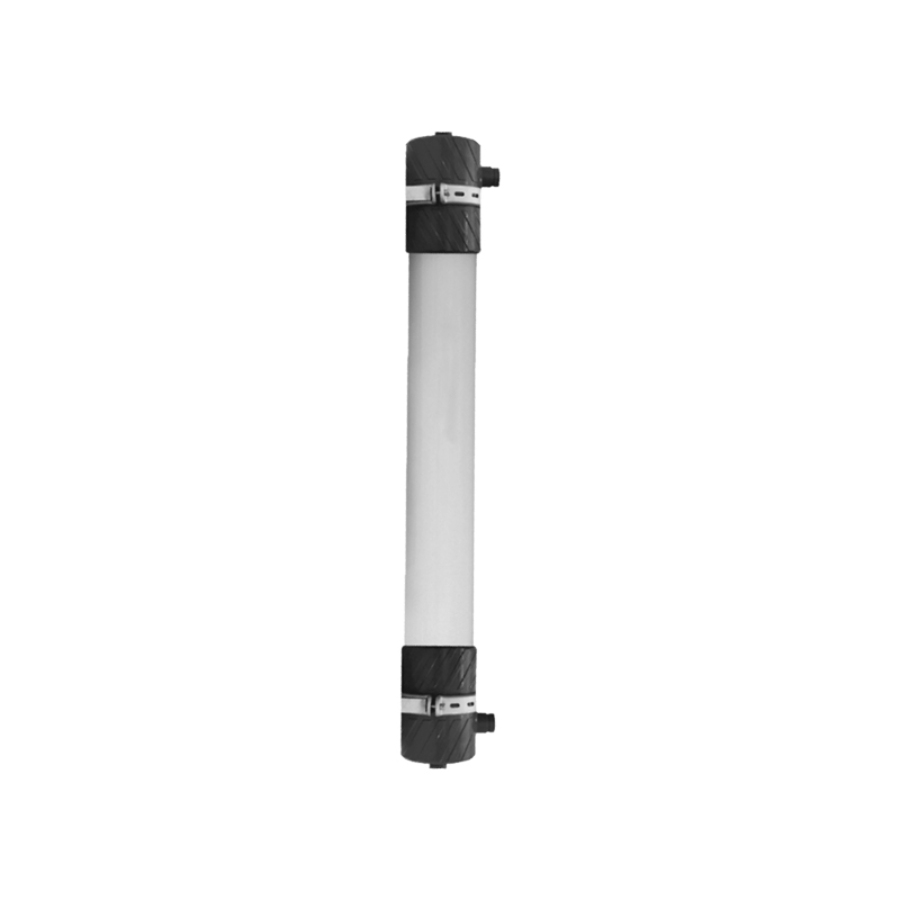
Each barrier should have one stated job. Pretreatment steadies solids and oxidant demand; the contactor delivers the verified reaction; filtration captures particles or biodegradable material created by oxidation; and another barrier protects storage or distribution when a residual is needed. With that basis established, HOSONWATER can integrate ozone, ultrafiltration, and modular treatment without presenting the generator as a self-contained cure.
Controls should convert process conditions into operating decisions. A smart water control system can collect relevant signals, trend ozone output and water quality, and issue alarms, but automation does not replace process validation. The control narrative should specify what each sensor protects, how bad data is detected, and which condition triggers a safe stop.
When ozone earns its lifecycle cost
Ozone earns its cost when a measured problem genuinely needs rapid oxidation. That may be a known taste-and-odor compound, persistent color, an oxidizable contaminant, or a filtration step that performs better after oxidation. The budget then has to cover the whole duty: air or oxygen preparation, power, consumables, cooling, instruments, off-gas destruction, and staff capable of maintaining them.
The alternative must be compared on the same water-quality basis. For industrial water treatment systems, the lowest purchase price can be misleading if it omits pretreatment, residual protection, sensor replacement, or by-product monitoring. A reliable decision model prices the complete process train and the consequences of an off-spec event.
The practical decision for plant owners
A plant owner can use the disadvantages as a practical go/no-go list. Confirm the treatment target, test water from the real operating range, close every off-gas route, decide what follows the contactor, and price the entire train. Until those items have owners and acceptance criteria, choosing an ozone generator for water purification is premature.
Once those questions are closed, an integrator can turn the water analysis into a testable process basis. HOSONWATER can review ozone alongside ultrafiltration, modular construction, and remote monitoring, with every control point and service responsibility stated before the equipment reaches site.
常见问题解答
What is the main disadvantage of ozone water treatment?
Complexity is the broadest drawback. The plant has to make ozone on site, dissolve it, contain the remaining gas, and protect the water afterward because the oxidant does not leave a durable residual.
Is ozone better than chlorine for every application?
No. Ozone reacts quickly, while chlorine can continue protecting water in a network. The choice depends on what must be treated, the distribution arrangement, likely by-products, and local requirements.
Can ozone produce bromate?
It can. Bromide in the source water may be converted to bromate under unfavorable chemistry and dosing. Test the actual water and agree on control limits before committing to the process.
How should ozone off-gas be managed?
Capture it from a closed contactor and send it through a correctly sized destruct unit. Room ventilation, leak alarms, interlocks, and safe access are separate safeguards, not substitutes for off-gas destruction.
When is ozone unlikely to be economical?
The case weakens when solids or oxidant demand drive a high dose, a simpler process meets the same goal, or the site cannot support dependable instruments and specialist maintenance.