

World populations keep growing fast. Climate shifts change usual rain and weather habits. As a result, freshwater shortages stand out as a key issue this century. Water covers about 70% of the planet’s surface. Yet only roughly 2.5% of that amount counts as fresh. Much of this fresh share sits trapped in ice sheets or buried deep in the ground. This tough fact draws attention worldwide to our biggest supply: seawater.
Right now, the conversion of seawater into drinking water goes beyond a high-end choice for rich, dry countries. It serves as a vital step for worldwide water safety. Advanced desalination water treatment methods let us change huge sea supplies into vital daily needs.
What is the Conversion of Seawater into Drinking Water and Why Does It Matter Now?
The conversion of seawater into drinking water means pulling out salts and minerals from salty liquid. This makes it fit for people to drink or for factory work. In the past, workers used heat-based boiling to gather steam. But that way took a lot of power and cost too much.
Today’s desalination water treatment relies on Reverse Osmosis (RO) methods. These use special thin barriers and strong pumps. As a result, RO setups remove tiny dirt bits, germs, and salt particles with great speed. This change counts a lot these days. Old water spots like ground layers and streams run low quicker than nature can refill them.
Coastal factories, beach hotels, and far-off army bases gain from desalination water treatment. It brings a steady water flow. Such supply does not depend on rain amounts or land features.
How Does Desalination Water Treatment Work to Solve the Global Water Crisis?
Modern 海水淡化处理 centers on careful building work and barrier knowledge. At HOSON, the focus goes past just offering a single part. Instead, it involves planning full setups that use each bit of water and power wisely.
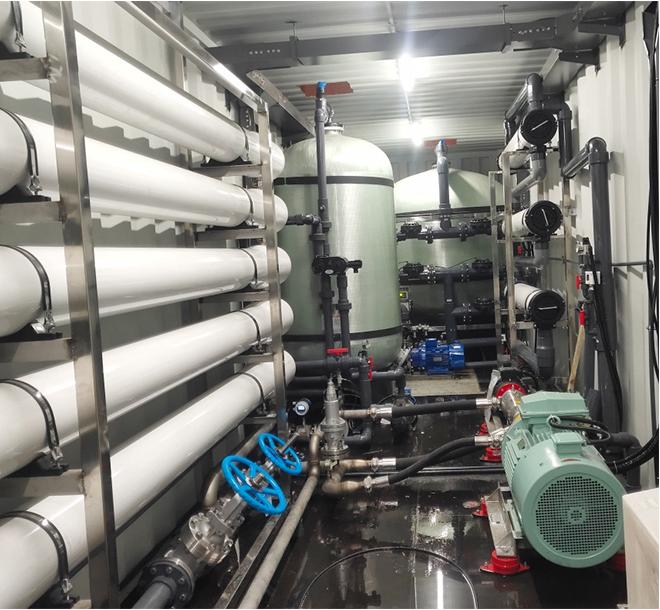
Consider the FSHB-320 Industrial Reverse Osmosis Seawater Desalination System. This unit fits big output demands. It creates 320 tons of clean water each day (TPD). Its strong points come from three core tech bases:
- High Salt Rejection: The FSHB-320 uses top RO barriers. Thus, it reaches a 99.2% salt block level. Even input water with 40,000 ppm Total Dissolved Solids (TDS) turns into very clean output. This beats basic drink rules.
- Hydraulic Optimization: The system tunes water paths and pushes levels. Because of this, it holds a 35% reuse rate. So for every 100 liters of sea input, 35 liters become pure drinking water. Power save parts cut extra loss too.
- Environmental Adaptability: These units handle rough spots well. They work in temperatures from 5°C to 45°C. This suits hot areas in the Middle East or wet shores in Southeast Asia.
Comparing Industrial and Portable Solutions: From Large Scale to Personal Survival
Current desalination water treatment shines in its size options. A setup works for a shore town or a lone explorer on an island. Each case has a matching build plan.
| 特性 | FSHB-320 (Industrial Grade) | FSHB-0.5 (Portable/Emergency) |
| 日产能 | 320 Tons (320,000 Liters) | 0.5 Tons (500 Liters) |
| 功耗 | 75千瓦时 | 0.75千瓦时 |
| Key Advantage | High-efficiency, continuous supply for large facilities | Suitcase-sized, portable, easy to deploy |
| Typical Scenario | Coastal resorts, offshore oil platforms, industrial zones | Yachts, remote research stations, emergency reserves |
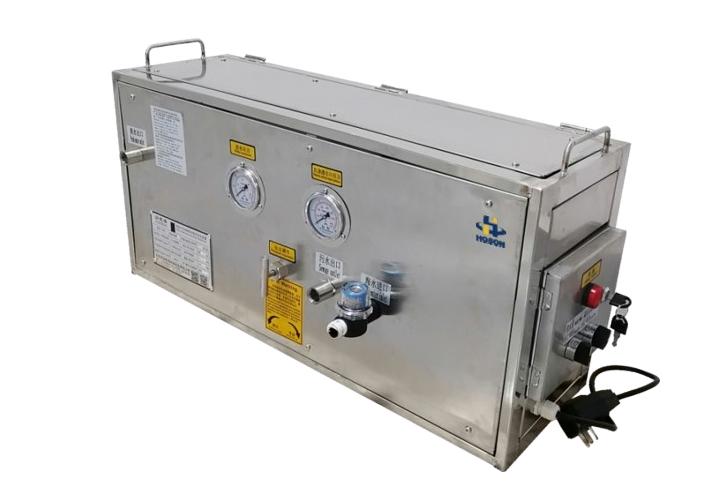
| Design Style | Skid-mounted (12m length) | Portable suitcase (680mm length) |
Why HOSON is the Architect of Your Water Future
HOSON sets itself apart from basic gear sellers. As a full plan builder, we stays open to tech choices. This lets the firm pick the best parts from anywhere. Selections match the buyer’s water type and money limits.
An offshore oil rig may need top water care for staff. Or a small sea-view shop wants a tiny source to clean fine tools. In both cases, the aim stays fixed: steady output. we makes sure the water tools run smoothly. The output always meets full safety checks.
We looks at the full ownership cost (TCO). This keeps desalination water treatment units affordable throughout their whole run time. Such strong builds allow updates as barrier tech gets better. Your spending now keeps giving back for years ahead, helping convert seawater to potable water efficiently and sustainably.
结论
The conversion of seawater into drinking water offers the best way ahead. In a place where fresh supplies grow rare, this path works well. From huge factory setups to carry-on kits for tough spots, the tech stands ready. It runs smoothly and holds up.
As the world water plan leader, HOSON works to guide through these issues. Secure a shore group’s water needs or protect a far team. The FSHB line brings the firm base and output for hard settings.
常见问题解答
Q: Is the water produced by desalination safe to drink immediately?
A: Yes. Units like the FSHB series apply RO barriers with 99.2% salt block. The process pulls out salt alone. It also clears germs, tiny bugs, and heavy bits. Such seawater-to-potable water steps match or top the WHO drinking rules.
Q: How much power is required for a desalination system in remote areas?
A: Power use has dropped a lot. The FSHB-0.5 portable model needs just 0.75 kW. This matches a basic home tool. Setups work with single 220V or three-phase power. It fits small engines or solar power links.
Q: Can these systems handle the high salinity found in the Middle East or the Red Sea?
A: Yes. HOSON builds for high salt spots. The FSHB-320 takes input up to 40,000 ppm TDS. This fits most sea types around the world. It covers the Atlantic to the salt-rich Persian Gulf.
Q: What is the maintenance cycle for a desalination plant?
A: New units aim for simple care. Regular tasks cover swapping front filters and light cleaning of RO barriers now and then. HOSON’s block-style build makes parts easy to reach. These cuts stop times a great deal.
Q: Is desalination environmentally friendly?
A: When planned right, it is. Strong setups like the FSHB-320 cut power needs by 35% over past types. Plus, HOSON’s skill in joining parts aids buyers. It helps handle salt waste in safe ways. This limits harm to nearby sea life.