
Introduction
Le monde est maintenant confronté à une véritable crise de l'eau plutôt qu'à une pour l'avenir. Elle touche la vie de millions de personnes en Afrique, au Moyen-Orient et en Asie. De nombreuses sources d’eau douce du monde, comme les rivières et les aquifères souterrains, sont gravement épuisées. Cela est dû à l'augmentation de l'activité industrielle et au changement climatique. En conséquence, la recherche d'une solution d'eau stable est plus pressante. Dans ces circonstances, le dessalement est la stratégie à long terme la plus fiable qui permettrait de remédier aux disparités entre les besoins en eau et la disponibilité.
La technologie de base: Systèmes de dessalement par osmose inverse
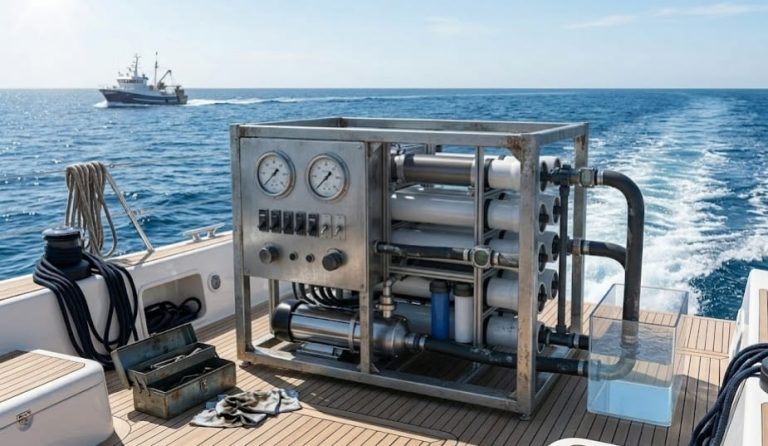
La principale partie de la sécurité de l'eau d'aujourd'hui est système de dessalement par osmose inverseIl diffère des anciennes méthodes de distillation thermique. Ces méthodes plus anciennes consomment beaucoup d'énergie. En revanche, l'osmose inverse (RO) utilise des membranes minces spéciales et des pompes fortes. Ces pièces filtrent le sel et la saleté à un niveau minuscule.
Les installations d'usine, comme le FSHB-320, montrent le meilleur de cette technologie. Les ingénieurs les construisent pour atteindre un taux de rejet de sel de 99,2%. Ils transforment l'eau salée de l'océan (jusqu'à 40 000 ppm TDS) en eau douce propre.
Comparaison des échelles de solution
| Caractéristique | FSHB-0.5 (Portable) | FSHB-320 (industriel) |
| Capacité quotidienne | 0,5 tonnes | 320 tonnes |
| Cas d'utilisation principal | Urgence/Yachts/Camps à distance | Plantes industrielles/villes côtières |
| Consommation d'énergie | 0,75 kWh | 75 kWh |
| Rejection du sel | ≥ 99% | 99.2% |
| Conception | Style valise/Portable | Montage à glissière/modulaire |
Durabilité et innovation : usines solaires de dessalement de l’eau
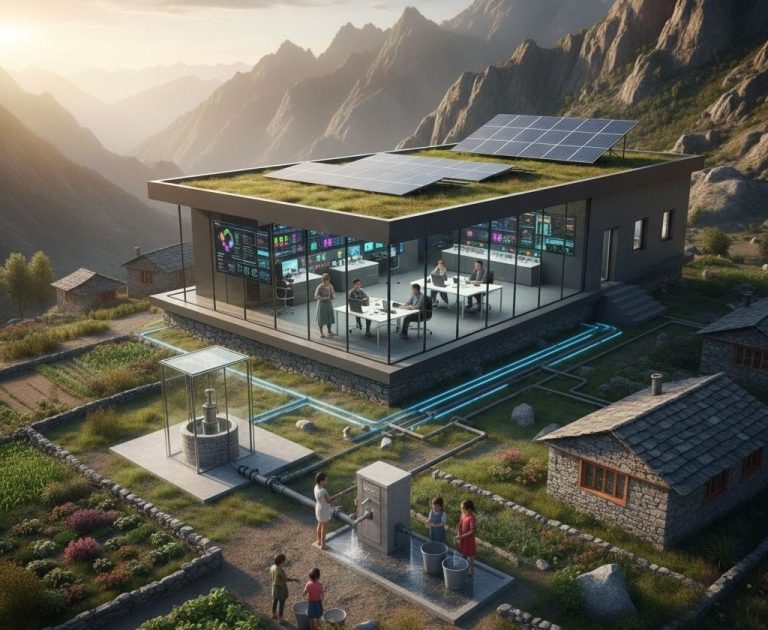
Dans les zones où le soleil est abondant mais les installations d'électricité sont faibles, l'usine de dessalement d'eau solaire apporte de grands changements. Cela romp le lien entre la dépendance de l’eau et du réseau électrique traditionnel à partir d’énergies fossiles, ce qui apporte un réel avantage à la nature et aux entreprises locales.
Les blocs de construction compacts, tels que le FSHB-1.5, sont conçus pour des besoins énergétiques faibles. Cela rend ces unités idéales pour l'accouplement avec des panneaux solaires autonomes. En conséquence, les hôtels insulaires éloignés ou les zones sèches avec de l'eau salée peuvent maintenir un flux d'eau fiable. Ils évitent le tracas de transporter du carburant pour les générateurs de secours.
Pourquoi le traitement modulaire de l'eau par dessalement est un changement de jeu
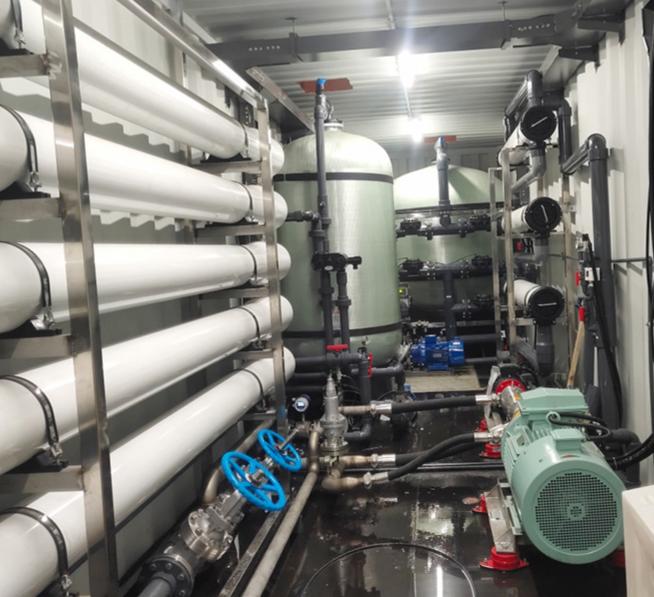
Les anciennes installations de traitement de l'eau nécessitent des années pour planifier et construire. Les nouvelles options de blocs de construction ont changé cette ancienne façon de faire les choses.
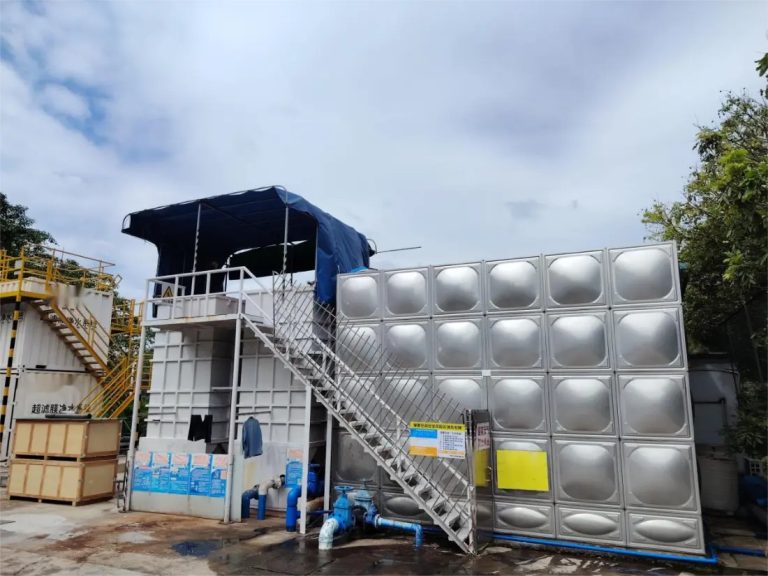
- Déploiement rapide : Des conceptions montées sur glissières comme le FSHB-320 permettent une installation facile « plug-and-play » des unités d’usine déjà contrôlées et assemblées. Par conséquent, le temps consacré à la construction sur le site diminue de 60 %.
- Efficacité spatiale:Sur des endroits comme les plateformes pétrolières en mer ou les hôtels à la côte fréquentés, la chambre est difficile à trouver. Les systèmes RO en blocs de construction donnent la plus grande sortie d'eau pour chaque bit d'espace utilisé.
- Des systèmes de ce type sont bien adaptés à une plage de températures de 5 à 45 degrés C. De tels systèmes robustes peuvent tolérer les conditions climatiques difficiles trouvées en Afrique et au Moyen-Orient.
Modulaire dessalement traitement de l'eau Les unités font évoluer l'infrastructure de l'eau d'un projet de construction complexe et pluriannuel en une solution à haut rendement et prête à l'utilisation. Grâce à la livraison de systèmes testés en usine et montés sur patinage, le travail sur place est minimisé, permettant un démarrage 60 % plus rapide. Cette approche assure une production stable d’eau douce même dans des environnements côtiers à 45°C extrêmes ou à peu d’espace.
Divers scénarios d'application
La flexibilité du traitement de l'eau de dessalement lui permet d'aider divers domaines :
- Énergie industrielle & Produits pétrochimiques :Fournir de l'eau de procédé de haute pureté pour éviter l'échelle de l'équipement.
- Tourisme et Hospitalité :Assurer la qualité de l'eau cinq étoiles pour les stations insulaires où l'eau douce naturelle n'existe pas.
- Secours en cas de catastrophe :Des unités portables comme le FSHB-0.5 fournissent de l'eau qui sauve des vies en quelques minutes lors de catastrophes naturelles.
- Agriculture :Fournir de l'eau d'irrigation régulière dans les régions côtières arides pour assurer la sécurité alimentaire.
Ces systèmes, au-delà de la simple filtration, répondent à des problèmes à l'échelle de l'industrie tels que le maintien du tourisme insulaire de luxe pour empêcher l'échelle des machines dans les centrales électriques. Des installations de dessalement sont en cours de développement dans le monde entier pour approvisionner les régions en difficulté en eau, en veillant à ce que les zones peuplées disposent d'une source fiable d'eau douce lors de sécheresses graves. Cela a été réalisé grâce à des unités portables utilisées dans de telles zones. Ces unités pourraient être utilisées pour l'irrigation dans les régions arides ou comme ligne de sauvetage en cas de catastrophe. Cette technologie contribue à la croissance économique en fournissant un approvisionnement en eau régulier.
Conclusion
Le dessalement de l'eau de mer est passé d'un choix de sauvegarde coûteux à un élément clef, économisant de l'énergie et essentiel des installations de base. En choisissant des systèmes de dessalement à osmose inverse solides et en examinant ce que usine de dessalement d'eau solaire Nous pouvons construire un avenir qui traite bien les pénuries d’eau.
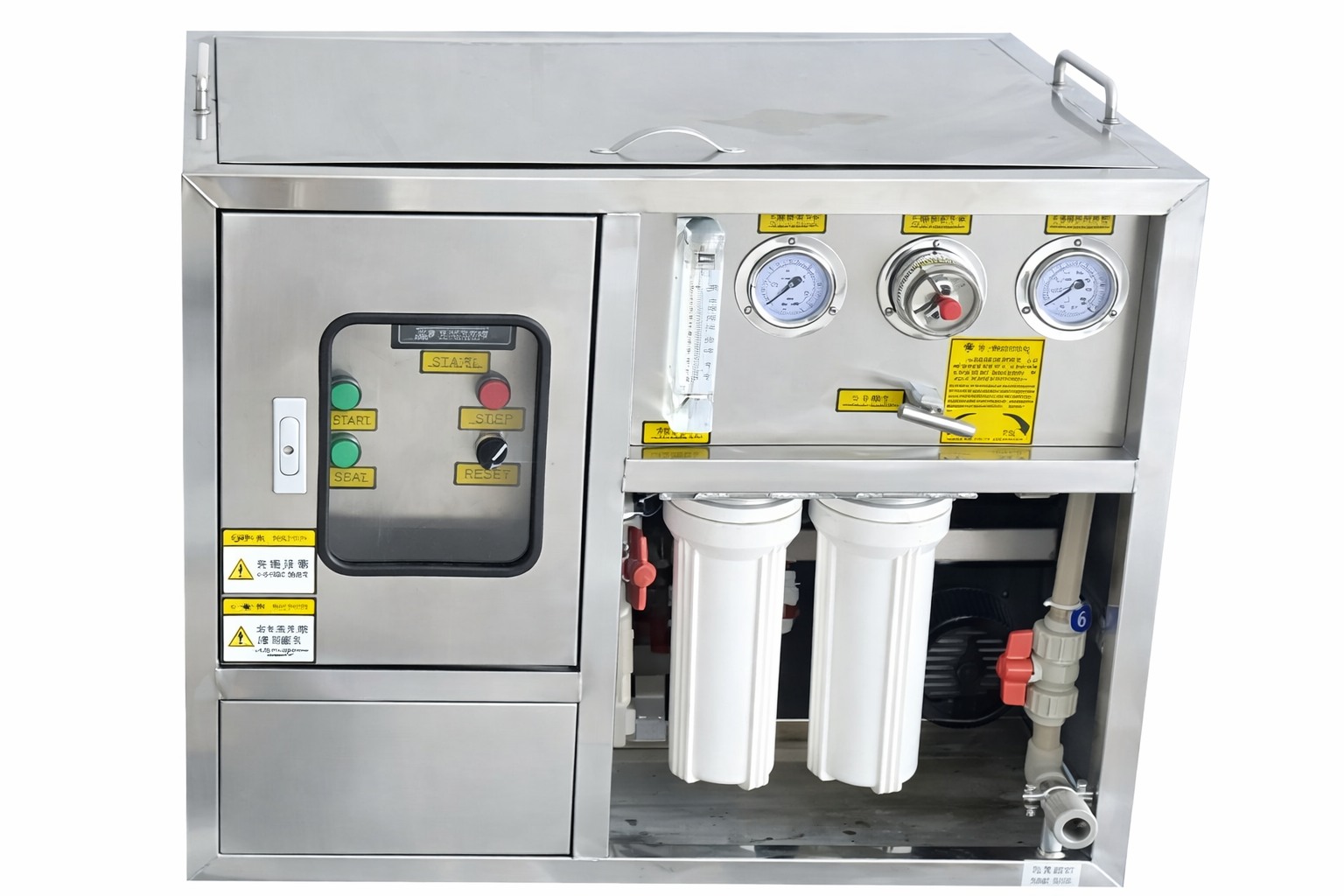
Chez HOSON, nous agissons en tant qu’architectes de solutions d’eau, intégrant des technologies avancées dans des systèmes pratiques et déployables. Des unités d'urgence portables aux installations industrielles de 320 tonnes, nos conceptions modulaires sont conçues pour répondre aux défis spécifiques du site avec une livraison déterministe. Nous nous concentrons sur la fourniture d’un soutien opérationnel fiable tout au long du cycle de vie du projet, assurant que votre approvisionnement en eau reste stable et efficace à long terme.
FAQ (questions fréquentes)
Q: L'eau produite par un système de dessalement à osmose inverse est-elle sûre à boire?
R : Les systèmes d’osmose inverse modernes de la série FSHB éliminent les métaux lourds, les virus et les bactéries, et ils rejettent également plus de 99 % du sel de l’eau. L’eau provenant de cet équipement est parfaitement sûre à boire selon les lignes directrices de l’Organisation mondiale de la santé.
Q: Combien d'énergie a vraiment besoin une usine de dessalement d'eau solaire?
R: La demande d'électricité dépend de la capacité. Les petites unités de dessalement à énergie solaire consomment généralement jusqu'à 1,5 kWh, ce qui convient aux applications hors réseau et à distance.
Q: À quelle fréquence les membranes RO doivent-elles être remplacées?
R: Avec un prétraitement approprié (tel que l'ultrafiltration pour réduire l'incrustation de la membrane), les membranes de haute qualité durent généralement 3 à 5 ans. L'utilisation de systèmes avec prétraitement intégré réduit considérablement les coûts d'entretien à long terme.
Q: Ces systèmes peuvent-ils gérer très « lesale« et ou l'eau de mer à haute turbidité ?
R: Les systèmes d'osmose inverse industriels intègrent des processus de préfiltration à plusieurs étapes afin d'éliminer les niveaux élevés de turbidité et de gérer les floraisons d'algues. Cela permet aux membranes de rester en bon état de fonctionnement.
Q: Qu'est-ce que le « leCoût total de propriété« et (TCO) pour une usine de dessalement?
R: Les dépenses initiales élevées nécessaires pour mettre en place une usine peuvent être contrebalancées par ses faibles coûts opérationnels. Les nouveaux systèmes sont conçus pour continuer à fonctionner normalement pendant 10 à 15 ans dans des conditions d'approvisionnement en eau constantes.