
Improving Safety in Remote Marine Environments through Water Desalination for Boats
Why Freshwater Access Is Critical for Boaters in Isolated Areas
Potable water access stands as a basic requirement for those navigating far from land. In distant ocean settings, the danger of dehydration rises quickly because resupply spots are few and far between.
Boats typically feature small freshwater tanks, which prove insufficient on long trips. In these cases, a water desalination for boat setup turns from a nice extra into an essential safety step. It provides independence when sailing away from coastlines. Plus, it readies ships for urgent situations where extra water sources might be out of reach.
Options like “zero-land acquisition” growth, floating water facilities, or gear built for tough spots (such as offshore rigs and murky flood zones) follow a modular approach.
What Makes Water Desalination a Vital Safety Tool for Offshore Cruising
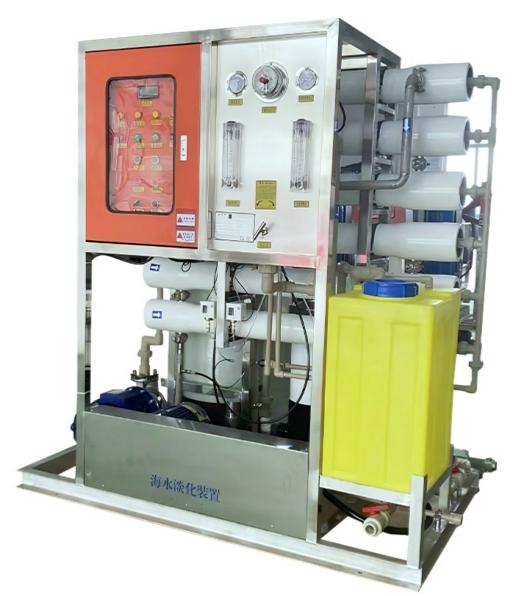
Sturdy marine desalination devices, often called marine watermakers, change seawater into safe drinking water. These setups deliver a steady and dependable flow of fresh water, no matter the spot on the map.
What to Know About Marine Watermakers and Their Functionality
How Marine Watermakers Convert Seawater into Drinkable Freshwater
Boat desalination systems mainly rely on reverse osmosis (RO) methods. Seawater gets pushed through special filters that block nearly all salt and dirt. Early filtering steps clear out particles and shield the filters from early damage.
For example, HOSON includes a strong ultrafiltration (UF) setup as the main part of RO preparation. This handles heavy murkiness, seaweed, and germ problems well. It
lowers the chance of RO filter clogging by over 60%.
Types of Desalination Systems Available for Boats
| Type | Ideal Use Case | Features |
| Manual Portable Desalinators | Liferafts, emergency kits | Hand-operated, compact, low output |
| Electric-Powered Marine Watermakers | Medium-to-large boats | Continuous supply, higher output |
| Engine-Driven / Solar-Powered Units | Long-range cruisers | Energy-saving, sustainable operation |
Manual Portable Desalinators
Hand-pump tools work well for urgent needs. Their light build and small shape make them a good fit for emergency packs or liferafts.
Electric-Powered Marine Watermakers
Built for boats with onboard AC electricity, these electric types offer a constant stream of fresh water with little hands-on work.
Engine-Driven and Solar-Powered Options
Such units draw power from engine generators or solar panels, suiting drawn-out trips where self-reliant energy counts the most.
How to Choose the Right Desalination System for Your Boat
Key Factors to Consider Before Purchase
As you assess which marine watermaker for sale fits your setup, think about these points:
- Daily water consumption (based on crew size)
- Duration and type of trips
- Power availability on board
- Installation space
- Maintenance capabilities of the crew
When choosing a marine watermaker, consider not only the initial cost but also the long-term operating expenses, including maintenance and energy consumption over the years.
Comparing Desalination Systems for Sale: What to Look For
- Output Capacity and Efficiency Ratings
This gets measured in liters per hour or tons per day. It shows how effectively the device covers everyday demands.
- Durability in Harsh Marine Conditions
Substances like SUS316 stainless steel provide strong protection against rust in salty surroundings.
- Portability vs Fixed Installation Systems
Movable units work best for sporadic needs or crises. Fixed setups give more production and ease of use.
| Model | Output | Power | Size (mm) | Weight | Key Feature |
| FSHB 3 | 3 tons/day | 1.5KW | 500×570×1350 | ≈150kg | Compact, easy maintenance |
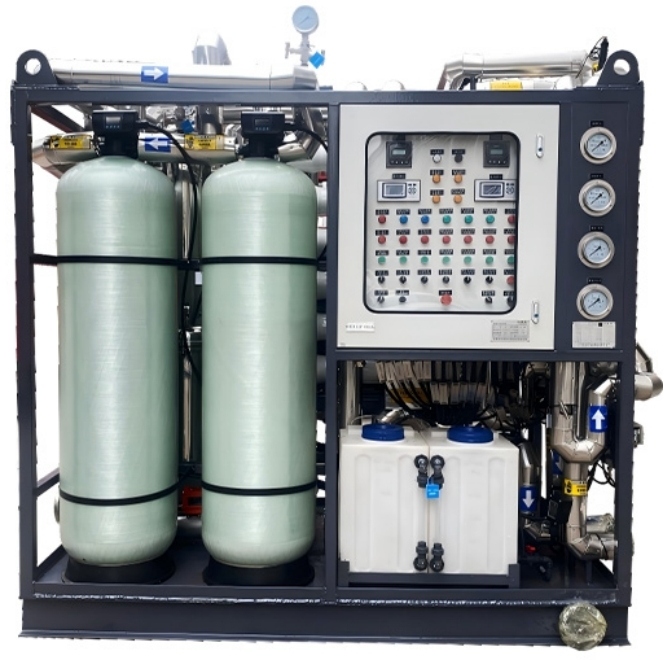
| FSHB 25A/B | 25 tons/day | 5.5KW | 1700×1120×1900 | 800kg | High output, robust build |
With a fresh water output of 25 tons per day, this system steadily handles the needs of small to medium-sized groups and business tasks.
Why Investing in a Marine Watermaker Enhances Emergency Preparedness
The Role of Desalination in Life-Threatening Situations at Sea
Marine desalination equipment holds a key spot in tough spots like drifting after motor trouble or riding out fierce storms.
How Onboard Watermakers Support Long-Distance Voyages Safely
Water desalination systems remove the need for constant stops at ports to refill fresh water. This lets crews keep going on cross-ocean paths without breaks. Such freedom opens up trips to far-off places, like island groups in Southeast Asia or shorelines in Africa, with real assurance.
Tailored small seawater desalination systems resist rust, handle rocking, and make the best use of space. The system fits offshore oil and gas platforms, ships, and unique boats. All this ensures solid work in severe sea conditions.
Where to Find Reliable Desalination Systems for Sale Today
Evaluating Trusted Suppliers and Manufacturers Online
When picking a desalination system for sale, look for products with international certifications.
- Read customer reviews regarding durability.
- Confirm warranty terms.
- Check if technical support is available in related areas.
HOSON offers complete care throughout the product’s life. This covers starting water checks, viability checks, custom planning, setup, startup, crew training, and ongoing help.
Understanding Pricing Ranges Based on Features and Capacity
- Budget-Friendly Manual Units for Emergencies Only
These cost-effective and small devices have basic daily yields.
- Mid-Tier Electric Models with Moderate Output
The models could serve well for small teams or pairs on wide-ranging sails.
- High-Capacity Systems Designed for Extended Voyages
These suits full-time boat dwellers or big ships. Often, High-Capacity Systems comes with backup parts and clever controls.
What Maintenance Involves After Installing a Boat Desalination System
Routine Care to Ensure Long-Term Performance
You need to rinse membranes often to stop salt from building up. Replace filters at set times based on how much you use them and the water’s state.
Troubleshooting Common Issues in Marine Watermakers
Low Output or Poor Water Quality
Common reasons include tired membranes or blocked filters. Checking them regularly helps a lot.
Power Supply Irregularities
Owners ought to inspect voltage, fuses, and wires to keep things running smoothly.
How Future Technologies Are Shaping Portable Desalinators
Reduced Environmental Footprint Designs
Green materials paired with power-saving tools help lessen harm to nature.
Smart Monitoring Systems
Top-end units feature IoT tools for checks you can see on phone apps. The system sends instant warnings and tips for upkeep ahead of time.
Integrating IoT sensors and cloud platforms, transforming passive maintenance into predictive maintenance.
FAQ
Q: What size desalination system do I need for my 4-person crew on long voyages?
A: A unit like HOSON’s FSHB 3 (3 tons/day) is sufficient for small crews. For extended travel without port calls, the FSHB 25A/B provides higher capacity.去掉
Q: How often do I need to replace filters and membranes?
A: Pre-filters usually require replacement every few months, depending on seawater quality. RO membranes can last up to five years with proper flushing and maintenance.
Q: Are HOSON systems suitable for high-salinity waters around the Middle East?
A: Yes. The system functions efficiently even with inlet TDS levels up to 40,000 PPM, making it highly suitable for Persian Gulf conditions.
Q: Is technical support available in Southeast Asia or Africa?
A: HOSON offers global service networks including Southeast Asia, Africa, and the Middle East. Customized support plans are available depending on project scope.