
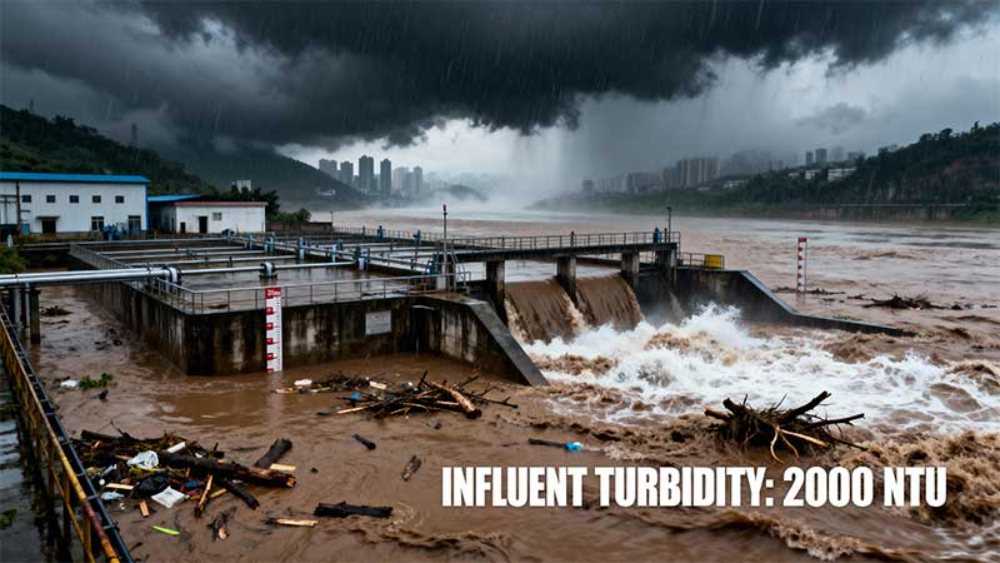
The road into a flood zone may be open for only a few hours. A truck arrives with a treatment unit, but the nearest intake is a brown river carrying silt, leaves, and runoff. Power comes from a generator. The storage tanks are still on another vehicle. In that situation, “portable” means very little unless the whole water supply plan works after unloading.
A mobile water treatment system has to do more than fit on a truck or inside a container. It must treat the water that is actually available, produce enough water during realistic operating hours, and keep running with the staff and utilities on site. Relief agencies, municipalities, contractors, and project owners therefore need to plan the source, process, transport, storage, discharge, and field operation as one job.
The Available Water Source Determines the Treatment Process
Emergency teams do not always get to choose a convenient source. After a storm, a river may be the only option, even though its turbidity changes whenever rain falls upstream. A borehole may look clear but contain dissolved salts. On an island or damaged coastal site, seawater may be more dependable than surface water. Water from a partly restored municipal network also needs checking because broken pipes can allow contamination to enter after central treatment.
Before equipment is selected, the project team should test the source and record how it may change. Useful starting data include turbidity, pH, salinity, and total dissolved solids (TDS), together with known microbial or chemical concerns. A single bottle collected on a calm morning may not represent the water that reaches the intake during a storm, high tide, or heavy runoff.
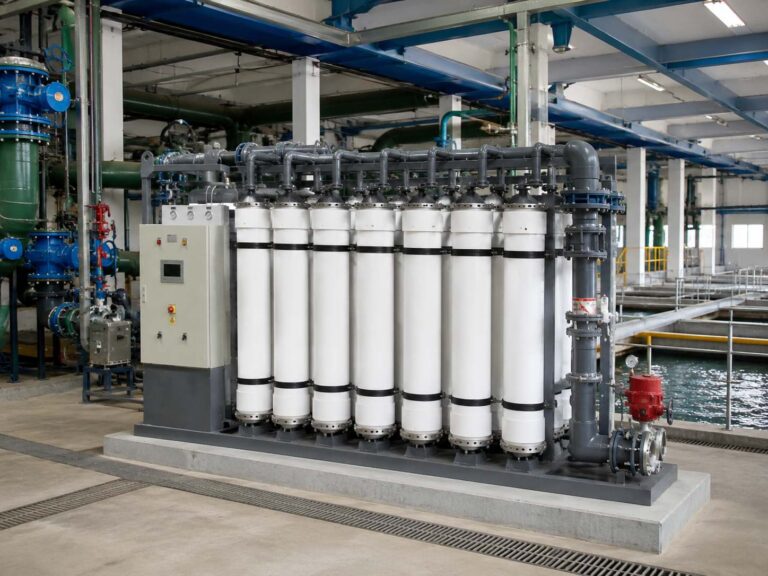
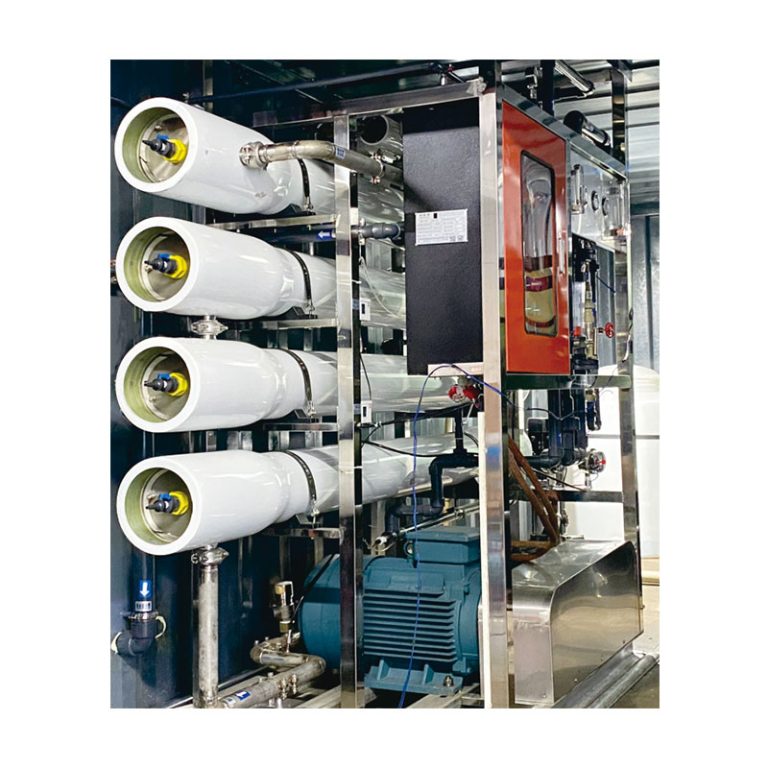
The water analysis determines the appropriate treatment train. Coarse screening can remove leaves and debris. Media filtration may be needed for suspended solids. Ultrafiltration (UF) can be used in pretreatment or in a potable-water process where the source and required water quality make it suitable. Reverse osmosis (RO) is typically used when dissolved salts must be removed. For seawater applications, seawater reverse osmosis (SWRO) is commonly used and operates at substantially higher pressure than freshwater membrane filtration processes.Activated carbon, chemical dosing, or final disinfection may be added when the analysis calls for them.
There is no universal treatment train for disaster relief. A mobile water treatment plant built for muddy river water is not automatically suitable for seawater. The two systems may look similar from outside, but the membrane process, operating pressure, pretreatment, and discharge arrangement can be quite different.
Capacity Must Reflect the Way the Site Will Operate
Daily demand is only the first number in a capacity calculation. The project team also needs to know how many hours the plant can run, when demand peaks, how much storage is available, and how the water will be divided among drinking, cooking, washing, sanitation, and technical uses. Water for drinking may have a different final specification from water used for cleaning a relief site.
Suppose a camp needs a given volume each day but the generator is available for only part of that day. The plant must produce the full requirement within that operating window, with time left for startup, checks, and any cleaning sequence. Dividing daily demand by 24 hours would make the unit look smaller than the site actually needs.
Storage helps, but only within limits. A correctly sized tank can cover meal-time peaks, water-truck filling, or a brief shutdown. It cannot make up for a treatment plant that falls short every day. Distribution also matters. A plant may produce enough water while queues still form because the tank outlet, filling points, or delivery schedule restrict the flow to users.
Emergency demand rarely stays fixed. More families may arrive, another shelter may open, or the first intake may become unusable. Modular water treatment gives planners room to respond by adding coordinated treatment or capacity modules. That expansion works only when pipe sizes, electrical loads, controls, and the space around the first installation were considered in advance.
A useful request for quotation should state the source-water data, required product water volume, available operating hours, intended uses, storage plan, power supply, site access, discharge conditions, and local staffing. These details tell a supplier much more than a request for a general water purification system for sale.
Portable, Skid-Mounted, Containerized, and Modular Are Not the Same
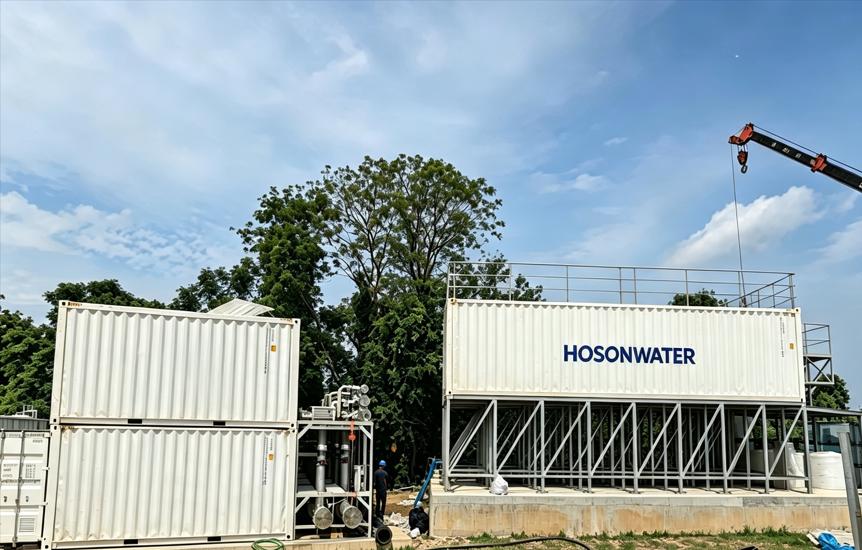
These terms are often grouped together, although each describes a different feature. Portable equipment is intended to be moved or deployed in a compact form. A skid-mounted system is assembled on an open structural frame. A containerized plant sits inside a defined enclosure. Modular equipment is designed as coordinated units that can be combined or expanded. A system can be modular without being containerized, and a skid can be transported without becoming a portable hand-carried unit.
Access to the site should influence the format. A container can protect equipment during sea and road transport and later provide an operating enclosure. It still needs a road, a suitable unloading area, and enough lifting capacity. Ventilation, drainage, internal temperature, and maintenance clearance must also be checked. An open skid gives technicians easier access to pipes and instruments, but it may need a shelter in heavy rain, dust, salt spray, or extreme heat.
A compact mobile water treatment unit can reach a smaller or isolated location more easily. The trade-off is not only capacity. Several small units may mean more intake connections, more operators, duplicated instruments, and a wider spare-parts requirement.
| Deployment format | Where it can help | What must be confirmed |
| Compact portable unit | Small camps or scattered demand points | Handling method, output, weather protection, and operator workload |
| Open skid-mounted system | Protected sites needing direct equipment access | Shelter, corrosion exposure, lifting points, and pipe connections |
| Containerized system | Road or sea transport with an enclosed operating space | Unloading access, ventilation, drainage, heat control, and maintenance clearance |
| Multi-module plant | Staged capacity or process expansion | Common controls, interface standards, hydraulic balance, and expansion space |
None of these formats removes all site work. The response plan still needs an intake, level base or foundation, electrical protection, product water storage, RO concentrate or UF backwash discharge, hoses, lighting, and secure access. Supplier drawings should identify the battery limits clearly so the field contractor knows which pipes, cables, tanks, pumps, and fittings are outside the equipment package.
Field Reliability Begins Before Shipping
Fast delivery does not leave much time to solve factory problems in the field. A Factory Acceptance Test (FAT) should therefore follow a written checklist. It can confirm equipment identity, piping, wiring, controls, alarms, instruments, maintenance access, and the documentation supplied with the system. If performance is tested, the report must identify the test-water conditions. Results obtained with one water source should not be treated as a guarantee for every flood, river, borehole, or coastal intake.
Commissioning starts after the plant reaches the site. Connections and utilities are checked, the system is flushed, instruments are verified, operating settings are established, and product water quality is sampled. Local operators need Standard Operating Procedures (SOPs) that are usable during a busy shift, not just a thick manual stored in an office. They should know what to do when turbidity rises, pressure changes, a pump trips, power becomes unstable, or a tank-level signal appears inconsistent.
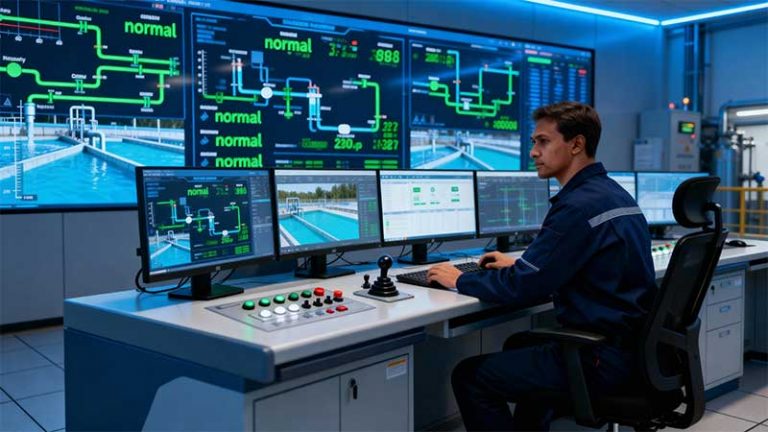
Remote monitoring can support a mobile water treatment system, provided communications are dependable. Flow, pressure, turbidity, pH value, tank level, pump status, and alarm history provide an off-site engineer with useful diagnostic data. In a UF system, the trend in Transmembrane Pressure (TMP) can help reveal membrane fouling. Even so, a remote screen cannot collect a water sample, find a leaking hose, or safely reset equipment. Someone trained must remain responsible at the site.
When one organization runs several relief locations, standardized mobile water purification systems make training and spare-parts planning easier. Standardization is most useful for instrument tags, controls, connections, and common components. The treatment process must still be selected according to the source-water conditions at each location.
The Deployment Package Extends Beyond the Plant
A complete treatment unit can sit idle because one hose coupling is missing. That sounds minor until the road closes again or the next supply truck is days away. Tanks, transfer pumps, generators, cables, test instruments, fittings, sampling containers, chemicals where required, and personal protective equipment should be checked against the same deployment list as the plant.
Spare-parts planning needs similar care. Startup consumables, routine operating stock, and critical spares are not the same category. Quantities should reflect the planned operating period and the realistic replenishment route. Chemical storage limits, shelf life, local import rules, and dangerous-goods transport regulations can affect what the team is able to keep on site.
Waste streams must also have a destination. Backwash water, settled solids, spent cleaning liquid, and RO concentrate differ in volume and composition. The correct management route depends on the feedwater, treatment process, and local environmental requirements. Leaving this decision until commissioning can delay startup or create a problem beside the intake.
At AIR HOSON, we begin a deployable water project with the water analysis and the operating conditions. Capacity, transport access, utilities, product water requirements, discharge, and local staffing are reviewed before the process is set. Depending on the source, the design may include UF, RO, SWRO, activated carbon, ozone, chemical dosing, or a combination of stages.
The work continues through factory testing, commissioning support, operator training, remote diagnostics, and spare-parts planning. Project teams can review our modular water treatment systems and other water purification equipment when preparing the technical brief for a relief or temporary supply project.
FAQ (Pertanyaan umum)
What information is needed to size a mobile water treatment plant?
Start with source-water test results, daily product water demand, available operating hours, intended water uses, required water quality, storage, power, site access, discharge conditions, and operator resources. A mobile water treatment plant sized only from the number of people can miss peak demand or the limited hours in which the equipment can run.
Can one mobile water treatment unit treat floodwater, groundwater, and seawater?
Not without confirming its process configuration. A mobile water treatment unit may use the same transport platform for different projects, but floodwater usually needs strong solids and turbidity control, while saline groundwater or seawater requires RO or SWRO for salt removal. Pretreatment and final conditioning must be selected from the actual analysis.
Are mobile water purification systems only for short emergencies?
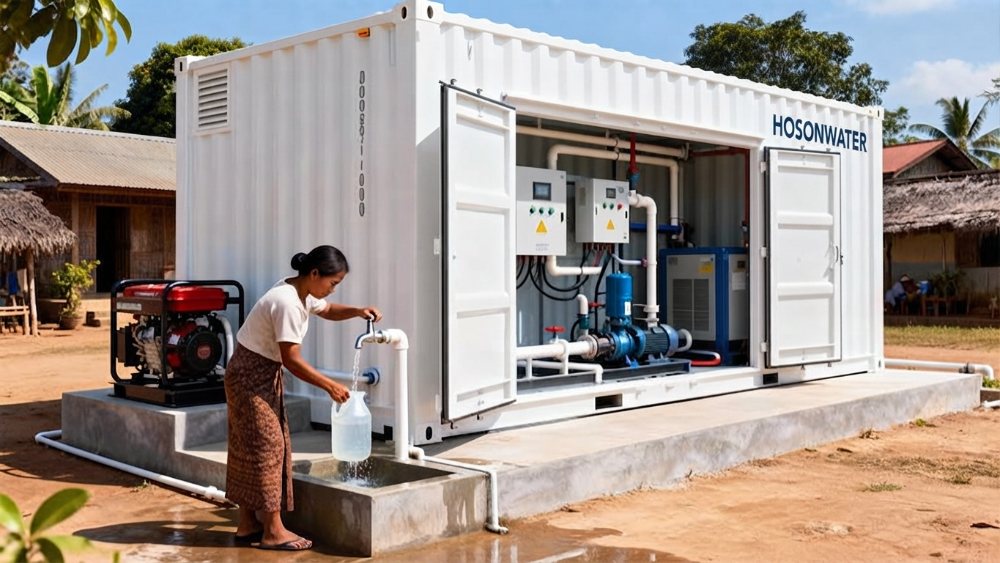
No. Mobile water purification systems can provide immediate relief, serve temporary camps, bridge a supply gap during repairs, or remain as decentralized infrastructure. A longer operating period calls for stronger planning around weather protection, redundancy, staffing, monitoring, consumables, and later expansion through modular water treatment.