
霍松
霍松

新闻

What Technologies Are Transforming Municipal Wastewater Treatment Aged Wastewater Infrastructure

管理员ajax

霍松

What Technologies Are Transforming Municipal Wastewater Treatment Aged Wastewater Infrastructure

Severe weather patterns and seasonal storms frequently cause abrupt increases in influent water volume. These events also carry high concentrations of suspended sediment, leading to rapid turbidity surges. Consequently, conventional wastewater treatment plants (WWTPs) are often overwhelmed. Traditional sedimentation and primary filtration processes are insufficient to manage these sudden turbidity spikes. Therefore, the reliability of water reuse is compromised, and ongoing operations are disrupted. To address these challenges, new technology combinations have been implemented. Ultrafiltration (UF) membrane systems and modular treatment units now transform municipal wastewater management, ensuring operational resilience under unstable climatic conditions.

Why Seasonal High-Turbidity Floods Paralyze Traditional Wastewater Treatment Plants

The Failure Mechanism of Aged Wastewater Infrastructure

Sudden turbidity spikes during seasonal floods often bypass secondary clarifiers. They carry heavy loads of suspended solids straight to downstream filtration systems. Standard sand filters clog rapidly under these conditions. This creates severe hydraulic blockages for 水处理公司. When the filtration layer fails, risks multiply in a chain reaction. Disinfection by-products (DBPs) increase because organic matter reacts with treatment chemicals. Microbiological breakthroughs threaten effluent safety. Irreversible membrane biofouling damages costly downstream reverse osmosis (RO) membranes.

The Operational and Financial Toll

For a legacy wastewater management plant, a high-turbidity event brings frequent operational shutdowns. Operators must perform manual backwashing. These constant interruptions lead to skyrocketing chemical consumption. Operators are forced to overdose on coagulants. Overworked pumps and fouled components shorten overall equipment lifespan. This leads to immense capital expenditures. The vulnerability shows the urgent need for robust wastewater management plant retrofits. Such upgrades help ensure climate resilience.

What Core Technologies Form the Defense Line Against Extreme Turbidity?

Next-Generation Ultrafiltration Membranes as Absolute Barriers

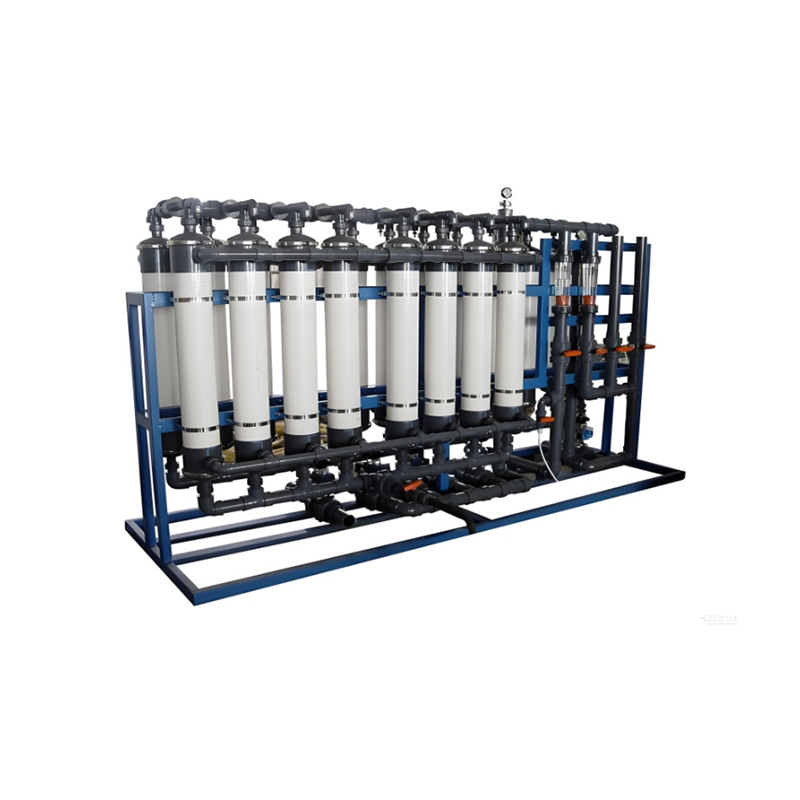
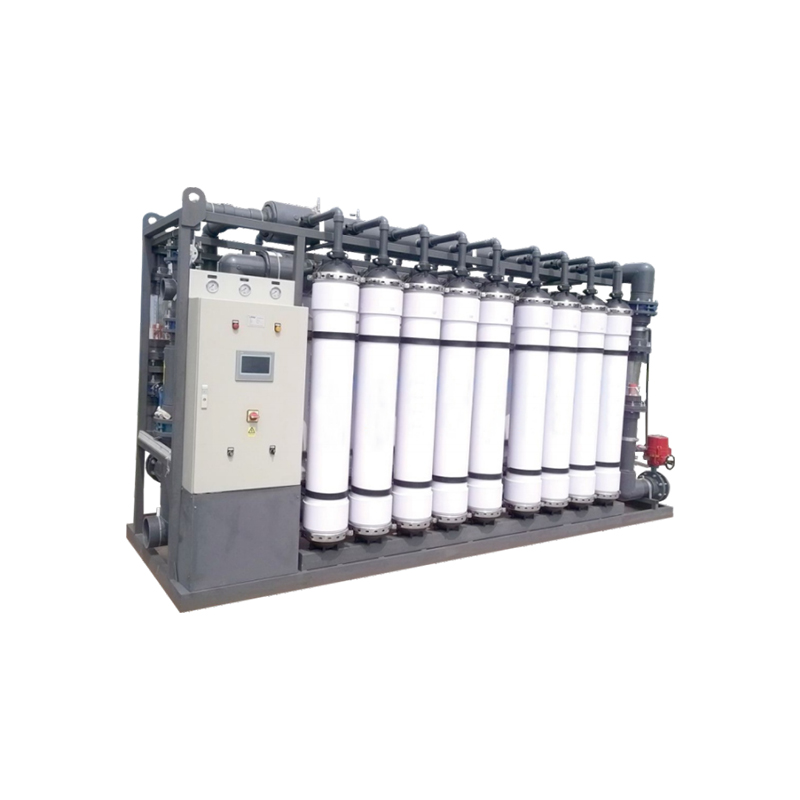
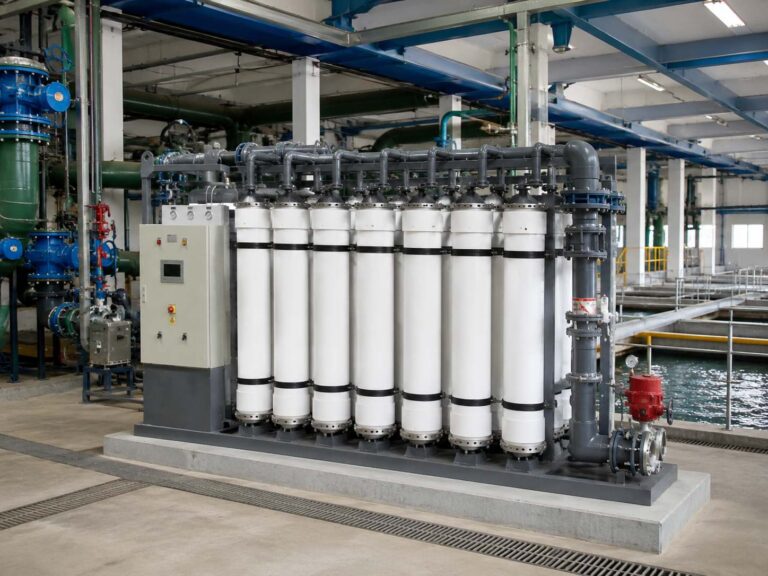
Advanced pressure ultrafiltration components establish an absolute physical barrier. They offer filtration precision of 0.01 to 0.02 μm. This microscopic pore structure efficiently removes suspended solids, colloids, bacteria, and viruses. It works regardless of extreme influent water quality fluctuations. By utilizing high-performance PVC alloy and PVDF materials, these systems ensure stable flux. They deliver reliable performance under high-turbidity stress.

Membrane System TypeCore Membrane MaterialNominal Pore Size (µm)Standard Filtration Flux (L/m²·h)Target Effluent Quality
LH型压力超滤聚氯乙烯合金0.0150 – 200Turbidity < 0.1 NTU, SDI₁₀ < 3
LW型压力超滤聚偏二氟乙烯0.0240–200Turbidity < 0.1 NTU, SDI₁₀ < 3
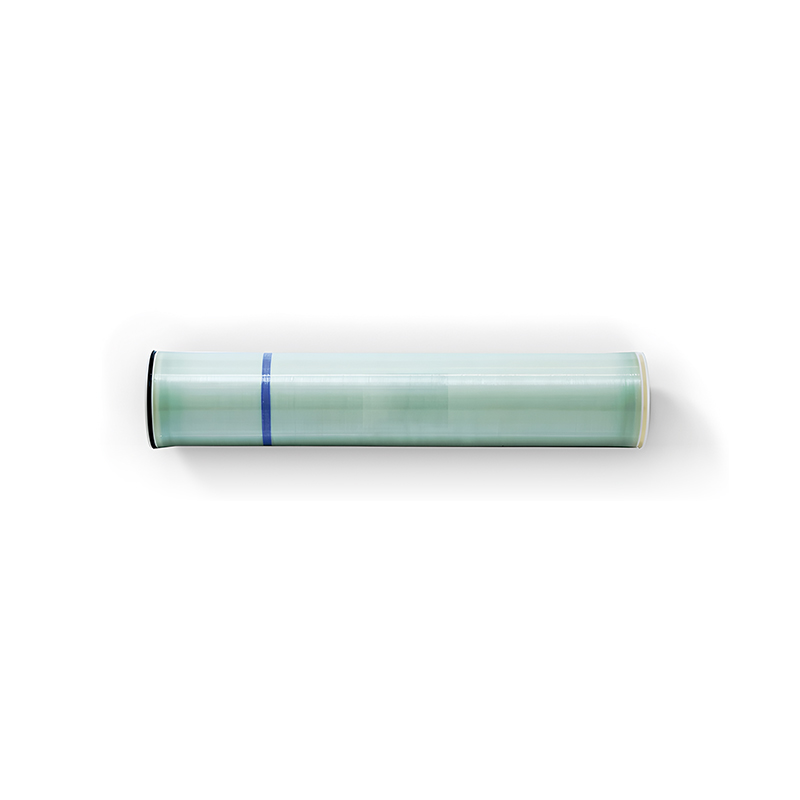
LRFR Series Anti-Fouling ROPolyamide Composite15–30Salt Rejection 99.5%–99.8%

Large-Scale Submerged Membrane Modules

Large-Scale Submerged Membrane Modules. For high municipal flow rates, submerged membrane bioreactor (MBR) modules provide high-density filtration within compact footprints. Integrated membrane stacks facilitate large-scale water processing without the need for extensive civil engineering. These advanced configurations enhance professional wastewater management and wastewater treatment plant (WWTP) operations. Consequently, the technology guarantees deterministic water delivery, converting variable raw water into stable, high-quality water assets.

wastewater management plant

How Do Smart Municipal Water Systems Maintain Efficiency Under Extreme Flux Conditions?

Energy Optimization via Revolutionary Scouring Technologies

A common myth claims that advanced membrane systems consume excessive energy during high-load flood periods. Modern systems solve this problem by utilizing low-energy pulsed aeration technology. They generate optimal air-water scouring paths around the membrane filaments. This prevents solids deposition on membrane surfaces. This continuous cleaning mechanism achieves up to 40% energy savings during continuous membrane scouring. It works even when processing highly turbid municipal wastewater streams.

Data-Driven Autonomic Plant Operations

Integrating a centralized digital brain allows a smart wastewater treatment plant (WWTP) to transition from passive maintenance to predictive service. Remote monitoring platforms track critical metrics continuously. They help prevent operational failures.

  • Real-time automated transmembrane pressure (TMP) adjustment adaptsto sudden solids loading.
  • Automated chemical cleaning protocols trigger precisely when fouling thresholds are reached.
  • Wide chemical tolerance allows deep cleaning across a wide pH range from 1 to 14 without damaging membrane integrity.
  • Predictive algorithms calculate the remaining service life of filtration elements based on historical turbidity trends.

Deploying these automated capabilities allows utilities to optimize operations. They manage complex infrastructure through comprehensive smart municipal water systems.

How Does Modular Prefabrication Speed Up Disaster Resilience and Expansion?

The Engineering Wisdom of Plug-and-Play Water Treatment Unit

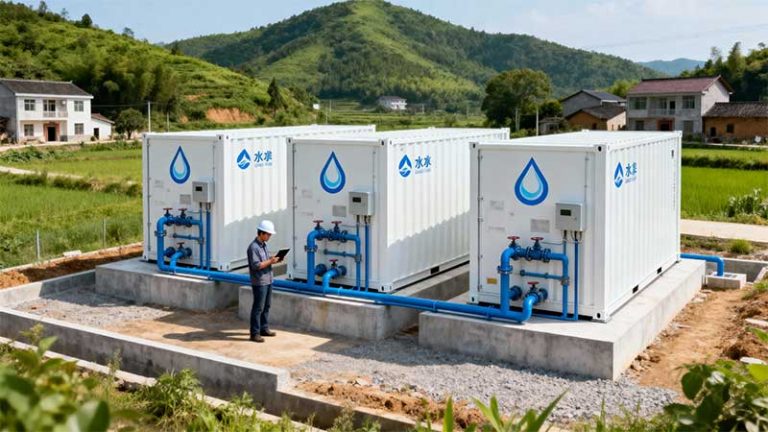
Traditional civil engineering works for water treatment expansion take months or years to construct. They become useless during an active seasonal crisis. Modular, pre-engineered systems deploy within weeks. They arrive prefabricated and factory-tested. This plug-and-play architecture enables zero-land acquisition expansions. It also allows deployment of floating or transportable water units. These units operate directly inside extreme flood environments.

Tailored Architectures for Complex Water Networks

True resilience requires moving away from rigid product catalogs. It calls for technology-neutral and optimal configurations. As a solution integrator, HOSONWATER engineers custom systems. They select the ideal combination of global components. These components match actual field conditions. This design philosophy delivers maximum value across the full lifecycle. It moves rapidly from initial water analysis to rapid plug-and-play field deployment. On CNOOC’s deep-sea platforms, this integration enabled reliable remote monitoring. It also ensured absolute asset protection in the harshest environments.

What Role Does Advanced Filtration Play in Sustainable Water Reuse?

Transitioning from Discharge to Reclaimed Water Assets

Advanced UF acts as the ultimate pretreatment layer for downstream wastewater RO systems. It captures fine colloidal particulates and organic macromolecules. This reduces subsequent RO fouling risks by over 60%. The multi-stage protection elevates effluent water quality directly to Class IV Surface Water Standards or higher. Treated water becomes instantly available for ecological replenishment, agricultural irrigation, and heavy industrial cooling.

Closing the Urban Water Loop

Implementing dependable pretreatment safeguards the entire downstream purification infrastructure. This structural reliability allows municipalities to establish secure networks for water reuse. By maintaining stable operations through seasonal flood crises, cities can confidently meet their circular economy goals. They secure a future built on sustainable water recycling.

城市污水处理

结论

Seasonal floods and extreme turbidity crises are no longer uncontrollable operational threats to municipalities. They represent architectural challenges that can be solved with the right mix of technology and integration expertise. By combining precision membrane barriers, modular prefabrication, and intelligent digital control, modern utilities achieve future-proof resilience. Partnering with a dedicated water solutions architect ensures that your utility can audit its climate resilience. It protects downstream equipment and unlocks a guaranteed, total-cost-optimized water future.

常见问题解答

What is the estimated capital cost for a smart wastewater treatment plant (WWTP) upgrade?

The total investment for upgrading to an automated smart wastewater treatment plant (WWTP) depends on your existing infrastructure. It also depends on daily processing capacity and the specific flux requirements needed to handle seasonal turbidity. We utilize a technology-neutral and modular approach. This method eliminates unnecessary civil engineering expenses. It optimizes component selection to guarantee the lowest total cost of ownership across the project lifecycle.

How do modern wastewater treatment plant (WWTP) services handle membrane replacement and support?

Professional wastewater treatment plant (WWTP) services include comprehensive lifecycle support. They begin with a full baseline audit of your facility. When membrane components require replacement or deep chemical cleaning, our smart platforms provide predictive alerts well in advance. Maintenance routines become simpler due to the high chemical tolerance of our PVC alloy and PVDF materials. These materials withstand extreme pH ranges during automated clean-in-place(CIP) cycles.

Can your municipal wastewater treatment systems integrate with legacy existing SCADA systems?

Yes, our smart municipal water systems are engineered for seamless and lightweight integration with existing industrial control frameworks. We utilize secure industrial IoT gateways. They connect critical sensors and legacy SCADA systems to an advanced digital brain. This requires minimal retrofitting. Operators can view real-time data and automated analytics within a few weeks of deployment.

How does sustainable water recycling save municipal budgets during flood seasons?

During heavy flood seasons, traditional treatment plants often shut down. They consume excessive amounts of expensive coagulants and drive up operational costs. Implementing a sustainable water recycling framework built on robust ultrafiltration membranes eliminates excessive chemical dependency. It prevents downtime at the same time. This constant efficiency protects downstream RO systems from severe fouling. It saves millions in premature equipment replacement.

What guarantees does HOSONWATER offer for deterministic water delivery during extreme weather?

HOSONWATER operates as a strategic water solutions architect rather than a rigid equipment supplier. This means we do not sell one-size-fits-all products. We guarantee a stable water supply by engineering customized water assets. These assets match your exact regional water quality fluctuations. Our systems are fully tested and proven to maintain stable flux. They also deliver compliant effluent quality even during extreme, high-turbidity weather events.

分类

目录

    相关新闻

    What Technologies Are Transforming Municipal Wastewater Treatment Aged Wastewater Infrastructure
    What Technologies Are Transforming Municipal Wastewater Treatment Aged Wastewater Infrastructure
    How to Manage Brine Discharge Risks from Marine Desalination Systems
    How to Manage Brine Discharge Risks from Marine Desalination Systems
    potable water treatment plant
    The Deputy Consul of the Consulate General of the Republic of Mali in Guangzhou Inspects Ultrafiltration Membrane Water Purification System

    常见问题解答

    欢迎来到浩森科技

    欢迎来到合盛科技。面对全球水危机,和盛科技正在利用膜技术彻底改变所有行业的水净化。秉承&#8220;深切的同情,让技术受益,&#8221;我们致力于掌握水资源利用的关键技术,为工业文明和人类生存建设可持续的水生态系统。

    欢迎来到合盛科技。面对全球水危机,和盛科技正在利用膜技术彻底改变所有行业的水净化。秉承&#8220;深切的同情,让技术受益,&#8221;我们致力于掌握水资源利用的关键技术,为工业文明和人类生存建设可持续的水生态系统。

    欢迎来到合盛科技。面对全球水危机,和盛科技正在利用膜技术彻底改变所有行业的水净化。秉承&#8220;深切的同情,让技术受益,&#8221;我们致力于掌握水资源利用的关键技术,为工业文明和人类生存建设可持续的水生态系统。

    相关产品

    立即联系我们的OEM/ODM专家

    立即联系我们的OEM/ODM专家

    告诉我们您的初步想法,我们将在一个工作日内提供初步的可行性分析和建议。