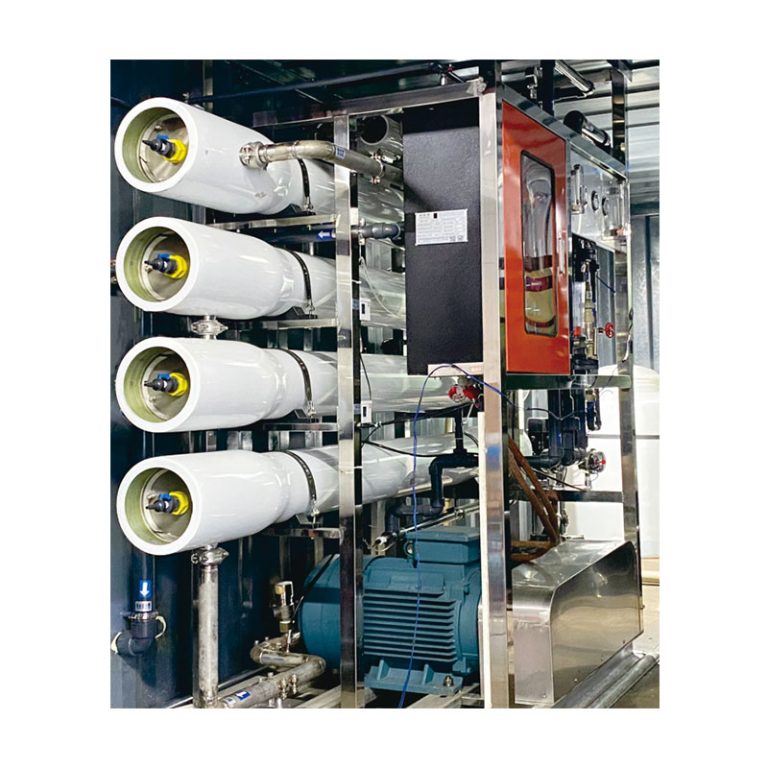


At sea, the production rating is only useful if the plant can run when the vessel needs it. Your design basis has to connect freshwater demand with operating hours, feed conditions, electrical supply and room to service the equipment.
Set the daily duty before choosing capacity
List the consumers first: galley, showers, laundry, cleaning, machinery make-up and any process use. Then separate normal demand from reserve. Crew numbers, time underway and the freshwater already in storage change the duty; a single average-day figure hides those differences.
State the required product-water volume and the hours available to make it. A tonnes-per-day (TPD) rating is a production rate tied to a set of operating conditions. It does not tell you how much water will reach the tank during a shorter operating window. Salinity, temperature, fouling, intake pressure and electrical availability all affect the result, so include the expected seawater range in the brief.
Use the FSHB 5 figures as a fit check
The published FSHB 5 data can help screen a layout. It cannot replace a vessel-specific review of access, support and utilities. Check the route into the space as well as the final footprint; service access can be lost after nearby pipework and equipment are installed.
|
FSHB 5 reference |
Published value |
Designfrage |
|---|---|---|
|
Freshwater output |
5 tonnes per day |
Under what feed and run conditions is this output specified? |
|
Dimensions and dry weight |
910 × 500 × 1,540 mm; about 260 kg |
Is there room for connections, lifting and maintenance? |
|
Rated power and supply |
2.2 kW; AC 380 V, 50 Hz, three-phase |
Does the vessel supply match, including auxiliary loads? |
|
System recovery |
Etwa 20 %, abhängig von Temperatur und Wasserqualität |
Can the intake and concentrate routes handle the flow? |
The values above are published references for FSHB 5. At the stated approximate 20% recovery, a simple balance for 5 tonnes of product water is about 25 tonnes of feed and 20 tonnes of concentrate. This is arithmetic, not a measured voyage result. It assumes steady operation at that recovery and leaves out flushing. Keep those limits visible when reviewing intake and discharge capacity.

Design around the feed the vessel will actually see
Seawater at the quay may differ from seawater offshore. A river mouth can bring more suspended material or biological loading; temperature shifts also affect operation. Ask what feed range the plant can accept and what measurements define that range. “Seawater” alone is not a useful specification.
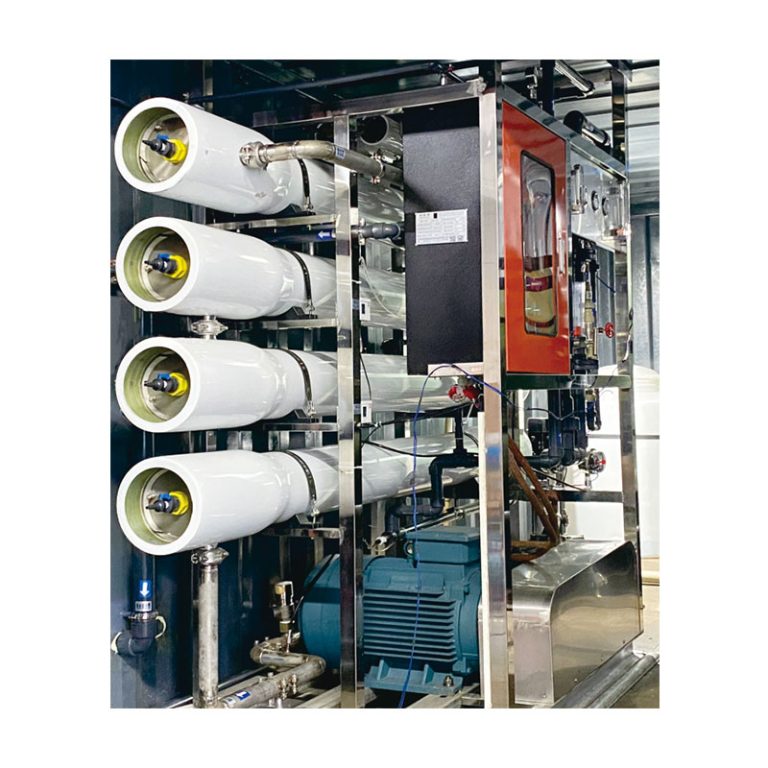
The high-pressure stage pushes part of the feed through a membrane as permeate. Most dissolved salts leave with the concentrate. A seawater reverse osmosis membrane needs feed within its operating limits, compatible pretreatment and a cleaning plan. The membrane does not correct a poor intake design.
Vessel motion, salt exposure and limited access belong in the installation review too. Check supports, pipe routing, enclosure placement and access to components against the vessel arrangement. Required provisions depend on the installation and selected equipment; the word “marine” does not define a test scope or a guaranteed operating envelope.
Permeate also has a destination. Confirm whether it needs further conditioning or disinfection and how it will be stored hygienically for the intended use. Do not equate membrane permeate with water approved for every onboard purpose.
Select pretreatment from the water analysis
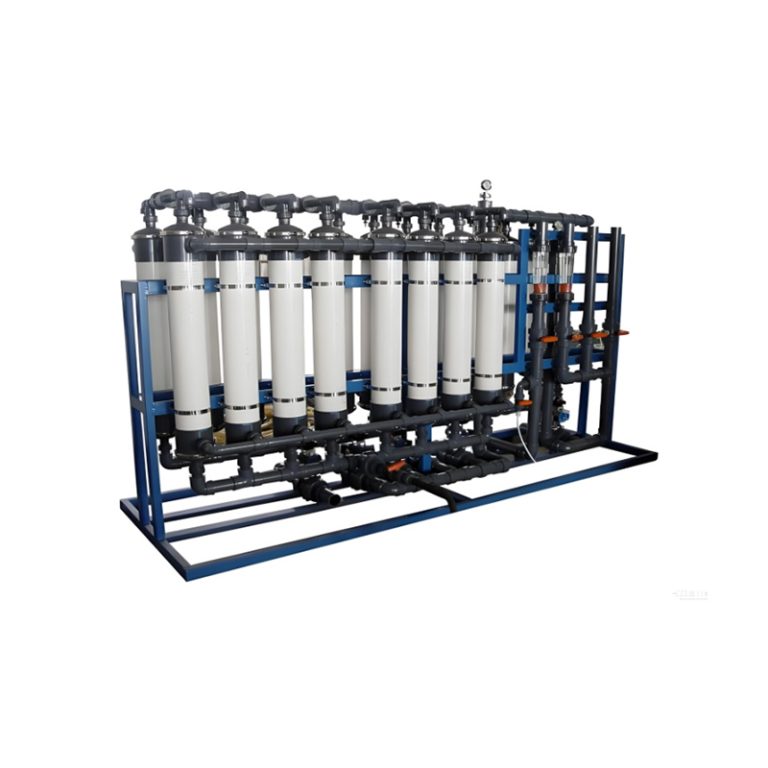
The feed-water analysis should drive the pretreatment train. A strainer or cartridge filter may be enough for some conditions; another intake may call for dosing, multimedia filtration or ultrafiltration. Confirm the proposed sequence against the contaminants, membrane limits and chemical compatibility. Adding stages without that check can complicate operation without solving the actual feed problem.
Agree on commissioning readings before installation. Feed and product flow, pressure drop, conductivity and product-water quality give the crew a baseline. A rising pressure drop can indicate a restriction, but the location still needs diagnosis. Conductivity changes also need context: check pressure, seals, membrane condition and the sampling method before drawing a conclusion.
Ein seawater reverse osmosis system should keep feed, permeate and concentrate paths distinct. If the proposed arrangement includes energy recovery, identify that equipment and its operating basis in the scope. The presence of a high-pressure pump does not confirm energy recovery.
Put service and acceptance into the purchase scope
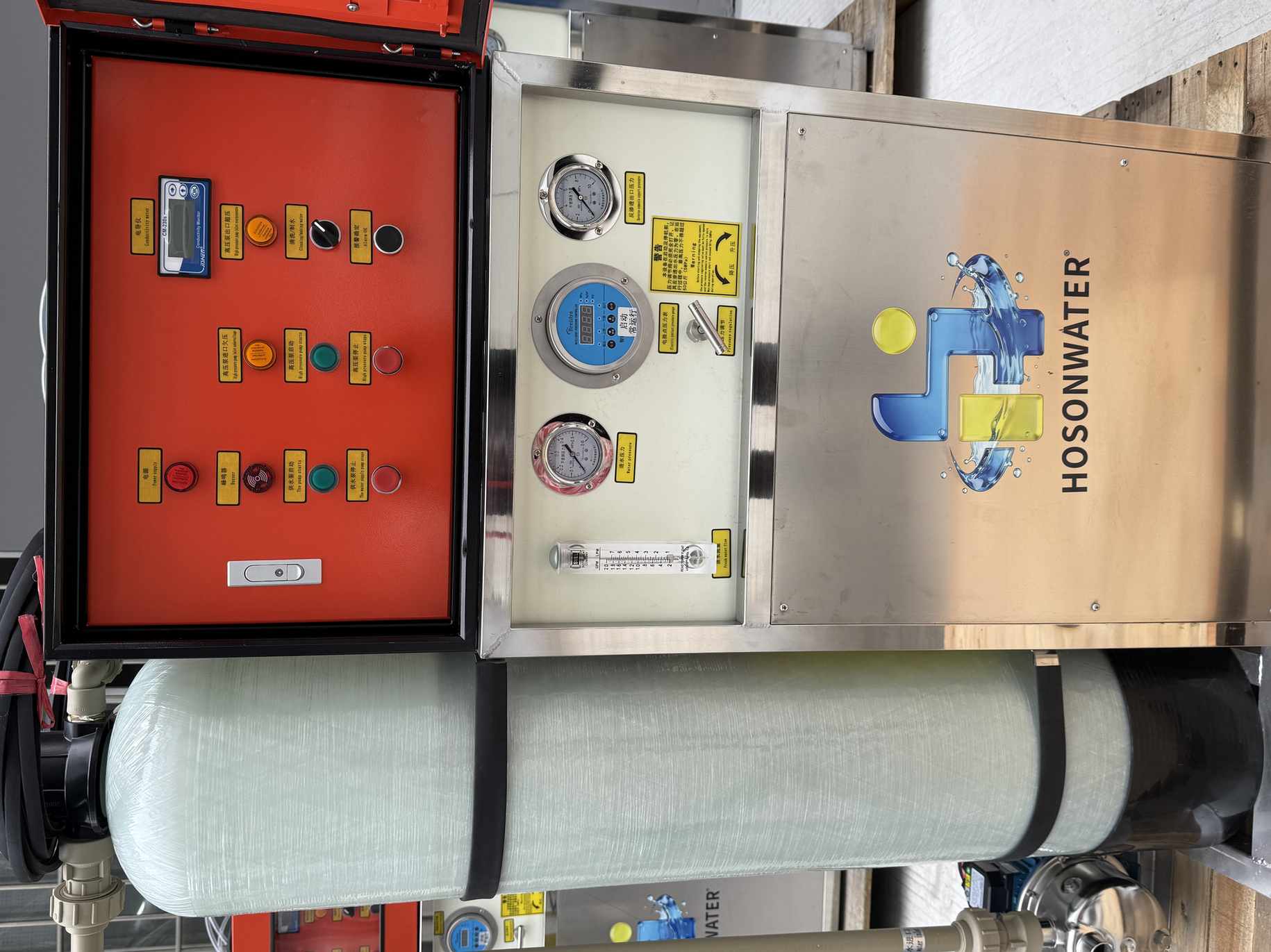
Write down the start-up and flushing procedure, chemical handling, spare membranes and pump seals, sensor checks, alarm settings and operating records. Name the tasks the crew can do onboard and those that require shore support. That distinction matters when the vessel has a short maintenance window.
An integrated package can reduce assembly work aboard, but it does not remove installation checks. Plan for alignment, electrical verification, intake inspection and product-water testing after installation. Agree on the feed conditions and instruments for acceptance before the test; otherwise the readings may not answer whether the plant meets the agreed duty.
For a yacht, fishing vessel or workboat, our team can discuss a Marine Umkehrosmoseanlage against the required water balance, available power and installation envelope. The published FSHB 5 values are a starting reference. The project brief determines whether that configuration fits.
Take the operating basis into the review
Bring demand, reserve, operating hours, feed-water range, utilities and service clearance to the technical review. Include where the concentrate goes and how the crew will recognize a change in performance. Those details connect the capacity on a data sheet with the water the vessel can use.
FAQ (häufig gestellte Fragen)
What does a shipboard reverse osmosis plant produce?
It separates a portion of pressurized seawater as permeate while most dissolved salts leave in the concentrate. The permeate may need conditioning, disinfection and hygienic storage for its intended use.
Is 5 tonnes per day guaranteed for the FSHB 5?
Five tonnes per day is the published reference capacity. Actual production depends on feed-water conditions and operating time, among other factors. Confirm the conditions attached to the rating for your vessel before using it as a guaranteed daily volume.
How do I choose pretreatment for a marine RO plant?
Start with feed-water analysis and the selected membrane’s limits. Use those to decide whether screening, filtration or additional treatment is needed, and verify dosing compatibility. Do not assume every vessel needs the same train.
What electrical supply is listed for the FSHB 5?
The published reference lists AC 380 V, 50 Hz, three-phase and rated power of 2.2 kW. Check the vessel supply, starting requirements and auxiliary loads with the project team. Rated kW is power, not energy consumed per tonne.
What should a buyer include in a shipboard RO comparison?
Compare output against the same feed and run basis, then check footprint, mounting, electrical fit, concentrate routing, monitoring and service access. Also agree on commissioning conditions and acceptance readings. Without those boundaries, capacity figures may not be comparable.