

A community can sit beside a river and still lack a dependable treated water supply. Seasonal changes in turbidity complicate filtration, while technical support may be far away. Containerized treatment brings a configured treatment system closer to the users, but reliable service depends on how well that system fits the source water, the site and the people operating it.
Source Water Determines Treatment Barriers
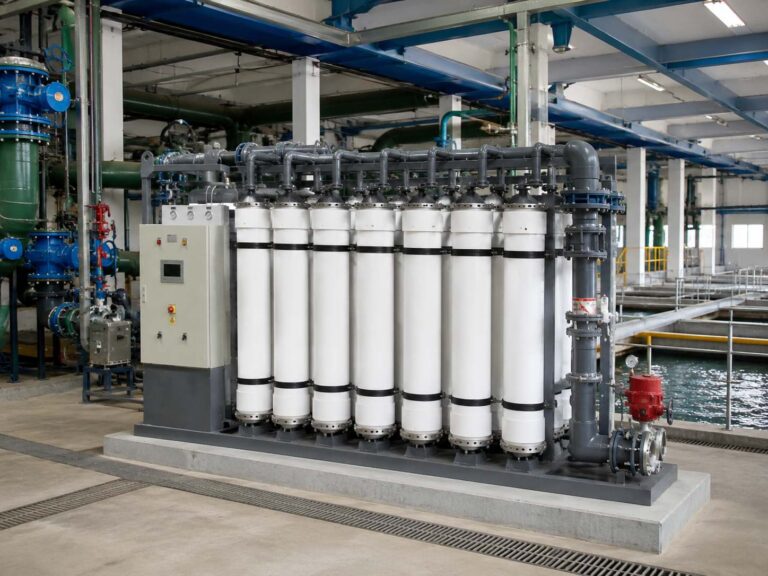
Raw water quality determines the treatment barriers needed for a surface-water supply. River or reservoir water may contain suspended solids, colloids and microorganisms. Ultrafiltration (UF) separates water from particles through a membrane, providing a physical barrier whose performance depends on the selected membrane and its integrity.
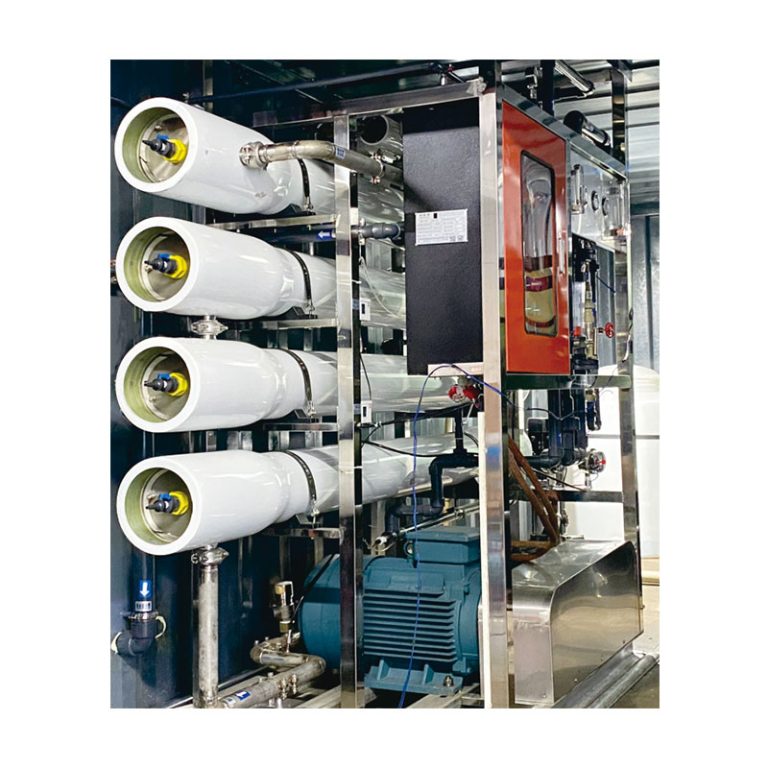
Dissolved contaminants require a separate assessment because ordinary UF does not remove dissolved salts or every chemical pollutant. Where salinity is unacceptable, an appropriately designed desalination stage such as reverse osmosis (RO) may be needed. Clear-looking UF product water alone is therefore insufficient evidence of suitability for drinking.
Disinfection and protected storage extend the treatment approach beyond filtration. A community supply needs a process that addresses its microbial risks, followed by measures to limit recontamination in tanks and distribution. Water safety planning, sanitary inspection and independent surveillance help manage risks that cannot be judged from appearance alone.
Seasonal source-water assessment connects these barriers to real operating conditions. A dry-season sample may miss the turbidity conditions that follow heavy rain, so engineers need to establish the expected operating range and responses when it is exceeded. These are familiar principles in municipal water treatment, applied here to a smaller, decentralized supply.
Factory Integration Reduces On-Site Complexity
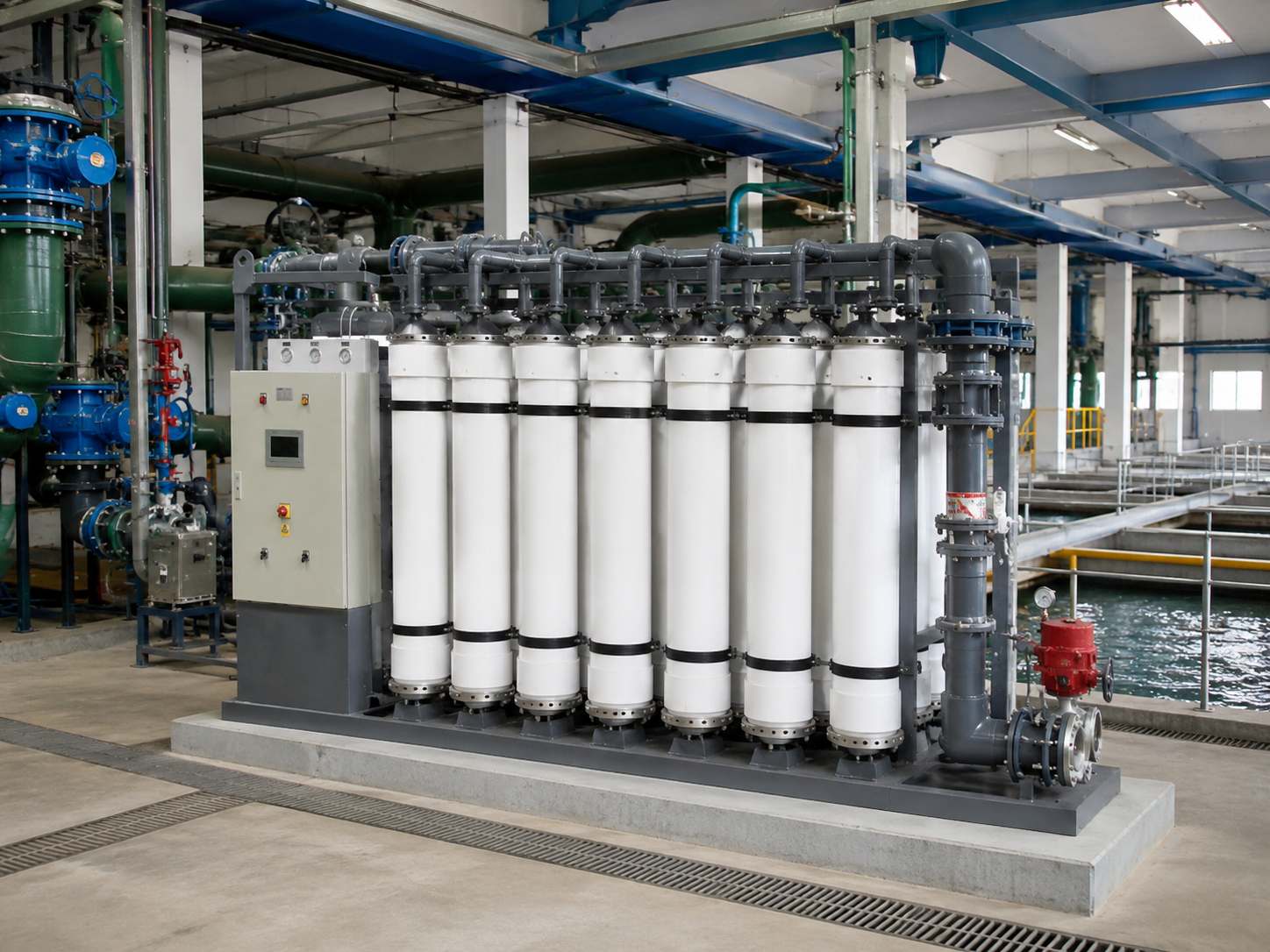
A source-specific treatment train becomes easier to deploy when its components are assembled and tested together before shipment. At HOSONWATER, we integrate pretreatment, UF, disinfection and controls into modular systems matched to local conditions. Completing this integration in the factory reduces the assembly and coordination work left for an isolated site.
Modular construction and containerization describe different aspects of the design. Modular refers to the arrangement of functional units, while containerized refers to their enclosure. A modular water treatment plant may occupy several containers or include equipment outside them; the enclosure itself does not determine the treatment process.
Factory testing checks how the selected components work together before shipping. Pumps, valves and controls must operate as an integrated process, including the transition between filtration and backwashing. Checking these functions before delivery can uncover problems while the equipment remains accessible to the integration team.
Site preparation remains necessary even when the treatment equipment is preassembled. Foundations, electrical supply and external piping must be ready for connection. This changes the nature of the on-site workload, but the plant still requires installation and commissioning under local conditions before it can enter service.
Daily Output Depends on Site Conditions
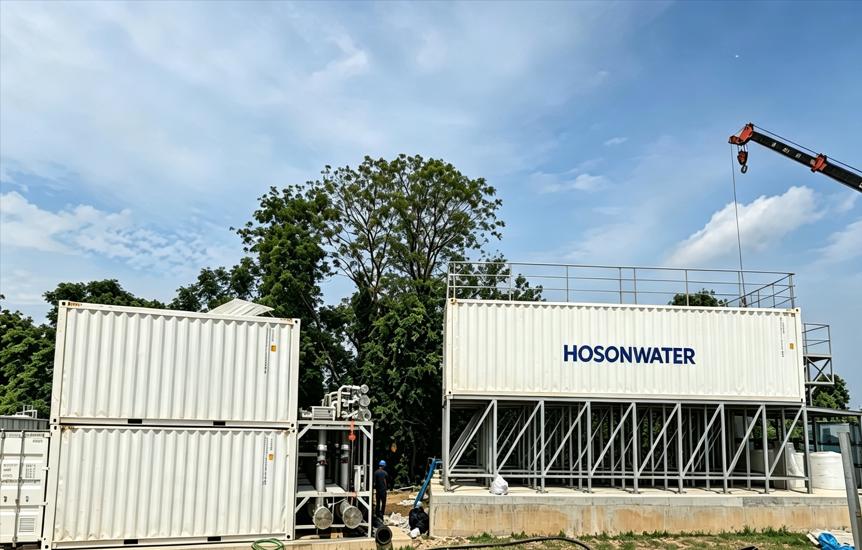
The infrastructure around the container determines whether its design capacity can support the community. A proposed surface-water scheme using the G20-2.0MLD illustrates the relationship between treatment equipment and site requirements. The figures below belong to that preliminary design; they are not universal container specifications or measured operating results.
| Design item | Example requirement | Site implication |
| Design output | 2,000 m³/day | Confirm usable daily supply after operating allowances. |
| Minimum feed pressure | 0.06 MPa | Provide sufficient gravity head or pumped feed. |
| Foundation dimensions | 9.9 m × 3.6 m | Plan the installation area and assess ground support. |
| Electrical provision | 380 V, 20 kW | Confirm supply compatibility and the connected equipment scope. |
Usable daily supply must account for backwashing, cleaning and maintenance downtime. The design capacity basis needs confirmation before it is compared with community demand. A clean-water tank can bridge an interruption in delivery to users, but stored water does not increase the treatment plant’s production.
The foundation and power requirements also need careful interpretation. Foundation dimensions describe the installation basis, not the container’s shipping footprint. The electrical provision is expressed as power in kW, rather than daily energy consumption in kWh; pump starting loads and auxiliary equipment requirements need separate confirmation.
Access and external connections complete the supply system. Delivery and lifting arrangements must suit the route and site, while the intake, storage tank and distribution network must support the intended service. Backwash water and cleaning wastes also need a managed disposal route rather than an uncontrolled discharge beside the plant.
Local Operators Maintain Dependable Service
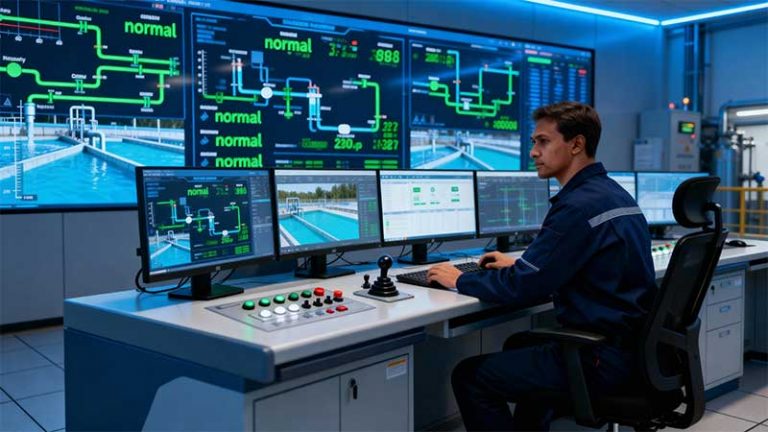
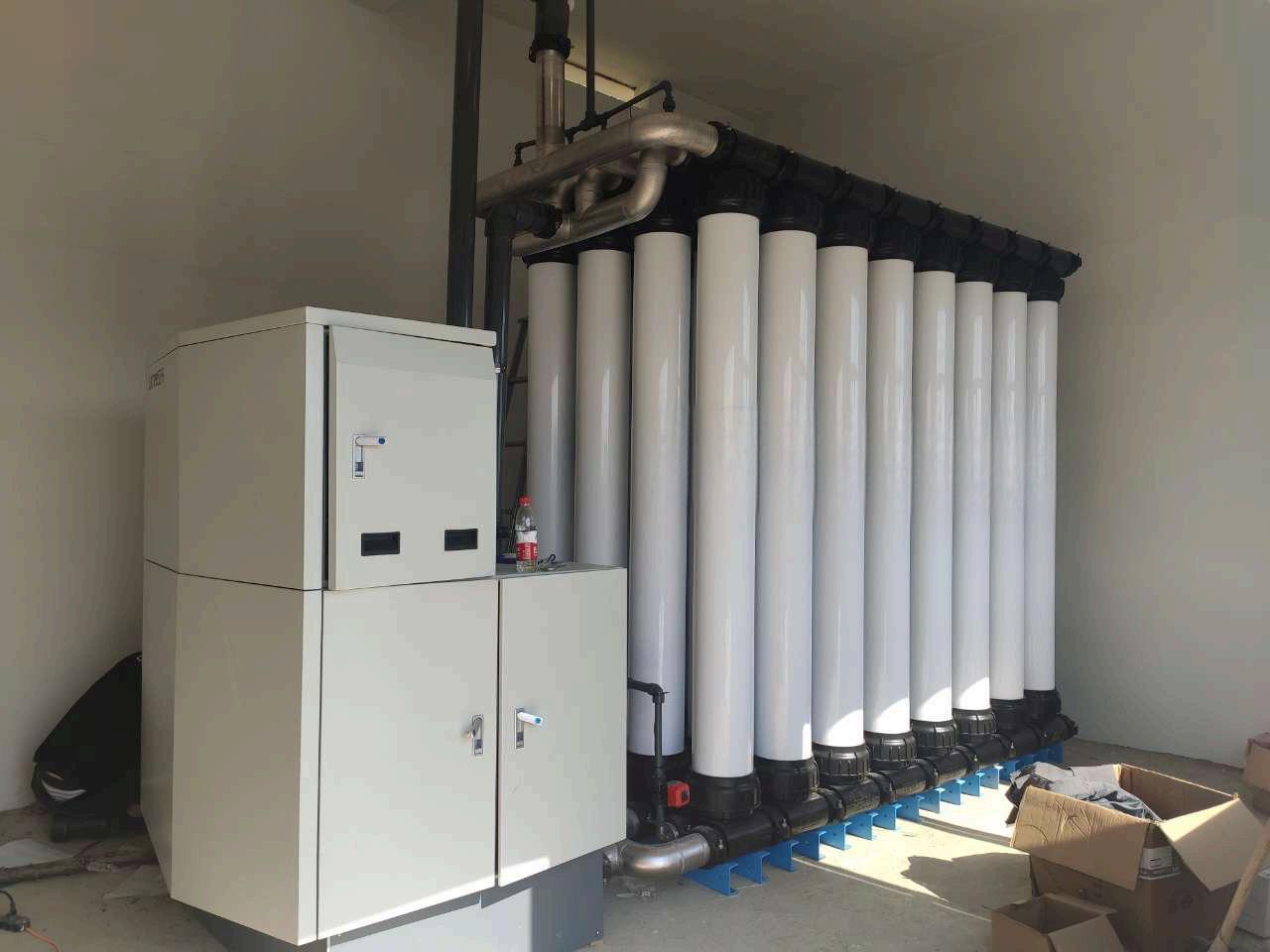
Reliable remote treatment requires a workable local operating routine after commissioning. A smart water monitoring system can provide remote visibility into flow, pressure, turbidity and equipment status. Configured alarms and trends help the responsible team identify changes and decide when investigation is needed.
Local staff still carry out the physical work behind those readings. They inspect equipment, check instruments, replenish chemicals and perform maintenance under the operating procedures. An alarm is useful only when someone knows what it means, who should respond and what action is appropriate for the condition.
Communication outages need an agreed operating response. The design review should establish which controls remain available locally and when staff should continue, restrict or stop production. Remote support should strengthen the local team’s capabilities without leaving essential decisions dependent on a working internet connection.
Future expansion also depends on the surrounding infrastructure. Adding treatment modules can increase installed capacity, but intake availability, electrical provision, storage and distribution must accommodate the additional flow. Reserving space for another unit is only one part of preparing for growth.
Reliable Supply Beyond the Container
Containerization makes decentralized treatment practical by moving much of the integration work away from a remote site. Its value becomes lasting when source-water assessment, usable capacity, site connections and local operation form one supply plan. Regional water authorities and project partners should assess these conditions together before settling the treatment configuration.
FAQ (häufig gestellte Fragen)
Can ultrafiltration treat seawater for drinking?
UF alone cannot make seawater suitable for drinking because dissolved salts pass through ordinary UF membranes. It may serve as pretreatment ahead of desalination, but a suitable desalination stage and assessment of final water quality are still needed.
Is a containerized plant suitable for permanent use?
Containerized plants can be engineered for temporary or permanent supply. Suitability depends on the equipment design, site conditions and maintenance arrangements. The enclosure format alone does not establish service life or remove the need for component replacement.
How ready is the plant after delivery?
Preassembly reduces the remaining installation work, but delivery is only one milestone. Water, power and drainage connections must be completed, followed by commissioning and operator training. Transport time and site readiness should be considered separately from installation time.
What staffing levels are required for operation?
Staffing depends on the process, operating duties, automation and applicable requirements. The plan should assign trained personnel to routine checks, maintenance and incident response, with adequate coverage during absences. Remote monitoring does not establish a universal minimum headcount.
Can the system expand if demand increases?
Additional modules may increase treatment capacity where the original design allows expansion. The project team should reassess raw-water availability and all shared infrastructure before adding them, because a larger treatment unit cannot resolve an inadequate intake or distribution connection.