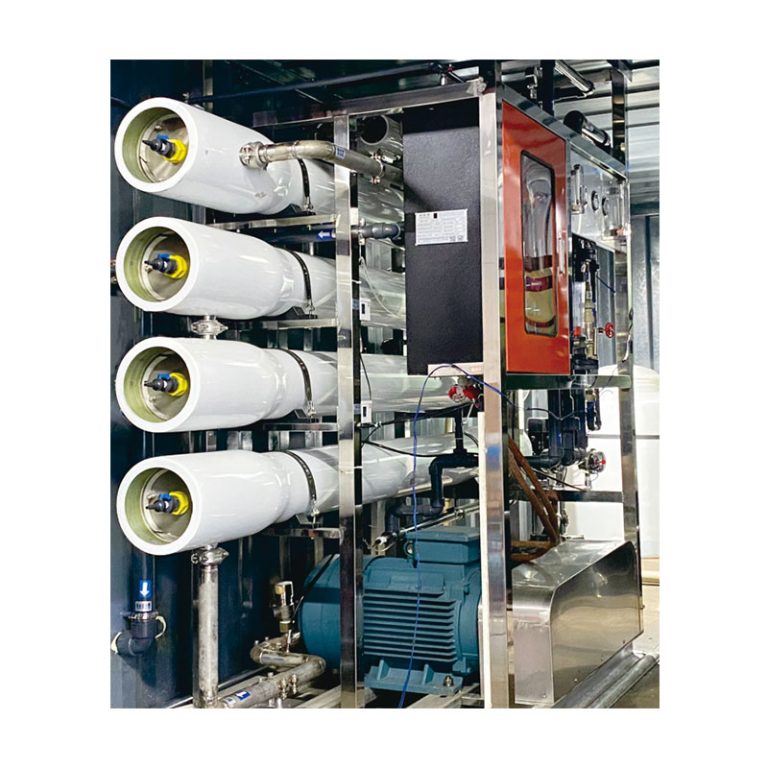


On a treatment line, ultrafiltration (UF) is chosen to reduce suspended material before a sensitive process. It passes water through a porous membrane as permeate while particles larger than the pores stay on the feed side. We start with your feed and output target because the same membrane figure cannot define two different treatment lines.
What crosses the membrane
In a pressure-driven UF system, a pump creates a pressure difference across hollow fibers or another membrane format. Feed water reaches the membrane surface. Water and sufficiently small constituents pass through the pores as permeate; retained solids and colloids leave in a concentrated stream or collect at the membrane surface until the system removes them.
UF is therefore a separation step, not a complete treatment train. It can control suspended matter and colloidal material, but the membrane pore size does not make the process a dissolved-salt removal stage. Where salinity must be reduced, a separate process such as reverse osmosis has to perform that duty. Where pathogens or chemicals are a concern, the complete process and its validated operating controls determine the required treatment barrier. A UF specification alone cannot establish finished-water safety.
UF’s role follows the feed analysis and product-water target. It may clarify surface water or reduce particulate loading ahead of reverse osmosis; the technology name alone does not define the treatment duty.
How retained material affects operation
As water passes through the membrane, retained material can accumulate on or within the membrane structure. That resistance may reduce the flow rate at a given pressure or require more pressure to maintain the same production. Your operations team should track flow, pressure and water quality over time; one clean-water test cannot establish long-term performance.
The system needs a method to manage retained solids. Depending on its design, this may involve backwashing, air scouring or chemical cleaning. We recommend checking cleaning limits, backwash pressure, chemical compatibility and temperature against the exact product specification. Cleaning pH tolerance is not the same as the pH range for continuous operation.
Feed quality sets the solids load and whether pretreatment is needed. Seasonal turbidity changes may alter operating demands, so a pore-size value alone is not enough to select a UF train.
Read performance figures in context
A pore-size figure describes the membrane’s nominal separation scale; it is not a complete statement of product-water quality. Turbidity, silt density index, recovery, flux and pressure describe different parts of performance. Their test method and operating conditions matter.
For example, our LW pressure-UF product information gives these reference values for that product family:
|
Indicator |
Published value |
What it helps assess |
|---|---|---|
|
Tamaño nominal de poro |
0,02 μm |
The membrane’s stated filtration scale |
|
Product-water turbidity |
< 0,1 NTU |
Suspended-particle carryover under the stated product conditions |
|
Flujo de filtración de diseño |
40–200 L/(m²·h) |
The area-normalized design flow range, not a guaranteed plant output |
|
Water temperature |
0–40 °C |
The stated operating-water temperature range |
These values apply to the LW product information, not every UF membrane or a project guarantee. Check design flux against feed quality, membrane area, recovery and cleaning cycle. The turbidity figure alone does not establish compliance with a drinking-water or process standard.
When you review a membrana de ultrafiltración de fibra hueca, check whether the quoted values describe an element, an integrated skid or the complete plant. Those are different scopes. The element may have a suitable nominal pore size while the final plant still depends on pretreatment, controls, disinfection and commissioning conditions.
Choose the configuration around the duty
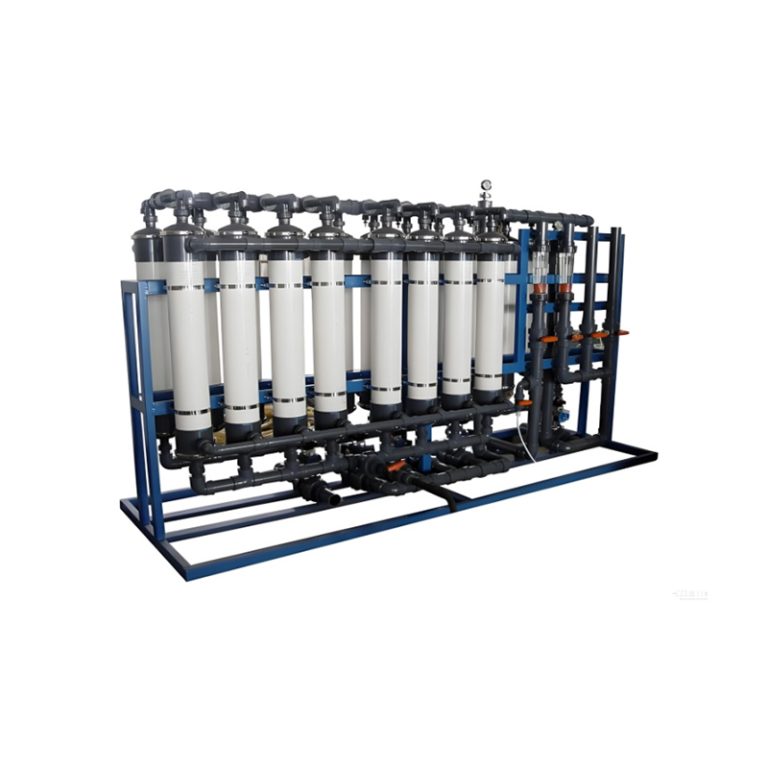
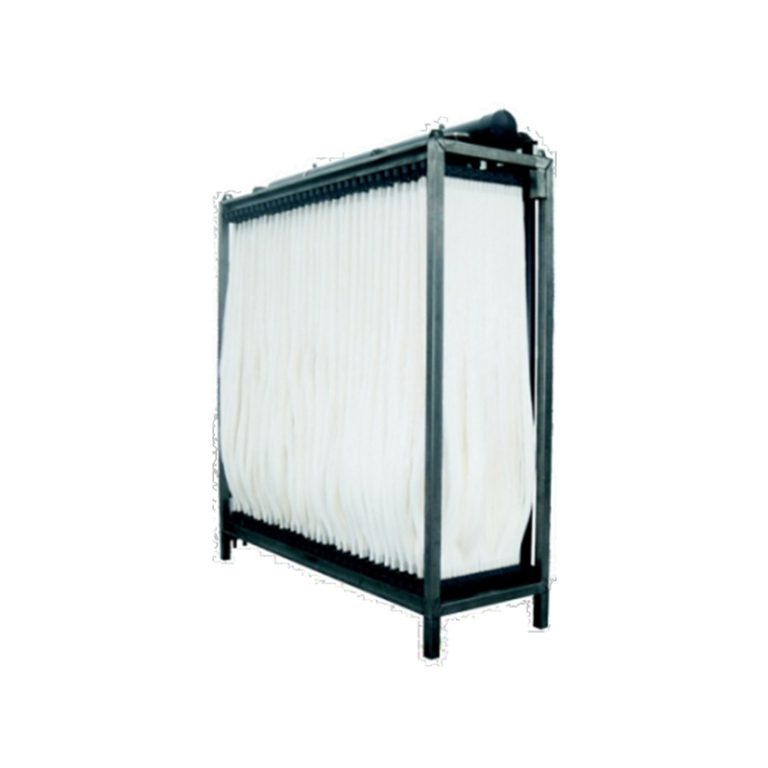
Pressure and submerged UF systems move water through a membrane in different physical arrangements. In a pressure system, feed flows inside or around pressurized membrane channels and permeate is collected across the membrane wall. In a submerged system, membrane modules sit in a tank and suction draws permeate through the membrane; air may be used to limit surface accumulation, according to the module design.
The choice affects footprint, pumping, solids handling and integration with existing tanks or downstream equipment. It should follow site layout and process duty, not a generic claim that one format is always more efficient. HOSONWATER lists UF products for tratamiento de agua industrial, while the right configuration still depends on feed and operating targets.
We recommend comparing proposals on the same feed analysis, permeate flow, recovery, design flux, cleaning sequence and included controls. Check whether each scope covers only the membrane module or a complete line with pumps, tanks, pretreatment and instrumentation. Capacity figures without that context may not be comparable.
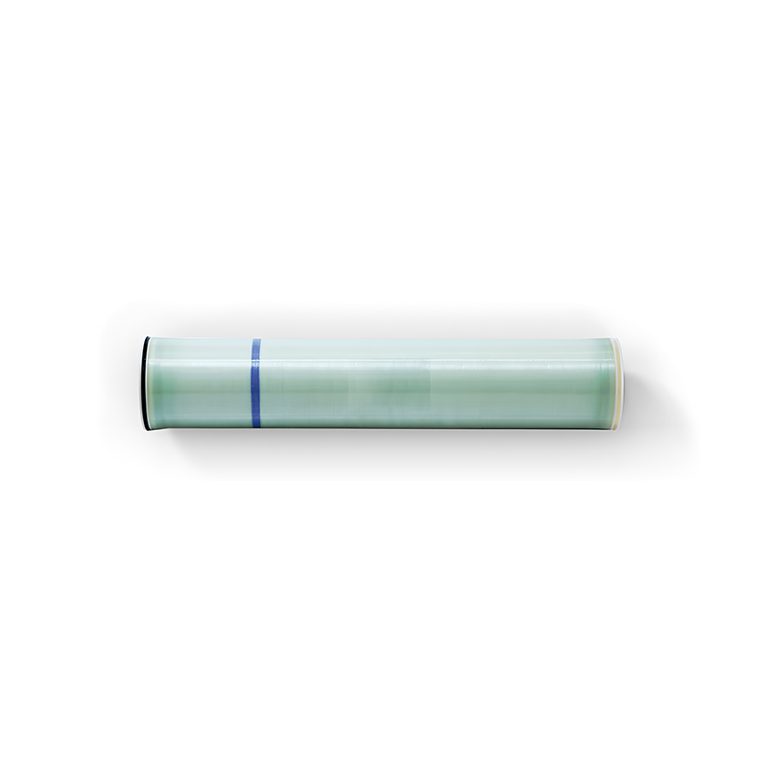
Where UF fits in a treatment line
UF works best when its role is explicit. It can reduce particulate loading before a sensitive process or target a specified turbidity as a direct filtration step. The rest of the treatment design must address other water-quality risks.
That boundary is especially important in desalination. UF can be considered upstream of reverse osmosis when source-water conditions and project economics support it, but it does not remove the dissolved salts that RO is designed to separate. The RO system still needs feed conditions within its own limits, and its concentrate stream requires a separate management plan.
Para municipal water filtration, assess raw-water variation and finished-water requirements. Your industrial duty may instead protect process equipment or prepare water for another membrane stage. In either case, UF is one barrier with a defined duty and operating limits.
A practical way to specify UF
We recommend specifying UF from your source-water analysis, required permeate quality and operating schedule. Then align system configuration, monitoring, cleaning and scope with those conditions. A smaller pore-size number alone does not establish lower cost, longer membrane life or better finished water; the full process determines those outcomes.
Frequently asked questions
¿La ultrafiltración elimina las sales disueltas?
No. UF is used to separate suspended and colloidal material. A separate desalination process, such as reverse osmosis, is required when dissolved salts must be removed.
Is a 0.02 μm pore size the same as a guaranteed water-quality result?
No. It is a nominal membrane specification. Product-water indicators also depend on the membrane, test method, operating condition and integrity of the complete system.
What causes UF flow to decline?
Retained solids can build up at the membrane surface or within its structure, increasing resistance to flow. Feed quality, operating flux and the cleaning sequence all affect how quickly that happens.
Should a project use pressure or submerged UF?
The decision depends on the feed, solids-management method, available tanks and footprint, hydraulic arrangement and integration requirements. Compare complete designs on the same flow and water-quality basis.
Can UF be used before reverse osmosis?
Yes, it can serve as pretreatment where the feed and project design justify it. The RO stage still performs dissolved-salt separation, and UF pretreatment does not remove the need to meet RO feed requirements.