

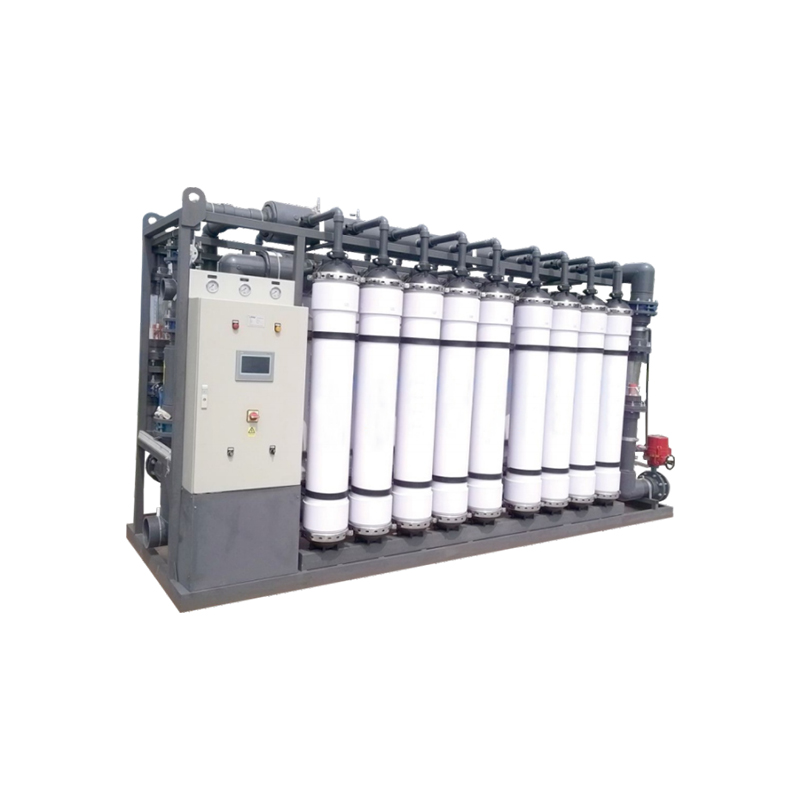
A treatment train works best when each membrane is assigned the job it can perform reliably. In practice, membrane processes for water treatment may address suspended solids, colloids, microorganisms, dissolved salts, or several risks together. The useful question is how feed-water variability, product-water targets, energy, cleaning, and downstream protection fit together.
What Membrane Processes Actually Separate
The separation ladder
Membrane separation depends on pore structure, pressure, chemistry, and the way water moves across the surface. Microfiltration (MF) generally targets larger suspended particles, ultrafiltration (UF) retains colloids and many microorganisms, nanofiltration (NF) provides tighter separation with partial softening, and reverse osmosis (RO) rejects dissolved salts through a dense selective layer.
These processes are different barriers rather than interchangeable labels. A water and wastewater treatment plant should therefore assign each membrane to the contaminant and operating objective it can handle consistently.
MF and UF: The Solid and Microbial Barrier
Particles, colloids, and microbial loading
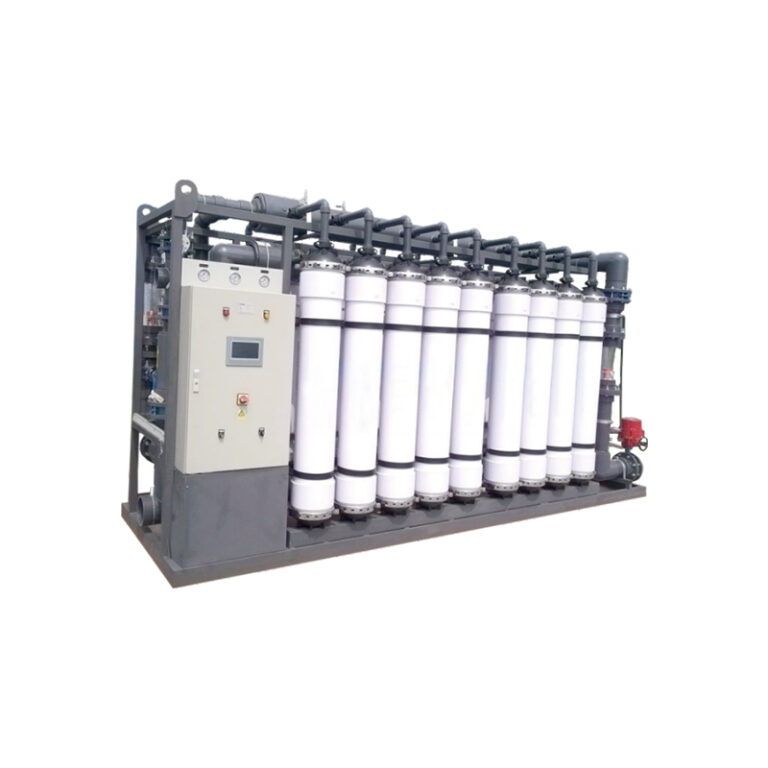
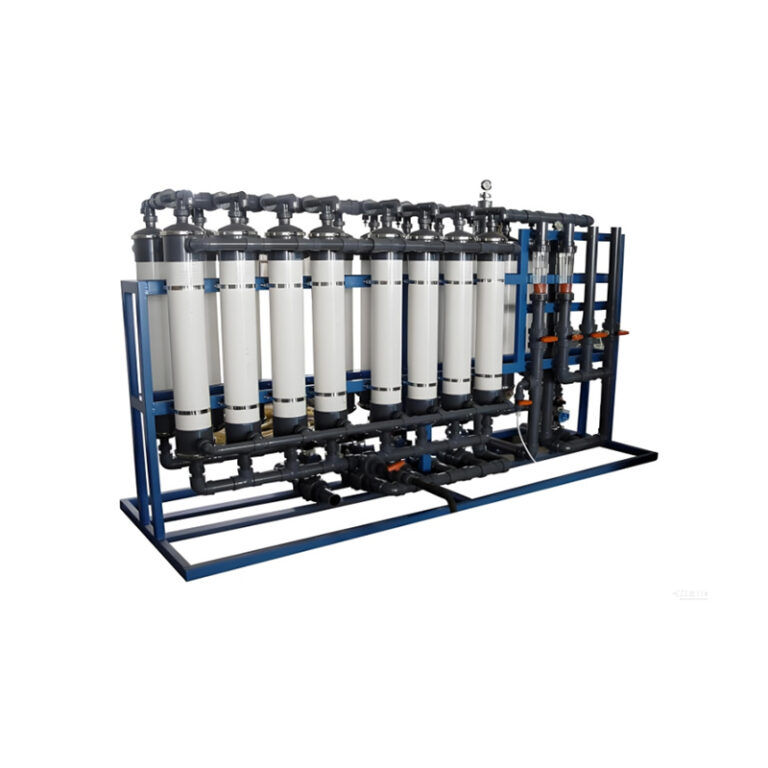
MF/UF works best when the primary concern is particulate or microbiological contamination. In such cases, an ultrafiltration membrane removes turbidity and suspended particles while allowing most dissolved ions to pass through. This makes UF suitable for RO pretreatment or for producing clarified water when desalination is not required. Unlike RO, UF does not rely on the high operating pressure needed for salt removal.
For coarse clarification, MF is sufficient, whereas UF provides a more refined barrier for colloids and microbes. It depends on the filtration requirement and the nature of the raw water.
NF and RO: The Dissolved-Contaminant Barrier
Dissolved constituents need tighter barriers
NF and RO address dissolved constituents that UF cannot remove. NF can reduce hardness and selected organic molecules with lower pressure than RO, but the result depends on feed chemistry and membrane selection.
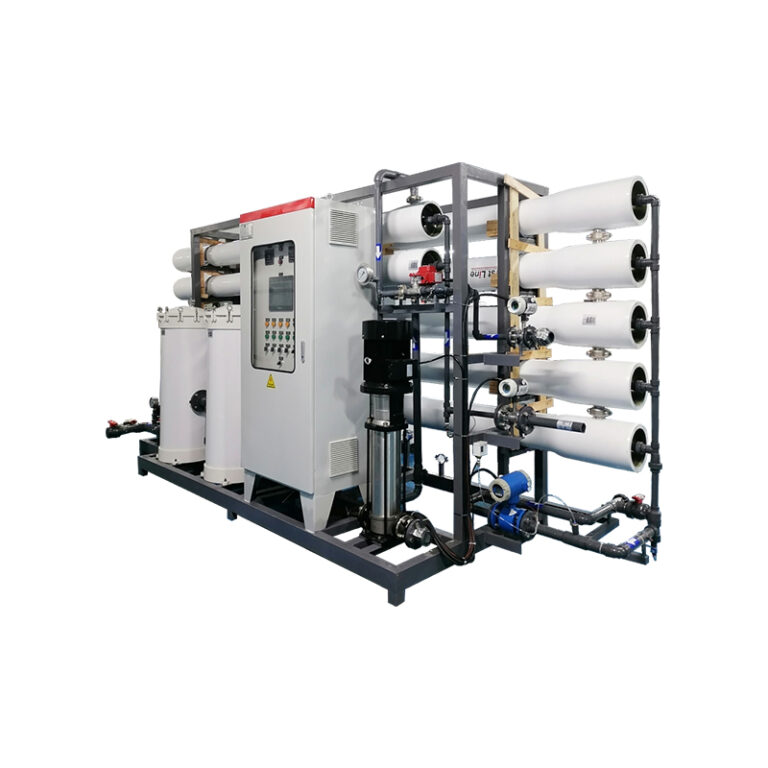
RO is the tighter desalination barrier and is normally evaluated through feed total dissolved solids (TDS), recovery, pressure, permeate quality, and concentrate handling rather than pore-size language alone.
How a Membrane Train Is Built
Una membrane filtration system should be designed as a sequence of controlled duties. Screening and clarification protect the first membrane, while UF can stabilize the silt density index (SDI) before RO.
Cartridge filtration catches residual particles before high-pressure equipment. Post-treatment may then adjust pH, add minerals, or provide disinfection when the water is intended for potable use.
A Practical Selection Matrix
The following matrix keeps selection tied to the contaminant and operating objective.
| Process | Primary duty | What it does not solve alone |
| MF | Suspended solids and larger particles | Dissolved salts and most hardness |
| UF | Colloids, turbidity, microbial loading | Dissolved salts and small ions |
| NF | Hardness and selected dissolved organics | Complete desalination |
| RO | Dissolved salts and broad ionic rejection | Pretreatment, concentrate disposal, and post-treatment needs |
Where UF Adds the Most Value
Pressure-UF evidence in context
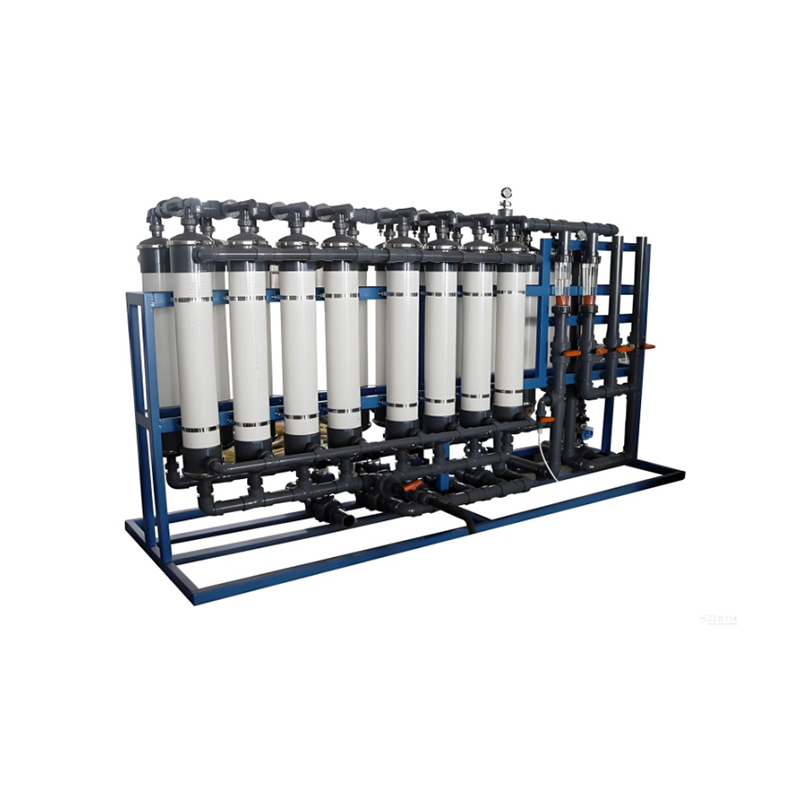
UF adds value when raw water changes faster than operators can manually correct the process. Surface water, reservoirs, and seasonally turbid sources can benefit from a stable filtrate barrier before disinfection or RO.
The relevant ultrafiltration membrane technology should be judged by its duty and operating evidence. Our PVC-alloy LH pressure-UF range uses a nominal 0.01 µm pore size, while the LW PVDF range uses 0.02 µm.
Those figures describe the selected membrane configuration, not a universal guarantee for every feed water. Filtrate quality, pressure trend, permeability, and integrity checks still matter.
The Operating Costs Behind the Technology
Lifecycle checks for UF
The main trade-off in UF is that lower operating pressure does not mean zero operating work. Backwash water, air scour where applicable, chemical cleaning, integrity checks, rejected water, and membrane replacement belong in the lifecycle model.
UF membrane cleaning limits should be set from the specific material. We distinguish short-term chemical tolerance from long-term operating pH to reduce the risk of premature ageing.
Why Modular Integration Matters
Repeatable blocks for constrained sites
Una modular water treatment plant turns the membrane train into repeatable functional blocks: pretreatment, membrane filtration, disinfection, controls, and utilities.
At HOSONWATER, we assemble and test these blocks before shipment, then connect defined interfaces on site. A modular water treatment plant can help projects in Southeast Asia, Africa, and the Middle East manage limited site labor while retaining a clear path for future capacity additions.
Design Checks Before Ordering
A sound design brief should include the following operating inputs before equipment selection:
- raw-water source and seasonal range
- target flow and peak demand
- turbidity, SDI, TDS, hardness, and microbiology
- available voltage, footprint, drainage, and chemical handling
- cleaning water, waste route, operator skill, and spare-parts plan
From Process Duty to Final Configuration
Matching the membrane to verified water data
When a project moves from concept to equipment, we match the membrane duty to verified water-quality data and the required operating response. UF, RO, automation, and modular controls can be integrated when their interfaces and duties are defined together.
The final selection should also record how the chosen ultrafiltration membrane technology will be cleaned, monitored, and accepted. That discipline matters more than calling every solution advanced.
Field Questions That Change the Design
Feed-water variability often decides whether a simple membrane train remains stable. Seasonal turbidity can increase pretreatment demand, while hardness and alkalinity influence NF or RO scaling risk.
Operators also need a clear plan for backwash water, chemical storage, calibration, and membrane integrity checks. Laboratory data, pilot observations, and operating envelopes belong in the design basis rather than being added after equipment selection.
A compact system can still need substantial utility coordination when the source changes quickly. Good records make troubleshooting faster because pressure, flow, turbidity, and cleaning response can be compared against an agreed baseline.
Summary and Next Step
The most reliable membrane processes for water treatment divide the problem correctly: MF or UF for particles and microbial loading, NF for selected dissolved constituents, and RO for desalination. The process train should be judged by the water-quality objective, not by a membrane label alone.
For a defensible design brief, provide representative feed-water data, target quality, flow, utilities, and operating constraints so the final configuration remains technically maintainable.
Preguntas frecuentes
Can UF remove dissolved salts?
No. UF primarily retains particles, colloids, and many microorganisms; dissolved salts generally pass through and require NF, RO, or another suitable process.
Is UF always required before RO?
Not always. The need depends on feed-water quality, pretreatment performance, SDI target, algae risk, and the RO supplier’s design basis.
Can a modular plant use different membrane types?
Yes, when the interfaces, duty, controls, and water-quality objectives are engineered together.
What data should a buyer provide first?
Provide source, seasonal quality, flow, target water quality, utilities, site limits, and the intended operating schedule.